
The Political Consensus Behind Harsh Immigration Policies Is Starting to Crack
As backlash to President Donald Trump’s deportation agenda grows, some lawmakers are reconsidering votes that expanded immigrant detention and ICE power.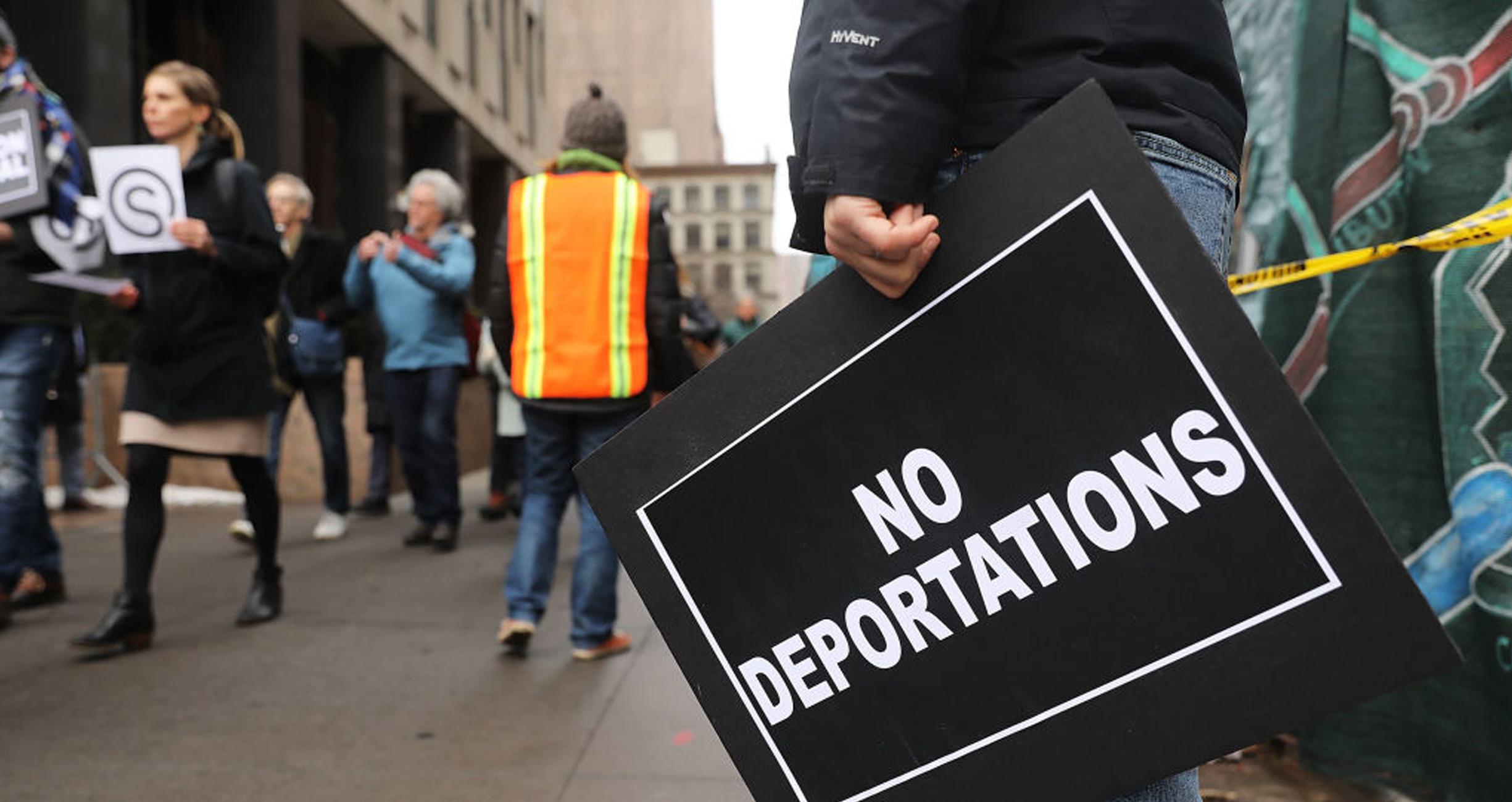
Slowly but surely, the political consensus on punitive crime and immigration measures is changing—for the better. Last week, Minnesota Representative Angie Craig provided the latest example of this shift when she apologized for her 2025 vote for the Laken Riley Act, a bill that dramatically expanded the number of undocumented people subjected to mandatory detention—and one that passed with broad bipartisan support. Craig is far from the first lawmaker to apologize for a vote in the Donald Trump era (and surely won’t be the last), but such a direct mea culpa—from a prototypical suburban moderate, no less—indicates a significant shift in public sentiment, driven largely by Trump’s extreme agenda.
Craig, who is running in the Democratic primary to replace Senator Tina Smith, wrote that it has “become clear that supporting any bill that gives ICE [United States Immigration and Customs Enforcement] new authority in this administration was the wrong decision.” Craig is not alone in expressing regret for her vote on the Laken Riley Act, joining Maryland Representative April McClain Delaney, Connecticut Representative Jahana Hayes, and Virginia Senator Mark Warner. Delaney’s apology is particularly noteworthy because it came in response to direct attacks from primary challenger David Trone, who said, “We can’t have any Democrats in Congress voting with Trump.” Amid a partial shutdown over ICE’s abusive overreach, and with the midterms approaching, these about-faces show just how much the politics of crime and immigration have changed in the past year.
For years, conventional wisdom dictated that supporting “tough” measures on crime and immigration would insulate lawmakers from criticism and political attacks related to public safety. Even with extensive research showing that voters overwhelmingly do not want these “tough” policies, this logic continues to guide lawmakers. But after the killings of Alex Pretti and Renée Good in Craig’s home state, along with story after story of ICE’s violent excesses, the political landscape is changing. Case in point: a new Economist/YouGov poll this month shows that just 39 percent of respondents oppose abolishing ICE. What may have seemed safe political ground recently—like voting for ICE funding or to confirm Kristi Noem—may now be toxic.
There is more evidence that the dam is breaking across the political spectrum. In January, New York Representative Tom Suozzi backtracked on his support for ICE funding, saying, “I failed to view the DHS funding vote as a referendum on the illegal and immoral conduct of ICE in Minneapolis.” Two Republican senators—Lisa Murkowski and Susan Collins—also voted for an (unsuccessful) bid to claw back ICE funding and redirect it to Medicaid. And during a Congressional hearing last week, GOP Senators Thom Tillis and John Kennedy harshly pressed Kristi Noem on her leadership, including her claims that Alex Pretti and Renée Good were involved in “domestic terrorism.”
Election results are already highlighting this dynamic as well: in North Carolina, seven-term Democratic Representative Carla Cunningham was trounced in the primaries after voting for a bill to increase cooperation between local law enforcement and ICE. As midterm primaries continue, we are likely to see more races turn, in part, on whether candidates recognize how the ground has shifted on issues that were once firmly seen as unshakeable “winners” for the Trump administration.
At the local level, opposition to ICE—and, by extension, to Trump’s deportation agenda—has galvanized disparate communities across the country. It’s reached the point that the White House is urging allies to stop referring to “mass deportation” at all, according to a new Axios report. Instead, the administration wants lawmakers to emphasize rhetoric about “removing violent criminals,” a sure sign that they still believe that language to be effective.
Lawmakers shouldn’t buy it. Data shows that only 5 percent of people detained by ICE have violent convictions, and a majority of voters polled do not believe the Trump administration is “prioritizing dangerous criminals for deportation.” The political calculus that it’s savvy to focus on getting “tough” on supposed “dangerous” immigrants and alleged “criminals” is precisely the strategy that Craig and the rest now regret. Voters have had a chance to see what that agenda looks like in action, as opposed to on the campaign trail, and, by and large, they do not care for it. With key votes looming on DHS funding, a new DHS secretary, and a possible “comprehensive crime bill,” members of Congress will have plenty of opportunities in the coming months to avoid taking votes they might come to regret the next time they face the electorate.
While one might wish for greater foresight on the part of lawmakers, as opposed to public expressions of regret after the damage has been done, politicians should remember that it is never too late to course-correct based on new information and shifting public sentiment. As the midterms approach, and as Trump surely prepares another campaign built around exploiting anxieties around crime and immigration, lawmakers will hopefully consider the benefits of advancing policies that actually deliver safety and rejecting the failed, “tough” rhetoric and policy that has dominated U.S. politics for too long.