
More People Are in Immigration Detention Than Ever Before
Vera’s research reveals what ICE is not sharing with the public and the vast scale and human cost of Trump’s immigration agenda.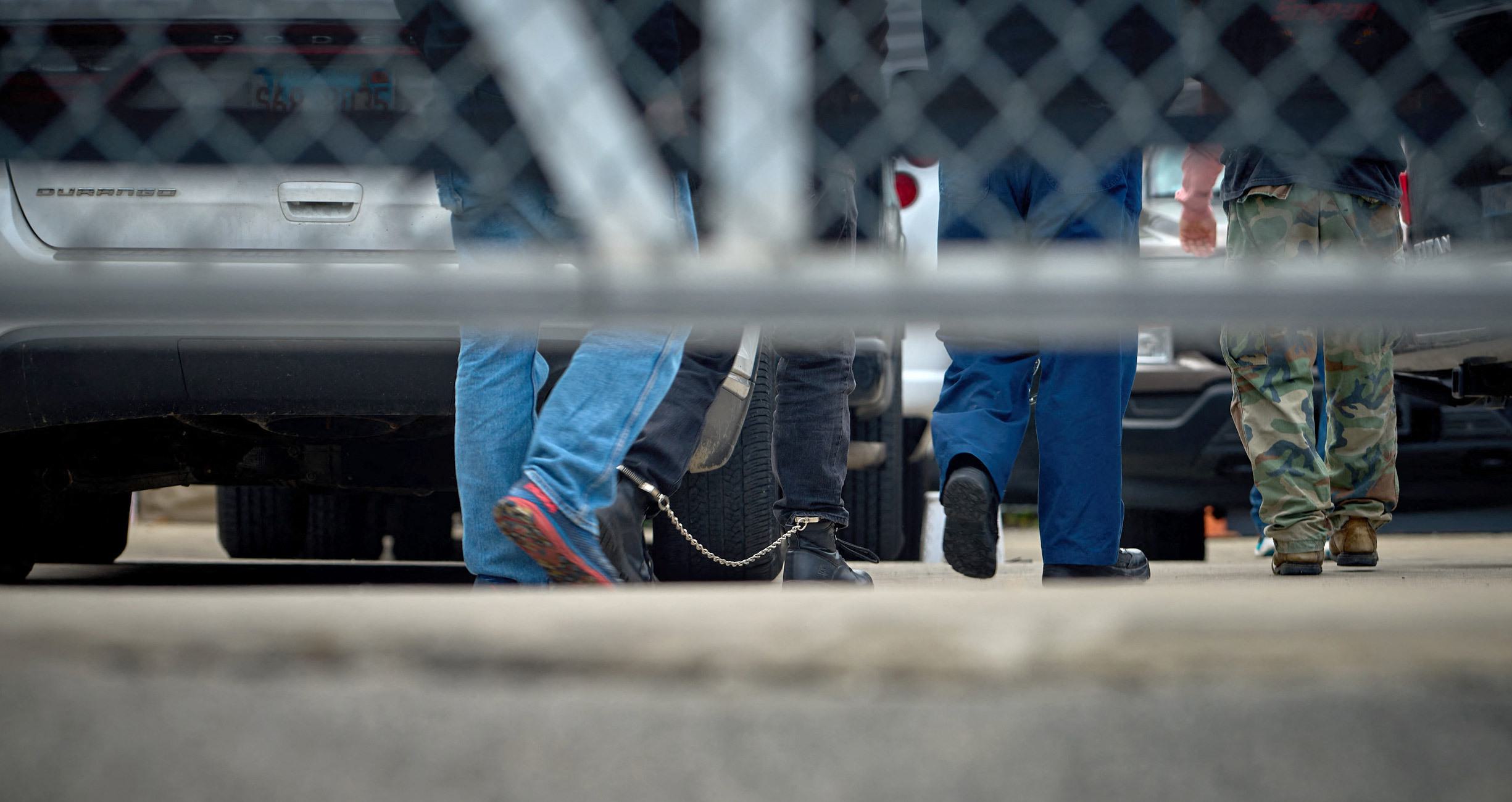
Recent reports show that Immigration and Customs Enforcement (ICE) is currently holding more than 59,000 people across the United States—a record and unprecedented high.
To imprison such an enormous group of people, ICE has built a massive, nation-spanning network of detention centers. Beyond the notorious stateand federally-run facilities like the South Florida Detention Facility (cruelly referred to as “Alligator Alcatraz”) and the Camp 57 wing of the Louisiana State Penitentiary (commonly known as Angola), the system also includes private prisons and local jails. Many unexpected places, such as hotels, hospitals, airports, and military bases, are also part of the ICE detention network. People detained in these facilities have reported violence, overcrowding, starvation, and medical neglect.
When ICE moves people into its labyrinthine detention system, it shares only limited, often error-prone statistics with the public. Its failure to regularly release accurate, complete, and accessible data is part of what enables it to operate this multi-billion-dollar network with little oversight or accountability.
But this summer, Vera researchers updated our ICE Detention Trends dashboard with newly available data, providing the general public with the best glimpse yet into the scale of ICE’s detention system. Analyzing millions of new detention history records provided by the Deportation Data Project, the tool provides an unprecedented level of detail about ICE detention populations every day over a 16-year period ending this past June—including a detailed picture of ICE’s detention operations during the first four months of President Trump’s second term.
Here’s what we found.
1. The number of people detained by ICE has reached unprecedented levels.
Recent public ICE reports reveal that 61,226 people were detained on August 23, 2025. Vera’s dashboard shows that the number of people in detention has never reached this level before, even for a single day, during the 16-year period covered by the data.
2. The number of people in detention has increased dramatically since the start of President Trump’s second term.
Vera’s analysis shows that, in the first four-and-a-half months of the second Trump administration, ICE booked people into detention roughly 119,500 times—a 17 percent increase from the same time period during Trump’s first term, and a 46 percent increase from the same period under President Biden (during the COVID-19 pandemic).
3. In early June 2025, ICE was detaining people in 436 facilities—but acknowledged using just 163 of them on its own website.
Vera’s analysis reveals that ICE was using 149 staging facilities and 55 medical facilities in June 2025—places that ICE largely excludes from the statistics it regularly puts out publicly. Among the litigation ICE is currently facing, one case argues that its practice of detaining people in overcrowded holding rooms for prolonged periods of time under inhumane conditions is unlawful and unconstitutional.
4. In June 2025, ICE detained people in facilities across all 50 states, as well as Puerto Rico; Guantanamo Bay, Cuba; the Northern Mariana Islands; Guam; and the U.S. Virgin Islands.
The states with the most facilities in Vera’s analysis were Texas (69), Florida (40), and California (27).
5. Since the start of President Trump’s second term, ICE has increasingly used mega-detention centers run by for-profit prison corporations with the capacity to detain large numbers of people.
In early June, 17 facilities across nine states—all of which are operated by private companies—held more than 1,000 people in detention per day. Two of these facilities—Adams County Correctional Center (Natchez, Mississippi) and Stewart Detention Center (Lumpkin, Georgia)—exceeded 2,000 people detained daily. These private companies have financially gained from the Trump administration’s expansion of detention, despite reports of inhumane conditions, overcrowding, and lack of access to counsel.
The following are the 17 facilities that held more than 1,000 people per day:
- Eloy Federal Contract Facility (Eloy, Arizona)
- Otay Mesa Detention Center (San Diego, California)
- Denver Contract Detention Facility (Aurora, Colorado)
- Krome North Service Processing Center (Miami, Florida)
- Stewart Detention Center (Lumpkin, Georgia)
- La Salle ICE Processing Center (Jena, Louisiana)
- Jackson Parish Correctional Center (Jonesboro, Louisiana)
- Richwood Correctional Center (Monroe, Louisiana)
- Winn Correctional Center (Winnfield, Louisiana)
- Adams County Correctional Center (Natchez, Mississippi)
- Moshannon Valley Processing Center (Philipsburg, Pennsylvania)
- Bluebonnet Detention Facility (Anson, Texas)
- Karnes County Residential Center (Karnes City, Texas)
- Montgomery Processing Center (Conroe, Texas)
- Port Isabel Service Processing Center (Los Fresnos, Texas)
- South Texas ICE Processing Center (Pearsall, Texas)
- Northwest ICE Processing Center (Tacoma, Washington)
6. Local jails were the most common type of detention facility used by ICE over the 16-year period covered by the data.
In addition to using private and federal detention facilities, ICE has a widespread practice of paying local governments to hold people facing civil immigration charges in jails.
7. The Trump administration has revived—and plans to expand—the practice of detaining families with children.
The Biden administration had phased out family detention because of the harm it inflicts on minors. Yet, ICE resumed holding families at two detention facilities in Texas: on June 10, 2025, the Karnes County Residential Center held 1,187 people, and the South Texas Family Residential Center in Dilley held 575 people. Two more family detention centers are slated to open by year’s end, giving the administration the added capacity to detain 5,500 more people.
8. Since the start of the second Trump term through early June 2025, ICE has detained people in 605 facilities.
By comparison, ICE detained people in 457 facilities in the last quarter of the Biden administration (October 1, 2024, to January 19, 2025).
9. ICE has detained people in 59 new facilities since the second Trump administration began, including 17 federal facilities (two in Guantanamo Bay, Cuba) and 20 medical facilities.
The following are the 10 largest new facilities:
- JTF Camp Six (Guantanamo Bay, Cuba)
- Atlanta U.S. Penitentiary (Atlanta, Georgia)
- Leavenworth U.S. Penitentiary (Leavenworth, Kansas)
- Hopkins County Jail (Madisonville, Kentucky)
- Campbell County Detention Center (Newport, Kentucky)
- Federal Correctional Institution Berlin (Berlin, New Hampshire)
- Corrections Center of Northwest Ohio (Stryker, Ohio)
- Cimarron Correctional Facility (Cushing, Oklahoma)
- Federal Detention Center Philadelphia (Philadelphia, Pennsylvania)
- El Paso Soft Sided Facility (El Paso, Texas)
10. ICE reopened 77 facilities that it had not been using in the year prior to President Trump’s second inauguration, including 36 non-dedicated facilities and 17 federal facilities.
The 10 largest of these reopened facilities are:
- Etowah County Jail (Gadsden, Alabama)
- Miami Federal Detention Center (Miami, Florida)
- Glades County Detention Center (Moore Haven, Florida)
- Marion County Jail (Indianapolis, Indiana)
- Greene County Jail (Springfield, Missouri)
- Butler County Jail (Hamilton, Ohio)
- Northeast Ohio Correctional Center (Youngstown, Ohio)
- Mahoning County Jail (Youngstown, Ohio)
- Broome County Jail (Binghamton, New York)
- Aguadilla Service Processing Center (Aguadilla, Puerto Rico)
The scale and scope of ICE’s detention network, as revealed by Vera’s research, is just a glimpse at the colossal amount of resources the United States has spent on immigration detention and enforcement. And the Trump administration has plans to dramatically expand its scope, recently allocating an unprecedented $45 billion for detention and $30 billion for additional enforcement.
Immigration detention terrorizes communities with no valid justification. Detention does not deter migration, nor is it necessary to ensure that people appear in court for immigration hearings. Yet, in the almost 30 years since the start of the modern era of civil immigration detention in the United States, millions of people, many seeking refuge and opportunity in this country, have had their lives irrevocably harmed by this cruel system. The scale of the problem may be vast, but that does not absolve us of our duty to address it.
Explore Vera’s interactive dashboard, or download the data through Vera’s GitHub repository.