
ICE Is Denying People Bond to Keep Them Locked Up
Incarcerating people before their immigration trials compounds injustice and strains an already crumbling system.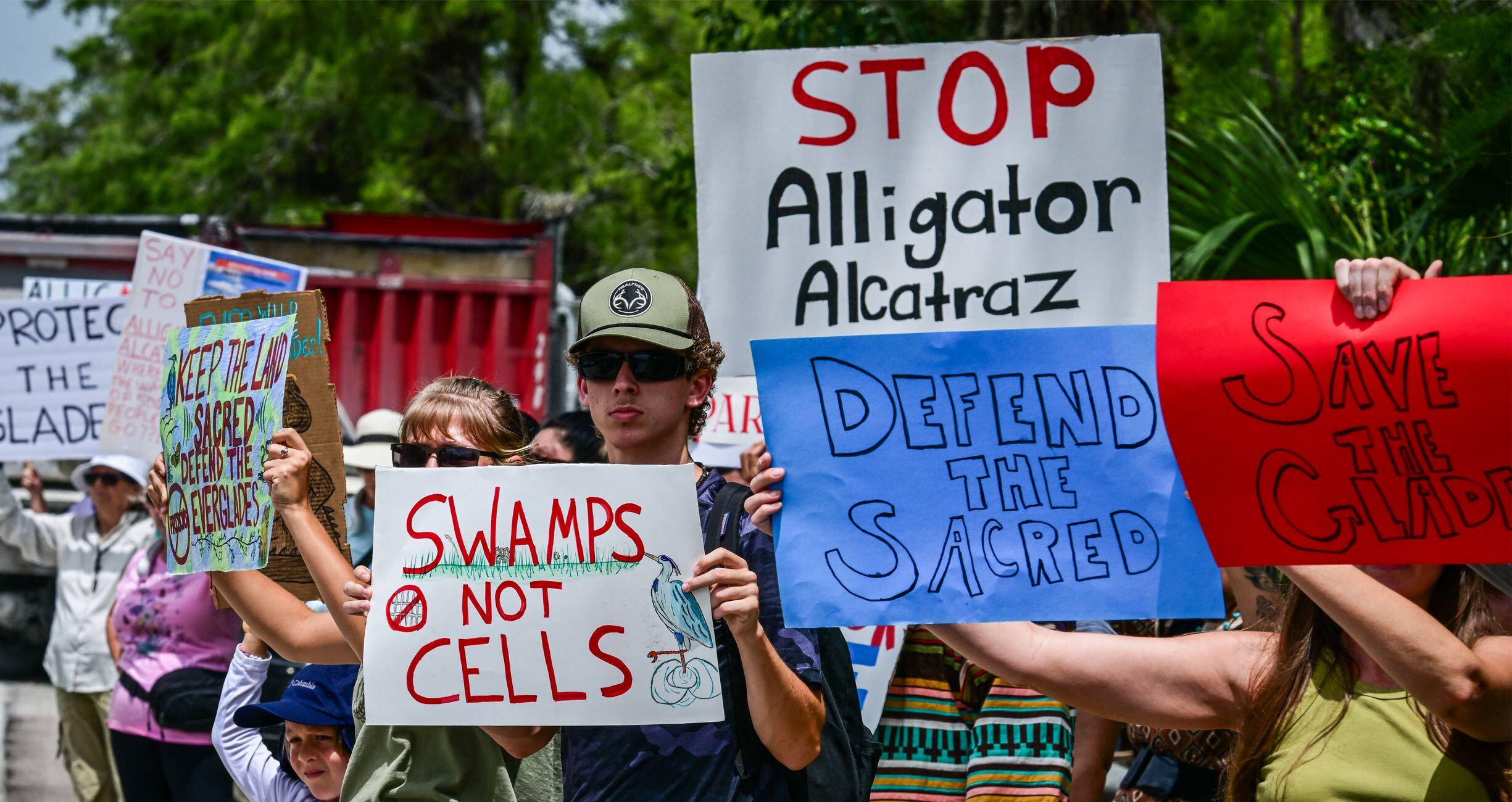
On July 8, the Trump administration announced a new policy that prevents judges from granting bond to anyone held in detention by Immigration and Customs Enforcement (ICE) who had entered the United States without documentation. This policy—in tandem with the Laken Riley Act’s expansion of mandatory detention and the One Big Beautiful Bill’s supercharged spending on immigration enforcement and new immigration prisons—threatens to send thousands more people into notoriously appalling conditions as they await their day in court.
What Trump’s policy does
Under existing law, immigration judges have the discretion to determine whether a person held in detention is neither a flight risk nor a danger to their community and is qualified for a bond hearing. At the hearing, the person could then argue that they should be released on bond as their case continues. However, judges are denied this discretion if the person falls under several categories, including how they entered the United States and whether they have been convicted of certain crimes. In these cases, the person is put under “mandatory detention” and forced to fight their case while incarcerated.
The Laken Riley Act, enacted in January, vastly expanded the criteria for mandatory detention to include people arrested for and accused of many nonviolent theft-related offenses and, for the first time, those arrested for and accused of criminal conduct but who have yet to be given a fair trial to determine their innocence. In July, the Department of Homeland Security announced it would further expand mandatory detention to anyone who entered the country without inspection.
This means that millions of people who might have been granted a bond hearing are now being denied one and kept in ICE detention. Meanwhile, as releases from immigration prisons have slowed to a trickle, daily detention numbers have reached record highs. By stripping even more people of the possibility of supervised release, Trump’s new actions will make things exponentially worse.
Immigration detention is unnecessary
Locking people away in immigration prison when they are suspected of being in the country without legal status is unjust and unnecessary. Decades of research shows that people do not need to be held behind bars to ensure that they appear for their immigration court proceedings.
We have also long seen how holding people in jail before trial in the criminal court system has made communities less safe. In criminal cases, pretrial release is typically conditioned on whether someone can pay a bail amount set by a judge at arraignment. This system ties a person’s freedom to their ability to pay for it. If a person is jailed before trial, it increases the likelihood they will lose work, fall behind on their bills, and lose custody of their children, compounding poverty and, with it, the drivers of crime.
Even for people with resources, the chaotic and dysfunctional immigration system already makes it difficult to get a hearing and be granted an affordable bond. Bond was only granted in 31 percent of cases heard during the first nine months of 2023, and the median bond amount that year was $7,000—an impossible sum for many.
And notably, many immigrants who will now face imprisonment without a chance to seek bond likely do have a path to legal residency in the United States. Under both U.S. and international law, for example, people who face danger in their home country have the right to go to other nations to seek safety and have their requests for asylum considered. Other people—such as survivors of trafficking, violent crime, and child abuse—may have the option to pursue residency through additional legal avenues.
The immigration system is already unfair and inhumane
The current immigration court backlog already exceeds 3.5 million cases; proceedings can take months, years, or even a decade to resolve. And now, the Trump administration is pouring even more money into locking more people up while simultaneously reducing the capacity of immigration courts and the legal service providers who defend immigrants’ due process rights. More than 50 judges have been fired, and dozens of others have taken advantage of incentives to resign voluntarily. Funding for legal service providers has also been gutted, even though people in detention already lack legal representation in nearly 50 percent of cases.
In 2023, more than 90 percent of the then-30,000 people in ICE’s deadly facilities on any given day were held in immigration prisons run by private corporations. These companies, which include GEO Group, CoreCivic, and LaSalle Corrections, have long lists of documented human rights abuses like forced labor, inhumane living conditions, sexual abuse, forced sterilizations, and medical neglect. And they’re now ramping up capacity as the number of people in detention balloons. State-operated facilities seem to offer no better treatment; people detained in the new, hastily constructed Florida Everglades facility (so-called Alligator Alcatraz) are being caged in chain-link enclosures and have reported health hazards, including floods of waste water, insects, and inedible food.
Trump’s aggressive enforcement since January has put more people in detention and will lengthen the time they’re forced to spend waiting for the resolution of their cases. Faced with the cruelty of immigration prison, many who have lawful claims to stay safely in the United States will have all the more incentive to instead accept deportation.
No one is made safer by keeping people in immigration prison
It is inhumane to make people fleeing danger await the outcome of their court proceedings while locked away in deadly immigration facilities. People who come to the United States deserve dignity, safety, and fairness of due process. They should be free to attend immigration court with the support of legal representation to help them understand their rights and prevent wrongful deportations.
This is a human rights crisis. Funneling thousands more people into an immigration detention system that is riddled with abuse and cruelty will cause immeasurable harm. The impact extends beyond the lives of immigrants themselves—it is separating families, destabilizing communities, and jeopardizing our economy. While Trump states that his mass detention and deportation agenda promotes public safety, the opposite is true. Sending masked agents into workplaces, courthouses, places of worship, schools, and homes to terrorize everyday people who pose no real threat to public safety is causing rippling harm and distrust. Instead of spending billions of dollars to expand pretrial detention, we should be devoting resources to programs that promote family unity, build strong communities and economies, and actually keep people safe.