
What is Trump’s Comprehensive Crime Bill and How Can Lawmakers Deliver Real Solutions for Safety Instead?
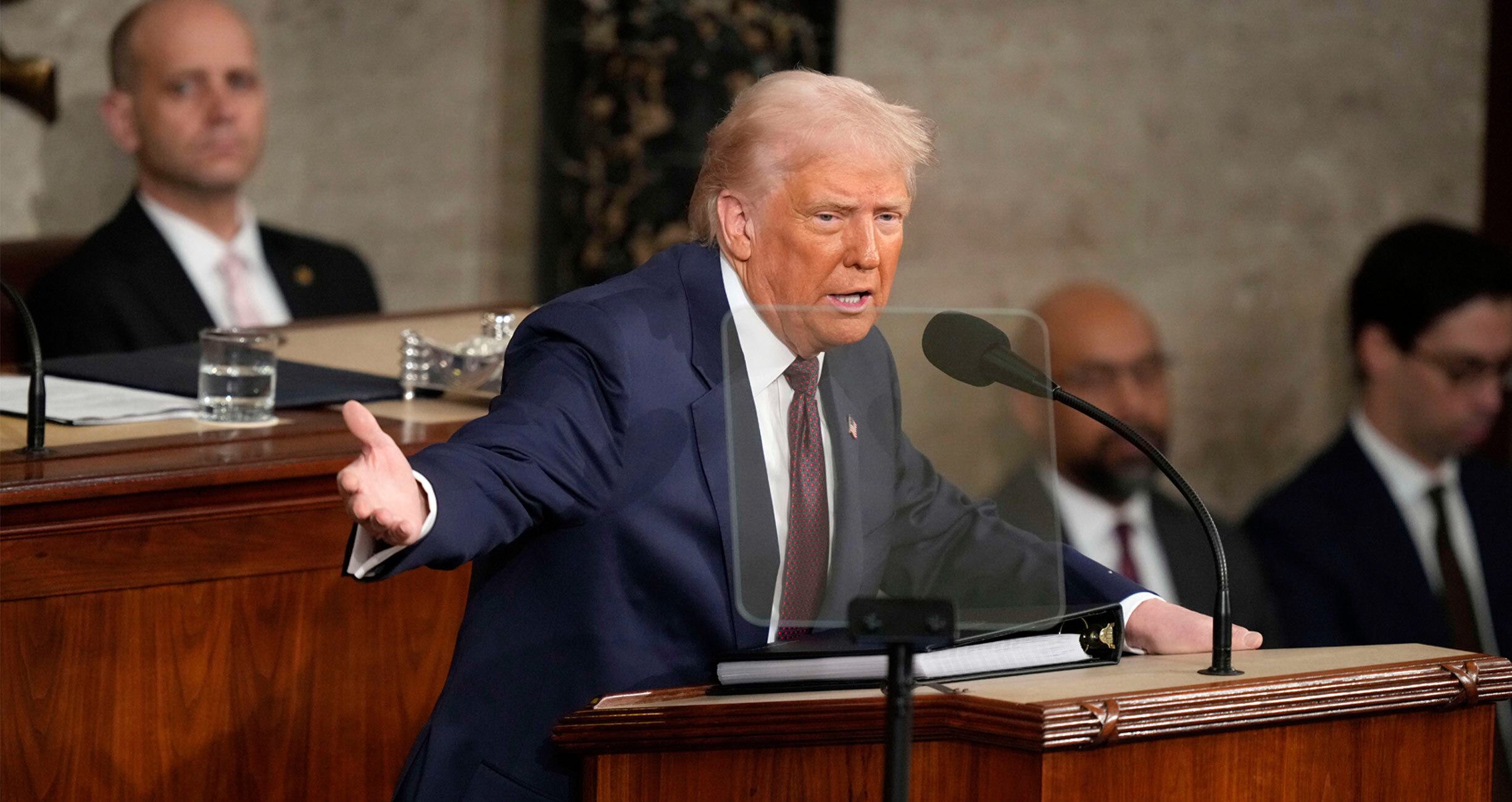
The Republican crime bill, rumored to arrive early in 2026, has its origins in President Donald Trump’s March 2025 address to Congress. In that speech, Trump said he was “asking for a new crime bill, getting tough on repeat offenders while enhancing protections for America’s police officers so they can do their jobs without fear of their lives being totally destroyed.”
In the nine months since, Trump has been incredibly active around crime and criminal justice, but no bill has appeared. He has addressed issues like protections for police and pretrial reform through executive orders (at a historic pace). But legislation remains appealing, as it is less likely to be challenged in court, can carry dedicated funding, can go beyond the scope of executive powers, and would outlast his presidency. In addition, legislation could be a boon to his party in the midterms, allowing them to accuse Democrats who vote against it as being “soft on crime.”
With his support on other national concerns dropping rapidly, Trump has returned to his strongest issue—crime. In August, he declared that “crime will be a big subject of the midterms,” rehashing his 2018 midterm strategy. Following the federal takeover of Washington, DC, the long-rumored crime bill resurfaced. On August 11, Trump wrote on Truth Social: “Speaker Mike Johnson, and Leader John Thune, are working with me, and other Republicans, on a Comprehensive Crime Bill. It’s what our Country needs.” House Republicans were reportedly as surprised as everyone else; but in September, Semafor reported that Republicans were indeed at work on a bill.
Why do Trump and the GOP believe leaning into crime is an effective strategy?
In September, congressional Republicans introduced a set of bills that would roll back progress on criminal justice reform in Washington, DC, as a test run for a national bill. Dividing the package into 13 separate bills, the GOP forced Democrats to take hard votes on crime, rightly anticipating that it would split the party. Of the seven bills that have so far advanced to the senate, six passed with support from House Democrats. Despite those crossover votes, the GOP strategy is still winning headlines like “Dozens of House Dems vote against crackdown on DC youth crime.”
Democrats have rarely mounted a strong, affirmative response to “tough-on-crime” politics. The notable exception was the 1994 Crime Bill, which took an “I-too-am-tough” approach. But America is no longer living in the 1990s: while voters remain worried about crime (despite historic lows), 81 percent of voters support criminal justice reform, and a majority support a comprehensive approach to safety that includes investments in community violence intervention, crisis response, and mental health and drug treatment.
Still, most Democrats continue to fear being perceived as “soft” on crime. That fear drove many Democrats to vote for the recent Washington, DC, bills and the Laken Riley Act. With the midterms looming, the rumored Trump crime bill presents a serious threat to criminal justice reform—despite being a dangerous power grab and not about public safety.
What might be in the crime bill?
The Semafor article gave the most details we’ve seen so far, suggesting that “tougher sentencing laws, cracking down on new synthetic drugs and organized crime, and restricting cashless bail could be in the mix for a bill.” But there has been little reporting since, and everything else is just conjecture.
Still, the administration has made many of its intentions clear, if not the exact mechanisms. Trump’s rhetoric and executive orders on issues like policing, the death penalty, pretrial detention, and federal troop deployment in cities provide some hints. Components of various “tough-on-crime” bills introduced by GOP congressmembers may be included. We can also look at criminal justice reform rollbacks recently passed in states like Louisiana, New Mexico, and North Carolina for likely models. Finally, Trump will likely continue to wield federal funding as both a carrot and stick—like the 1994 Crime Bill did in incentivizing new prisons, mandatory minimums, and so-called “truth in sentencing.”
Based on these factors, here are six things to expect from the Comprehensive Crime Bill:
Expectation 1: The bill may further the administration’s efforts to undo decades of evidence-based pretrial reform that delivers safety and justice.
- Trump is expected to make bail restrictions a centerpiece of his crime bill, using federal leverage to push more states toward rollbacks. Trump appears personally fixated on bail policy. He has issued two executive orders on it and harps on it regularly, likely because it is misunderstood and easy to fearmonger around. Even though the Tenth Amendment dictates that Congress cannot set local bail rules (outside its limited authority over DC), Trump is nevertheless attempting to overstep these constitutional boundaries.
- Congressional Republicans are already road-testing these ideas. Representative Elise Stefanik has proposed banning “cashless bail” in Washington, DC; Senator Marsha Blackburn has sought to condition a key source of criminal justice funding (Byrne Justice Assistant Grants) on money bail; and Senator Tom Cotton has introduced the No Bail Post-Jail Act, requiring detention for anyone previously incarcerated for a violent felony who is arrested for another felony offense. Some or all of these ideas could show up in a larger bill.
- These proposals may take their cues from state laws and further incentivize states to roll back pretrial reforms. States like New Hampshire, North Carolina, and Texas all passed sweeping bail reform rollbacks this year. After Trump and the GOP blamed Democrats for the tragic murder of Iryna Zarutska, North Carolina passed HB 307 (“Iryna’s Law”), its toughest bail statute in decades. The law eliminates nonmonetary release for people facing any charge (violent or otherwise), creates a new “violent offenses” category, mandates electronic monitoring, expands court-ordered mental health evaluations and involuntary commitments, and assumes people charged with violent crimes will flee or pose danger—flipping the usual burden of proof. Despite reservations, Democratic Governor Josh Stein signed the bill into law, making clear how fearmongering around singular tragedies can force lawmakers into approving bad policy out of fear.
Expectation 2: The bill may include outdated “tough-on-crime” policies like longer sentences and more capital punishment.
- Trump’s crime bill could codify his “tough” sentencing agenda—especially around violent crime, the death penalty, and drug offenses. Trump’s allies are also eyeing broader rollbacks: reviving so-called “truth-in-sentencing” laws, restricting “second look” resentencing, and scaling back Clean Slate reforms. Recent GOP legislation already offers a blueprint: in June, Senators Chuck Grassley and Mike Crapo, along with nine GOP colleagues, introduced the Combating Violent and Dangerous Crime Act (S.1949), which would raise penalties for carjacking, expand kidnapping offenses (with a life sentence or death penalty if a victim dies), and add enhancements for marketing candy-flavored drugs to minors, among other provisions.
- Trump could broaden the number of death penalty-eligible federal offenses, incentivize states to expand death penalty eligibility, or ease access to execution drugs. These elements have all appeared in his executive orders or directives to Attorney General Pam Bondi. Since January, he has reinstated federal executions, directed prosecutors to pursue new death sentences, and encouraged pursuing state-level capital charges for the 37 people whose federal death sentences were commuted by President Joe Biden. He has urged the death penalty in cases involving drug trafficking, the murder of a law enforcement officer, and offenses committed by a noncitizen. Executions have surged nationwide, driven by Trump’s posture, a Supreme Court increasingly willing to clear procedural barriers, and increasingly aggressive states.
Expectation 3: The bill may push the limits of the law under the guise of combatting drug trafficking.
- After at least 21 deadly U.S. strikes on alleged drug-smuggling boats—military actions with little clear legal basis or utility—it is clear Trump is conducting a massive, unprecedented expansion of presidential power under the excuse of combatting drug trafficking. With congressional Republicans seemingly behind him, he faced little opposition until news broke of Defense Secretary Pete Hegseth potentially violating international law. The picture remains vague, but Congress could further entrench these powers by weakening key statutory guardrails like the War Powers Act of 1973 or the National Security Act of 1947, which include guardrails to limit unilateral military action. Weakening these laws would strip Congress of its own oversight power—something Republicans have repeatedly shown a willingness to cede. Any law here might also touch on the government’s ability to detain foreign nationals in these situations (as they seem to be doing).
- The administration is turning its war-like drug policy into a domestic assault. Trump already signed the harmful HALT Fentanyl Act in July, which permanently classifies all fentanyl-related substances as Schedule I drugs and imposes harsh mandatory minimums. A Trump crime bill could go further by adopting proposals like Senator John Kennedy’s Fairness in Fentanyl Sentencing Act (S.477), which would further lower the threshold amounts that trigger mandatory minimums. This might face limited resistance, as Democrats voted for HALT Fentanyl and have enacted such laws at the state level.
Expectation 4: The bill may attack and stifle freedom of speech and political expression.
- Trump has already laid the groundwork for a crackdown on dissent, furthering his ongoing attack against civil society. In September, he issued a National Security Presidential Memorandum (NSPM) directing agencies to “investigate, prosecute, and disrupt entities and individuals engaged in acts of political violence.” The memorandum explicitly targets “anti-police and ‘criminal justice’ riots.” It also assigns sweeping new operational roles to FBI-led Joint Terrorism Task Forces (JTTFs)–multi-agency units that fuse federal, state, and local law enforcement, although they have long drawn scrutiny for surveilling racial justice activists, journalists, and Muslim communities with little accountability. Crucially, the memo does not create new legal powers; it weaponizes vague, overbroad authorities, instructing JTTFs, the Treasury, and the IRS to target nonprofits, activists, and donors under the pretext of counterterrorism. Congressional Republicans are likely to build on this, recycling partisan rhetoric about “radical left violence” into legal proposals, such as crafting a federal domestic terrorism statute (previously backed by some Democrats) or empowering the Department of Justice (DOJ), Treasury, and IRS to revoke tax-exempt status or pursue nonprofits under the guise of financing “political violence.”
- Taken together, Trump’s NSPM and any congressional follow-through could create a powerful new infrastructure for policing political opponents under the banner of counterterrorism. The memo envisions a task force empowered to investigate and dismantle organizations—not for violent acts themselves, but for alleged association with dissenting ideologies such as “extremism on migration, race, and gender.” Blurring the line between violence and legitimate political advocacy makes it easier to criminalize nonprofits, grassroots organizing, and even philanthropic groups merely for their political beliefs. As a preview, Trump has already demanded the DOJ pursue the Soros family under the Racketeer Influenced and Corrupt Organizations Act (RICO), in the vein of Georgia’s failed “Cop City” prosecutions.
Expectation 5: The bill may make it even harder to hold law enforcement accountable when they break the law.
- This will likely be a main function of the bill, as indicated by Trump’s original comment about the bill and his executive order on policing. The bill could cover both police and other federal agents currently roaming U.S. cities, including U.S. Immigration and Customs Enforcement (ICE). It would likely enhance penalties for offenses committed against law enforcement.
- The bill could include many existing GOP proposals to shield law enforcement. House Republicans have proposed boosting qualified immunity and making it even harder to file lawsuits against police officers; criminalizing the publication of information about a federal law enforcement officer; and doubling “criminal penalties for assaulting, resisting, or impeding an ICE officer or employee.” Other proposals extend federal powers over the Washington, DC, Metropolitan Police Department, expand self-defense rights for law enforcement officers, and impose stiffer punishments—including the death penalty—for attacks on police. Some of these policies, like penalties for assaulting law enforcement, could make very difficult votes for Democrats.
- The bill could also find ways to go after reform-minded district attorneys. Trump has made no secret of his disdain for district attorneys like Philadelphia’s Larry Krasner, and Project 2025 laid bare plans to go against them. Such attacks would likely weaponize federal funding. Senators John Kennedy and Ted Cruz introduced a bill threatening to pull federal funding from the districts of prosecutors who fail to report their case-referral rates to the attorney general.
Expectation 6: The bill may help Trump consolidate power by making it easier to deploy the National Guard under the guise of fighting crime.
- Trump’s effort to use the National Guard as a domestic police force is advancing aggressively—but courts are increasingly finding it unlawful. Under the banner of fighting “civil disturbances,” crime, and immigration, Trump has sent—or tried to send—National Guard troops into Chicago, Los Angeles, Memphis, and Washington, DC, and he has openly threatened deployments to Baltimore, New Orleans, and New York City. These increasingly aggressive moves have triggered a wave of litigation. The furthest-along case is in Chicago, where a federal judge temporarily blocked the deployment after finding “insufficient evidence” of any rebellion. That case is currently before the Supreme Court, which could issue a temporary ruling soon.
- A federal crime bill could directly expand the president’s authority to deploy the National Guard—and limit how courts review those deployments. These legal disputes are significant because, for now, federal law imposes some limits on using the National Guard for crime control. One potential model, Representative Pat Harrigan’s GUARD Act, would let presidents federalize the National Guard for immigration enforcement even if governors refuse, and would allow National Guard units to arrest, detain, and deport immigrants.
Saying no to Trump’s bill is not enough. We need to advance a better vision of safety.
A bill that contains any number of these provisions—along with other policies we may not have anticipated—would amount to a historic attack on criminal justice reform as well as a huge power grab from the Trump administration. The criminal justice field and elected officials who care about safety cannot afford to wait. We must be prepared to defend the shared values of safety and justice, as well as the evidence-based progress we have made to advance them.
Rather than accepting the binary choice of voting for or against the Comprehensive Crime Bill, we should acknowledge the truism that sometimes the best defense is a good offense. Congressmembers who care about truly delivering safety and justice can do this by proposing an alternate safety bill that invests in communities and in the kinds of evidence-backed strategies that are delivering historic crime declines across the country by working to prevent crime, stop violence, and respond to crisis. Such an affirmative agenda should reflect what voters want—especially Black voters and other voters of color, who are most affected by crime and decades of mass incarceration—offering a robust, clear response to the crime fearmongering and dog whistles. Future work from Vera and partners will detail what such an affirmative agenda can look like. In the meantime, this analysis of the bill’s possible contents can hopefully help prepare for the coming fight.