
Trump Is “Federalizing” Washington, DC, and Threatening to Eliminate “Cashless Bail.” Here’s What That Means.
After declaring “Liberation Day in DC,” Trump announced a federal takeover of DC’s police department, vowed to send in the National Guard, and doubled down on dismantling bail reform. The facts—and the evidence—tell a different story.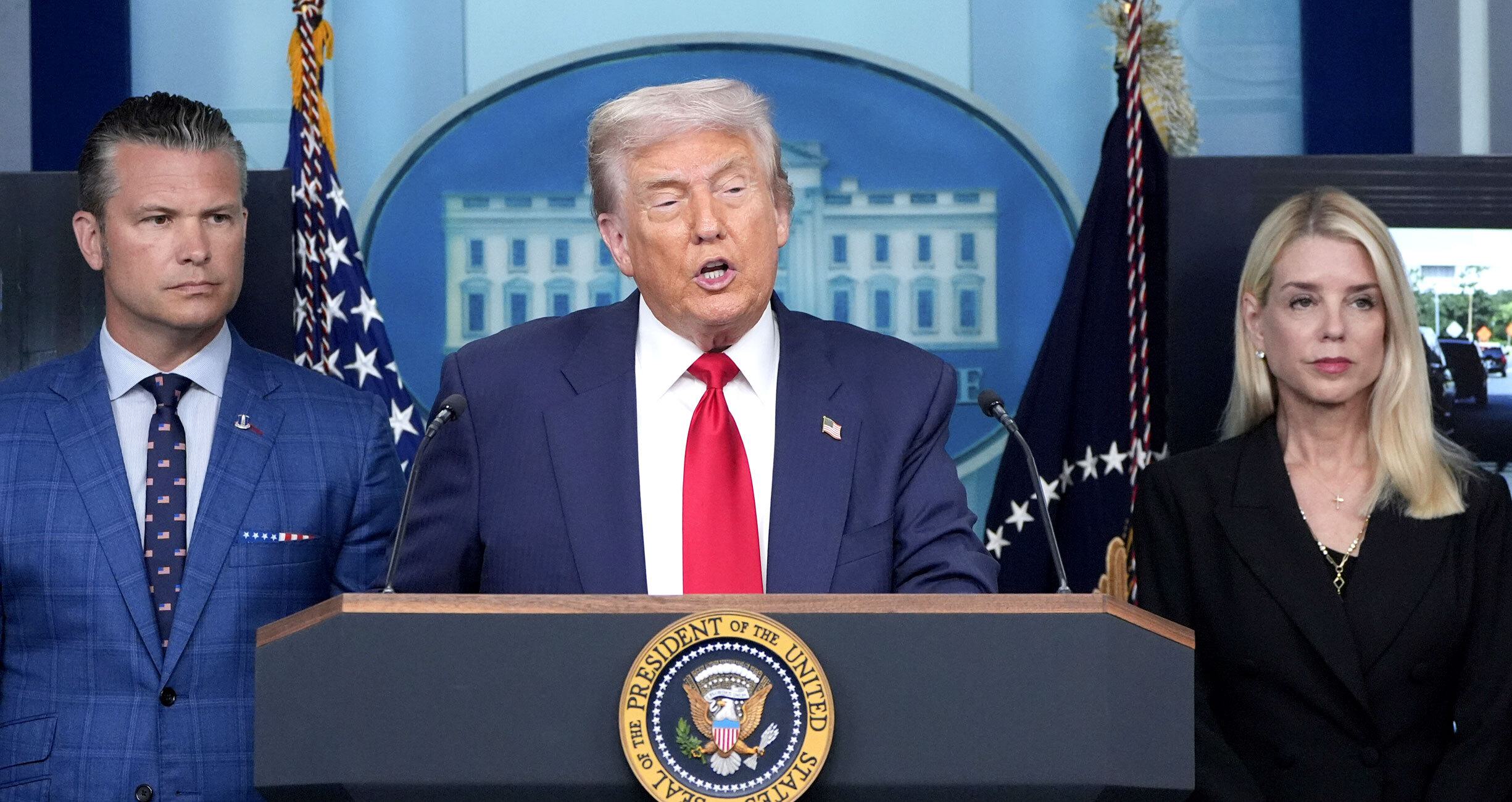
On August 11, at a press conference on crime in Washington, DC, Donald Trump declared “Liberation Day in DC” and announced a federal takeover of the Metropolitan Police Department (MPD), appointing DEA head Terry Cole as its commissioner. Trump ordered 800 National Guard soldiers to crack down on crime and clear encampments of unhoused people, issued executive actions to authorize the deployment, and left open the option of sending active-duty military. Flanked by top officials, Trump told law enforcement they could “do whatever the hell they want” and vowed to “change no cash bail” in DC, Chicago, and New York—falsely blaming it for rising crime.
The announcement followed a week of political theater after an image of a former Department of Government Efficiency staffer—beaten and bloodied after allegedly intervening in a carjacking—went viral. Trump seized on the incident to justify federalizing a crime crackdown, reviving past threats to override DC’s Home Rule, and ordering a seven-day operation, deploying federal law enforcement across the city. He also claimed youth were “randomly attacking” citizens, called for trying children as young as 14 as adults, and demanded the law be changed to “lock them up for a long time.” United States Attorney for Washington, DC, Jeanine Pirro, echoed him, attacking the district’s recent conviction sealing and sentencing reforms, even though 93 percent of people released under those reforms have not been re-arrested.
In reality, DC’s crime rates are falling, bail reform is working nationwide, and Trump’s plan will undermine—not improve—public safety.
DC crime is falling, but Trump is exploiting fear.
Trump’s latest actions escalate a long-running pattern: exploiting DC’s special political status to push punitive crackdowns. Because DC is a federal district, its autonomy is limited: the 1973 Home Rule Act granted local self-government through an elected mayor and council but preserved ultimate authority for Congress. Under the Home Rule Act, the president can take control of the MPD for up to 48 hours during “special conditions of an emergency nature,” with potential extensions. Unlike state governors, only the president can deploy the DC National Guard.
Despite Trump’s claim that crime in DC is “out of control,” the data shows the opposite: 2024 marked the district’s lowest violent crime rate in over 30 years, violent crime is already down 26 percent from last year, and the city’s homicide rate has fallen about 30 percent from 2023. These drops mirror national declines: FBI crime data from 2024 shows that murder fell by nearly 15 percent nationwide compared to 2023, violent crime fell by 4.5 percent, and property crime dropped by more than 8 percent—bringing the country to some of its lowest crime rates since the 1960s, according to at least one analyst.
These historic declines coincide with unprecedented investments in community-based safety programs. COVID recovery dollars and the Bipartisan Safer Communities Act have directed millions toward community violence intervention (CVI) and alternative crisis response. Baltimore, for example, committed $50 million from 2022 to 2025 to CVI, youth justice, and reentry programs that deescalate conflicts, provide life coaching and mentorship to youth at risk of system involvement, and deliver intensive case management to reduce the likelihood of future violence. These investments have likely contributed to a 56 percent drop in homicides since 2019 and a 24 percent decline in just the past year. The pattern extends nationwide: Chicago’s CVI investments have coincided with a 25 percent drop in homicides since 2019, while Los Angeles—also targeted in Trump’s press conference—is on track for its lowest homicide rate in nearly 60 years, aided by long-term funding for violence interrupters and crisis teams.
Bail reform works. Trump’s attacks are baseless.
At the August 11 press conference, Trump attacked “cashless bail,” falsely claiming it fuels violence in cities. This is a familiar talking point, but one thoroughly discredited by practice and research. Bail reform—or what Trump and others call “cashless bail”—ensures that people are jailed only if they pose a flight risk or a danger to their community and not because they can’t pay up.
Roughly 80 percent of people in U.S. jails—or 457,000 people—are detained pretrial. That means they are still legally innocent, but they remain incarcerated for days, weeks, or sometimes even years until their trial. The overwhelming majority of these cases do not involve people who pose a flight risk or a threat to their community; rather, people simply cannot afford to pay the money bail that’s been set in their case.
But bail reform does not harm public safety. In September 2023, Illinois became the first state in the country to end the use of money bail when the Pretrial Fairness Act (PFA) went into effect. More than a year later, there’s clear evidence that far fewer people are being jailed pretrial and more people are on pretrial supervision. With it, crime rates are down and failure-to-appear warrants have declined or remained stable across counties—meaning overall fewer people are missing their court dates (one of the reasons courts have used to justify pretrial detention). New Jersey slashed its pretrial jail population by 40 percent in four years after reforms that eliminated cash bail. There has been no change in gun violence, and crime remains well below both national averages and trends. New York’s bail reform law, despite relentless political attacks, has shown no link to increased crime, as confirmed by several studies. And more studies in Harris County, Texas (Houston) and Kentucky have also found that bail reform has not contributed to a rise in crime.
Money bail effectively requires people to choose between buying their freedom (if they can afford to), languishing in jail until their court date, or guaranteeing their release by pleading guilty. In fact, nearly all cases are resolved by plea, not trial—and pretrial detention puts unfair pressure on a person to plead guilty even if they are innocent. Abolishing this obviously unjust practice would significantly reduce the number of people behind bars and help end mass incarceration.
Unnecessary pretrial detention does not make communities safer. A few days in jail can cost people their jobs, their homes, and custody of their children. Research shows that even 24 hours in jail can be so destabilizing to people’s lives that it makes it more likely they will be arrested again in the future. So, needlessly locking people up—because they can’t afford to pay cash bail, for instance—can actually lead to less safety.
Yet the use of cash bail is widespread, meaning someone’s freedom remains contingent on the size of their bank account—despite evidence that cash bail is not necessary to ensure people show up in court.
DC’s autonomy is under threat.
Trump’s move comes as DC faces a $1 billion budget shortfall, a result of a congressional funding fight earlier this year. The Senate passed a bill to restore the funds, but the measure has been stalled in the House for months. Local leaders warn the hole could force cuts to essential city services—including police.
Trump’s “Liberation Day” agenda for DC is built on fear, misinformation, and the misuse of federal authority. Federalizing MPD, deploying the National Guard, threatening military intervention, and attacking bail reform will not make DC safer. Neither will punitive crackdowns like curfews or prosecuting kids as adults, which research shows fail to reduce crime and can cause lasting harm. Rather, these “tough-on-crime” tactics will destabilize communities and undermine some of the evidence-based reforms DC has already been implementing to address crime and disorder. The city’s most promising strategies to address youth crime—like restorative justice diversion, CVI, and programs to combat school absenteeism—are already demonstrating success in lowering future justice system involvement and keeping young people connected to supportive services.
The data is clear: DC’s crime rates are falling, bail reform works, and public safety comes from sustained investment in housing, mental health, youth programs, school engagement, and violence prevention—not from turning the capital into a stage for punitive political theater.