
Lessons from German Prisons Take Root in United States Facilities
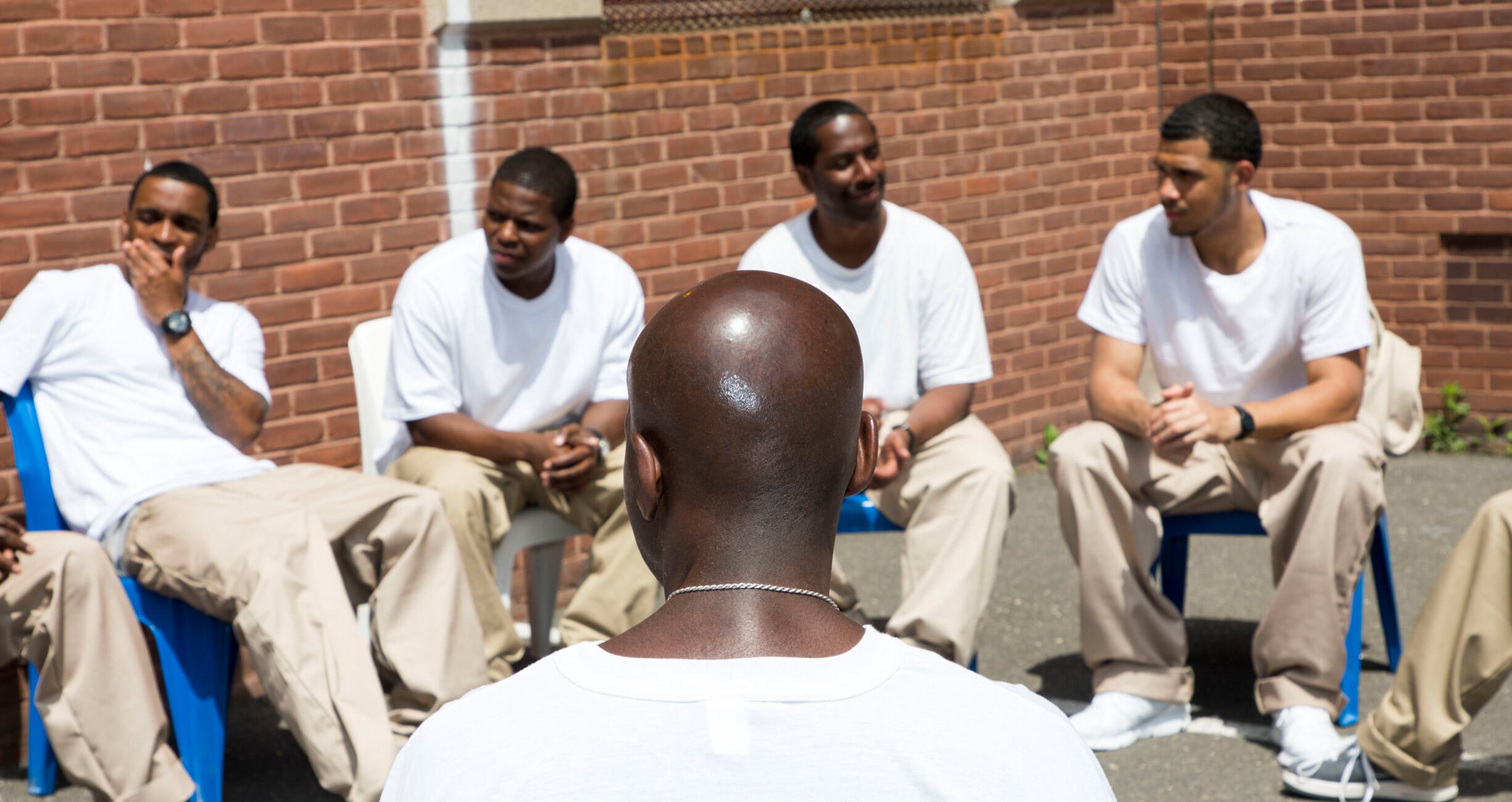
Visitors from the United States are often taken aback by the freedom afforded people in Germany’s prisons. “One of the biggest ‘whoa’ moments comes when you are in a hallway and a man walks by you with a set of keys and unlocks his own door,” said Brittany Brown, a senior program associate at the Vera Institute of Justice’s (Vera) Global Justice Exchange.
Since 2013, Vera has brought corrections leaders and justice practitioners to visit prisons in Germany, where the conditions of incarceration are designed to promote safety and dignity. Lessons learned have sparked real reforms in United States prisons, with young adult housing facilities from Connecticut to South Carolina inspired by the German model.
This year’s Global Justice Exchange was especially focused on ways the German model can inspire reform in New York, where new leadership offers unique opportunity for transformation. Stanley Richards, who was appointed commissioner of the New York City Department of Correction in February, walked the halls of several German prisons, along with Daniel Martuscello, commissioner of the New York State Department of Corrections and Community Supervision (DOCCS); Robert Mitchell, assistant commissioner for correctional facilities from DOCCS; and Nicholas Deml, the remediation manager for Rikers Island.
“From the ashes of the Holocaust, the German people have built a system that remembers and never relinquishes humanity,” Richards told Vera. “You are not the worst thing you have ever done, and your behavior doesn’t determine whether you retain your humanity and dignity.”
The German model
Germany’s constitution states that “human dignity shall be inviolable. To respect and protect it shall be the duty of all state authority.” This principle is reflected in German prisons, where the sole purpose of incarceration is to help people lead independent, productive lives in society once they are released. Corrections staff have training that resembles that of social workers in the United States. Incarcerated people wear their own clothes and prepare their own meals. Work and education are required and paid. Incarcerated people can obtain home leave. Solitary confinement is rarely used.
Richards was struck by the fact that in German prison cells, private bathrooms with doors come standard and the cells themselves are called “rooms.” “You maintain your privacy and dignity,” he said. “What really jumped out at me was the commitment to center humanity and dignity in everything that the Germans do with respect to criminal justice.”
Additionally, incarceration is used far less frequently and for shorter periods in Germany. Only about 4.4 percent of convicted people are sentenced to prison, according to Germany’s Federal Ministry of Justice, while the majority receive noncustodial sanctions and diversion. Indeed, people who have died awaiting trial in U.S. jails and prisons would likely not even be behind bars under Germany’s criminal justice model.
Putting lessons from Germany into practice in the United States
The first Global Justice Exchange trips to Germany inspired the creation of Vera’s Restoring Promise initiative’s young adult housing units, which aim to center dignity in all aspects of prison culture. The first Restoring Promise unit was opened in 2017 in the Cheshire Correctional Institution in Connecticut. The corrections officers and incarcerated people who worked on designing the new space also came up with the name: T.R.U.E., which stands for Truthfulness, Respectfulness, Understanding, and Elevating. The unit was built around personal accountability, education, and restorative justice rather than punitive isolation. In the T.R.U.E. unit, older incarcerated people serve as mentors for the young people, providing guidance surrounding conflict resolution, goal setting, and preparation for life after prison. “I feel like this program is going to make me into a leader and give me the skills I need to become successful upon my release,” said one T.R.U.E. participant. “I know I made mistakes at a young age. One of those mistakes brought me to prison, but that does not define me as a person,” said another person in the unit.
Richards visited the T.R.U.E. unit earlier this year and was impressed by the opportunities available to the young adults who reside in a pleasant environment and live in a way that closely models life on the outside. There is a structured daily schedule, leadership development, family connection activities, and mentorship. Rather than the drab grey of typical prisons, T.R.U.E.’s walls feature colorful paint, inspirational quotes, meaningful photos, and artwork.
“It was very exciting to see,” Richards told Vera. “It gave the young people purpose and hope. And staff felt like being in that kind of environment brought safety. They felt like they were part of helping people stay motivated and engaged.”
T.R.U.E.’s model has been replicated, resulting in seven additional Restoring Promise prison units across the country. In South Carolina, a randomized control trial showed that living in a Restoring Promise unit decreased young adults’ odds of being convicted for a violent infraction by 73 percent compared to being housed in the general population of a prison. It also reduced the odds of a punitive restrictive housing stay by 83 percent. Across all locations, young adults and staff report positive experiences resulting from the changes to prison culture implemented by Restoring Promise. Furthermore, corrections professionals working in these units reported feeling safe and finding purpose in their work.
How German principles can influence future plans for New York City jails
Richards inherited a New York City corrections system of about 7,000 people that is facing a staffing and conditions crisis. New York State DOCCS Commissioner Martuscello is leading a system that has been left in a precarious position after last year when two incarcerated people were killed by corrections officers and after a months-long illegal strike by staff. It raises hope that both leaders chose to join the Global Justice Exchange.
As the city works to close Rikers Island and transition to borough-based jails, Richards said he will be seeking opportunities to ensure that everyone touched by the New York City corrections system maintains their dignity and humanity. “That is non-negotiable for all of us,” he told Vera. He is planning to launch a young adult unit inspired by T.R.U.E. and codify language that will require respect for the human dignity of all people under the jurisdiction of the Department of Correction.
As he faces the difficult task of reforming New York City jails, Richards expressed gratitude for the diverse partners he met through the Global Justice Exchange. “It gave me additional wind beneath my wings to know I have partners in Oregon, in California, in upstate New York, and in Pennsylvania who are in this work and holding on to hope that tomorrow can be a better day for the criminal legal system.”