
When a Country Says “Never Again”
A visit to Germany’s prisons highlights a postwar commitment to human dignity. What would it take for the United States to do the same?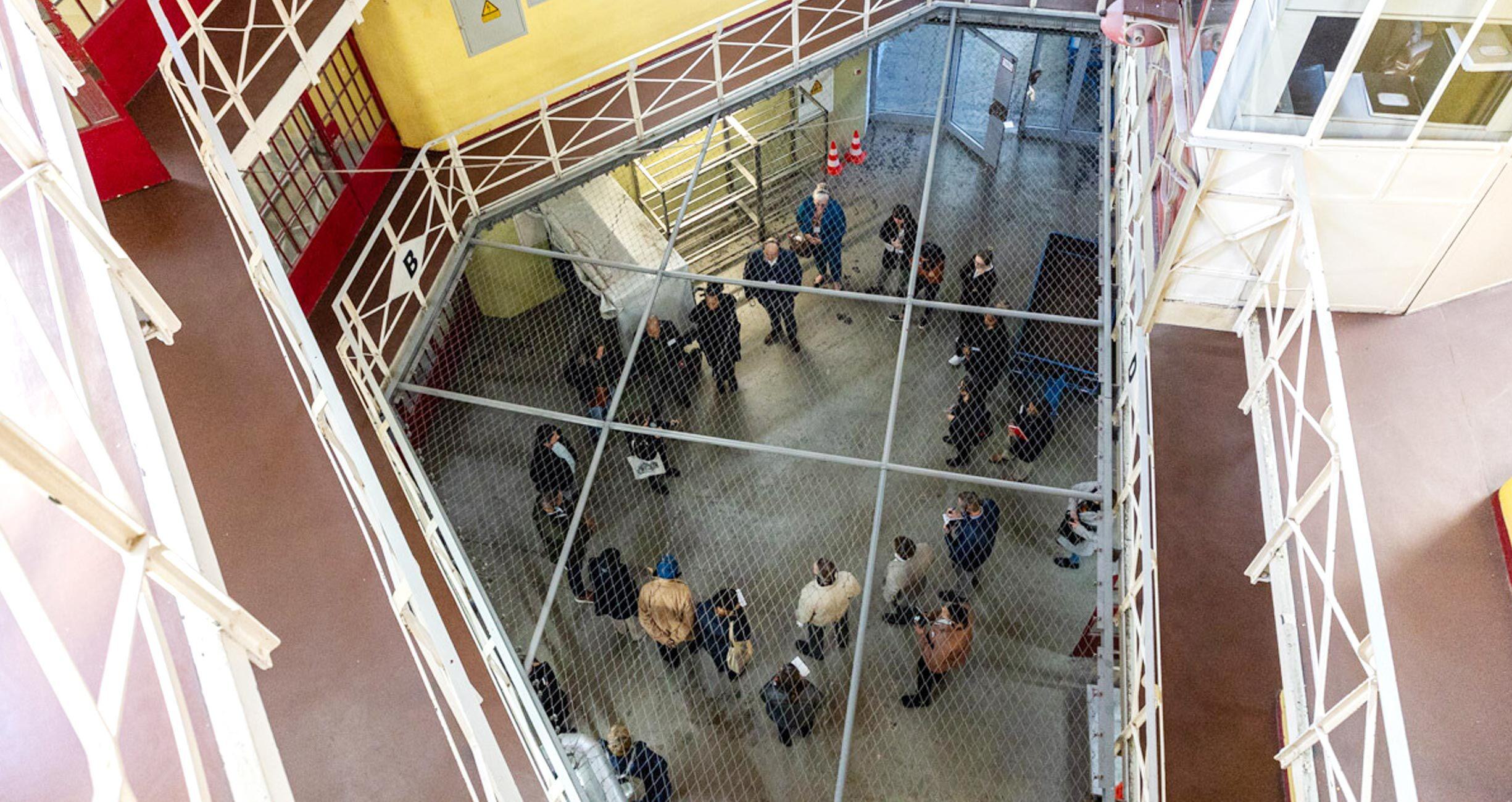
Since 2013, the Vera Institute of Justice has organized study delegations to visit Germany, where the conditions of incarceration are designed to promote safety and dignity. Vera’s goal is to stimulate breakthrough thinking and ambitious criminal justice system reform in the United States by learning about the German system’s operations, underpinnings, and philosophy. Early trips inspired Vera’s Restoring Promise initiative, which now has seven dignity-centered young adult housing units. In the essay below, Sheena Meade offers her reflections on her experience with Vera’s Germany Global Justice Exchange. Another delegation is visiting Germany from May 16 to May 22, 2026.
In the Everglades, when the water rises too high, the land burns. And while the fire looks destructive, it is actually a necessary reset. It offers the chance for the ground to grow something better.
Walking through Germany’s prisons, I realized that the country went through its own version of that reset. After World War II, Germany confronted the horrors it had caused. It examined how easily a system can turn against its own people. And then it rebuilt everything with one goal in mind: never again.
Today, its justice system is a direct response to that reckoning. It is what emerges when a country refuses to repeat its darkest history.
Denazification and rebuilding
After the war, Germany confronted its actions head on. The country went through a process the world now calls denazification. It examined every piece of its government: courts, prisons, police, media, schools.
This led to the country’s modern commitment to human dignity. It is why its Constitution begins with the following line:
“Human dignity shall be inviolable.”
Its prisons look the way they do now because Germany vowed that cruelty would never again be the norm.
America’s past still shapes our prisons today
I think a country’s prisons always reflect its history. For example, Germany confronted its harm, and its prisons are built around dignity. The United States, though, has never fully confronted its own harm, and our prisons are built around punishment.
Our justice system is the product of a history we still have not reckoned with: slavery, Jim Crow, segregation, and punishment.
We have never had a national moment where we said: “We will never do that again.” We have never examined our courts, our policing, our media, our language, and our prisons the way that Germany did.
We have never redesigned our systems from the ground up to prevent the worst parts of our past from repeating themselves.
This is why our prison system mirrors our history.
We have decades-long sentences, mass solitary confinement, the death penalty, media that treats crime like entertainment, and elections that weaponize fear.
Germany confronted its past, and then it built a justice system designed to avoid repeating it. You can see this philosophy in its outcomes.
Germany has one of the lowest incarceration rates in the world, with just 67 people incarcerated per 100,000 compared to 614 per 100,000 in the United States. Germany’s reconviction rate is about 34 percent within three years, with only 4 percent receiving an unsuspended prison sentence, compared to a 40 percent reincarceration rate in the United States, with rates as high as 60 percent in some states. Violence and suicide rates are low in Germany, and solitary confinement is almost never used. In some facilities, it has been used only two or three times in an entire year, or twice in five years. Germany also relies on shorter sentences, with 75 percent of sentences lasting a year or less and 92 percent lasting two years or less.
All of this stems from a country making a structural commitment to dignity and safety after witnessing what happens when a government abandons those values.
We have never made that choice in the United States, and our prisons tell that story every day.
What could this look like at home?
Up until this trip, I thought I had a clear picture of what American prisons were and why they looked the way they did. But so much of what I saw in Germany forced me to see our system with new eyes.
I realized that our system is not a natural truth. It was built out of a story our country has been telling for generations. This is a story about punishment—and deservedness. It’s also a story that has gone unexamined for far too long.
Germany showed me that a country can change its story. Its justice system is proof that when a nation confronts its past directly, it can build something new.
If a country with a history as dark as Germany’s can confront its harm and choose dignity, then I believe we can too. Change begins with the courage to tell the truth about where we are and the imagination to see what could be possible if we did things differently.
We are not trapped in the story we inherited. We can write a new one.
This essay was originally published on LinkedIn.
Vera believes in using our platforms to elevate diverse voices and opinions, including those of people who are currently and formerly incarcerated. Other than Vera employees, contributors speak for themselves. Vera has not independently verified the statements made in this post.