
Immigrants Facing Deportation Need Lawyers. Congress and States Can Help.
The federal SHIELD Act and New York’s BUILD Act would strengthen the immigration legal services workforce and help ensure people receive their fair day in court.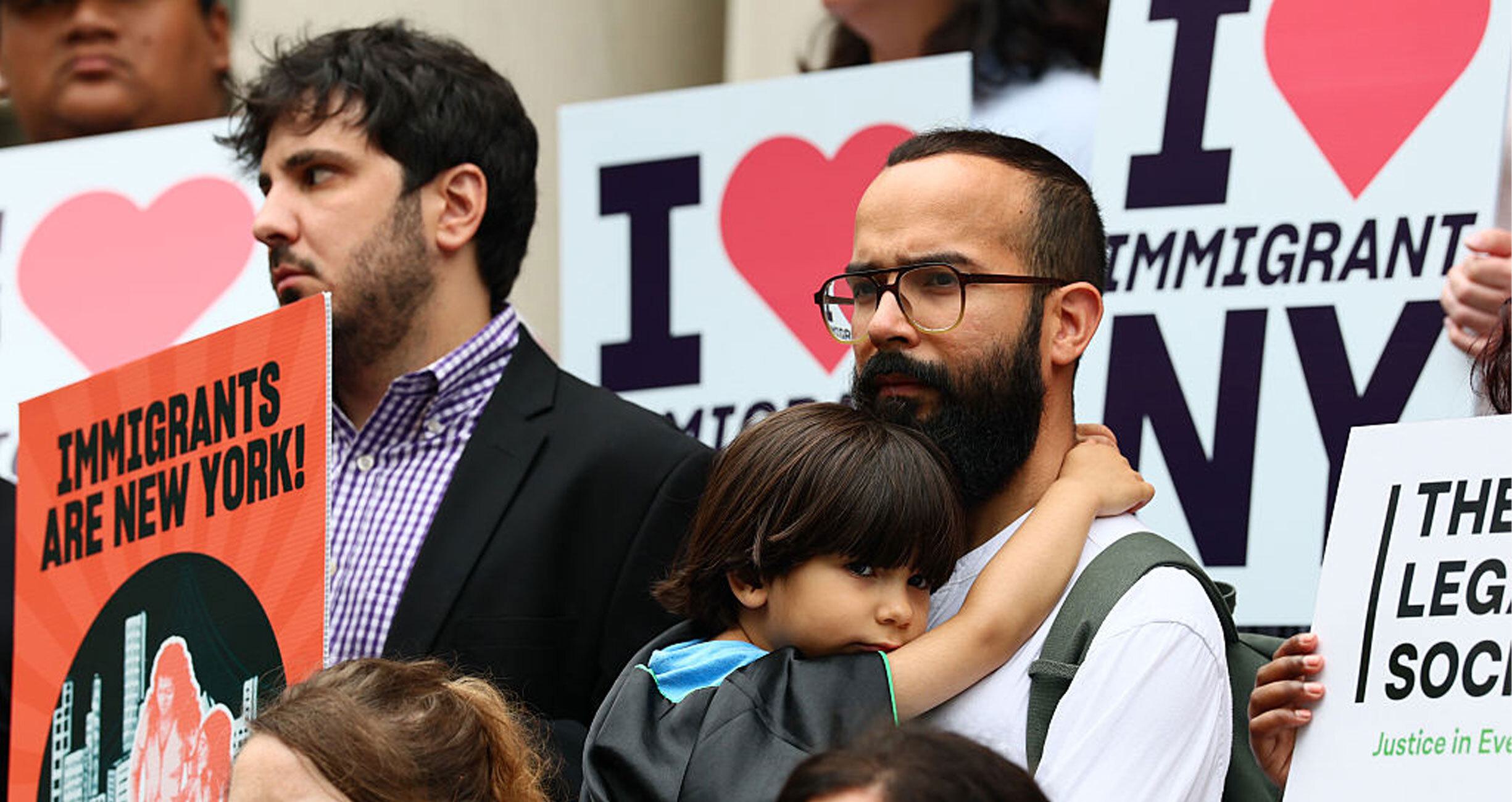
The family of five showed up in immigration court, just as directed. After fleeing danger in Ecuador, they had applied for asylum, a form of protection that allows people to remain in the United States if they meet certain legal requirements including being subject to persecution in their country of origin. Their legal representative, Constanza Bentancor, was prepared to help them present evidence to the judge that they merited this status.
Instead, the judge immediately “pretermitted” their case, denying their asylum application without holding a hearing, listening to testimony, or reviewing any evidence. The parents and three children were ordered to be deported to Honduras, a country where they have no ties. “They were terrified,” said Bentancor, who served as their Department of Justice (DOJ) accredited representative and works for Neighbors Link Community Law Practice in New York. “I am seeing so much fear.”
Luckily for this family, they, unlike many, had a legal representative. Bentancor filed a motion to oppose the devastating result, preventing immediate deportation. Far too many people are facing the hostile and supercharged Trump administration’s deportation machine alone.
As United States Immigration and Customs Enforcement arrests and detains thousands of immigrants each day, states and localities have stepped up to pass legislation and budget measures that fund legal services for people who are facing deportation and cannot find a lawyer. The Fairness to Freedom Act seeks to do this at the federal level. Even with these measures, however, more needs to be done to support the growth of the immigration legal services field, which has been stretched to capacity in recent years.
Congress and states can help protect their residents by passing legislation that strengthens immigration legal services. The federal Securing Help for Immigrants through Education and Legal Development (SHIELD) Act would establish a $100 million grant program to grow and strengthen legal representation capacity for immigrants and uphold due process nationally. By supporting the recruitment, training, retention, and development of staff and resources for immigrant legal defenders, this legislation would ensure that more immigrants have access to the representation they desperately need.
On the state level, New York’s proposed Building Up Immigrant Legal Defense (BUILD) Act (A2689/S4538) would fund immigrant legal services infrastructure, including workforce development, expansion of services into rural areas, and the integration of social workers to coordinate client support. This investment would strengthen and scale up the legal services that help protect the rights of people who face deportation across the state.
Such investments are critical in the face of unprecedented and unchecked spending on immigration enforcement. Using lawless, violent tactics, the Trump administration is sweeping thousands of people into detention each day, including some who have legal residency in the United States.
People facing detention and deportation are not entitled to a lawyer if they can’t afford one. As a result, many may be deported to dangerous conditions simply because they can’t afford an attorney to help protect their rights. Access to a lawyer remains one of the biggest determinants of whether someone will be released from detention and assert their right to remain in the United States. Indeed, people in detention facing deportation who have legal representation are up to 10.5 times more likely to obtain a successful case outcome than those without.
As of January 2026, 55 percent of people facing deportation in immigration court lacked legal counsel. Cuts to federal funding for immigration legal services programs, including the Unaccompanied Children Program, the National Qualified Representative Program, and Amica Center’s Legal Orientation Program, have depleted the ranks of immigration legal service providers. Organizations that provide legal services to immigrants who can’t afford attorneys are stretched thin, working overtime to help people understand and defend their rights. “It is impossible to help everybody,” said Bentancor. “There is a huge need.” Karin Anderson Ponzer, director of legal services for Neighbors Link, noted, “There are at least 100 cases our organization could assign today if we had another lawyer.”
Immigration legal services work has become exponentially more difficult as the federal government has sped up proceedings and attacked due process protections. Bentancor notes there have been hundreds of changes to immigration policy since the Trump administration began its mass deportation agenda. “Immigration law was already complicated,” said Bentancor. “Having an attorney makes a huge difference because there are a lot of . . . regulations and protocols that a person wouldn’t be aware of, especially if they don’t speak the language.”
DOJ accredited representatives like Bentancor are a crucial part of the pipeline of immigration experts entering the legal workforce. DOJ accreditation authorizes trained and qualified non-attorneys to represent people in immigration proceedings. Yet, few dedicated resources exist to fund the training and accreditation process, and the administration has gutted the office that oversees the accreditation process. The BUILD and SHIELD Acts seek to change this, in addition to developing the workforce of attorneys, social workers, and community navigators that are needed to effectively defend people from deportation.
To help defend the rights and well-being of immigrant communities, Congress should pass the SHIELD Act. States should also invest in infrastructure to expand immigrant legal services through legislation like New York’s BUILD Act. As the immigration system becomes ever more treacherous, people should not be forced to face immigration court alone. “We are living in such dark and dangerous times for immigrants,” said Bentancor. “Rights are being violated and we need to stand up for our neighbors.”