
How Legal Representation Turned the Tide For a Mother Facing Deportation
“I hope [my attorneys] will be able to help other people—the same way they helped me.”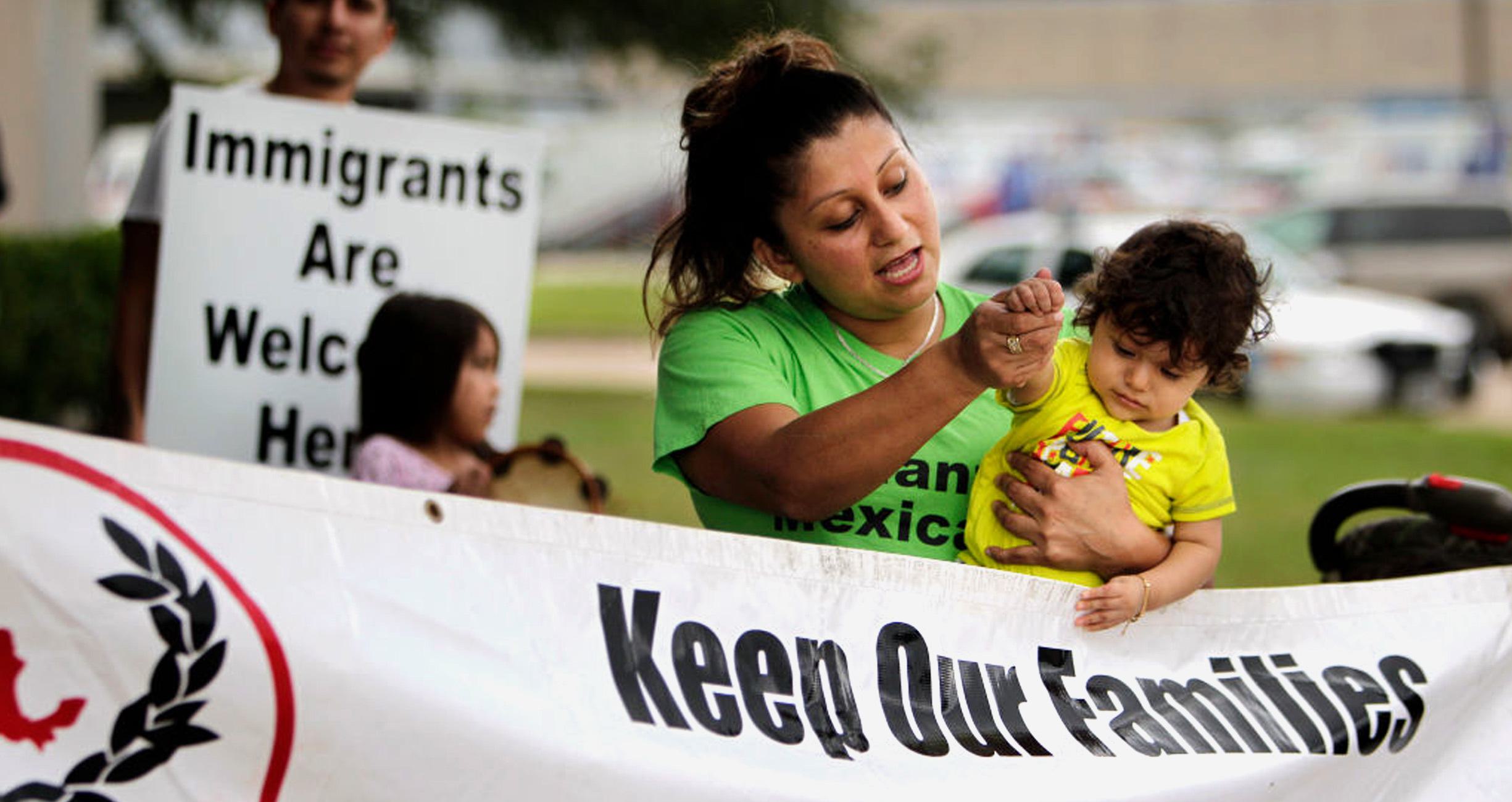
Shackled hand and foot on a deportation flight to Mexico, Naomi* sat weeping and praying. Her parents brought her to the United States when she was nine years old. Though she had struggled to navigate the complex path to legal residency, she had built a life in the Chicago area, with children and grandchildren she would be leaving behind.
When she was first detained, Naomi had asked the United States Immigration and Customs Enforcement (ICE) officers who arrested her not to handcuff her in front of her grandchildren, who had been sleeping over at her home when it was surrounded by plainclothes officers.
She woke her two youngest daughters and told them to call their older sister to pick them up because she expected to be detained. “I was trying not to cry,” she said. “I knew that it was ICE. I was afraid, but I answered the door because I have always tried to do the right thing.” The officers did not spare the children the sight of their grandmother being shackled.
Arrested in January 2025, Naomi was one of the first people caught in the dragnet of President Donald Trump’s massive detention and deportation expansion. Free legal assistance from the National Immigrant Justice Center (NIJC) helped her return home to her family.
After ICE arrested Naomi and took her away, her frantic children called the Family Support Network and Hotline of the Illinois Coalition for Immigrant and Refugee Rights, which connected them with NIJC. NIJC is part of the Midwest Immigrant Defenders Alliance (MIDA), which offers legal services free of charge to people in detention who are facing deportation in immigration court in Chicago. The Vera Institute of Justice (Vera) conducted a three-year evaluation of the MIDA program and found that being represented by a MIDA attorney increased a person’s likelihood of being granted relief from removal deportation by 366 percent relative to someone who was not represented by MIDA. NIJC attorneys quickly began exploring what legal mechanisms could be used to get Naomi home.
When Naomi was ordered removed in 2016, she did not have an attorney. Though a path to legal residency was open to her, she didn’t know she was eligible or how to claim it in court. “No one educated me on what to say and what not to say,” she said. “I was terrified. I told the judge I wanted to be with my children.” The judge advised Naomi that ICE would likely allow her to continue living in the United States despite her order of removal because she had young children. In fact, ICE allowed her to continue living in the United States for the next 10 years with an ankle monitor. But things changed during the second administration of President Trump, who had campaigned with the promise of the largest number of deportations in U.S. history.
After ICE arrested Naomi in January 2025, she spent nine months behind bars, separated from her children and family. She was transferred between four different “horrible jails” in Indiana, Kansas, and Kentucky. At times, she didn’t even know her location and worried deeply about her two youngest daughters, who were only 15 and nine years old. Her health suffered because she was not given medicine for her diabetes and asthma. She lost 55 pounds.
During her first week of detention, immigration officers told her they were going to take her back to Chicago to be deported to Mexico. She had an order of removal and therefore did not have the right to go before an immigration judge and was subject to mandatory detention.
“In Chicago, we were boarding the plane and I was talking to God,” she said. “I was crying over the fact that I was not able to say goodbye to my two youngest daughters. I was crying and saying, God please, I did not get a chance to say goodbye to my daughters, I am in your hands.”
The plane flew to another airport to pick up more people for deportation. Just before it took off, immigration officers came onto the plane and told Naomi to come with them. NIJC attorneys, with support from members of Congress, advocated to avert her deportation, buying time for them to file a motion to reopen and stay her removal with the immigration court. NIJC also filed applications for legal protection on the grounds of the gender-based violence she had experienced. NIJC ultimately secured her release through a habeas petition after nine months behind bars. Now, eight months after her release, Naomi has status in the United States and her deportation removal order has been terminated.
“She’s an amazing person,” said her NIJC attorney, Olivia Abrecht. “She now has a far less urgent fear of deportation, is on a path to citizenship, and has work authorization.”
Abrecht picked Naomi up from the bus station in Chicago after her release from detention and brought her to her sister’s house. “They are all angels,” Naomi said of the legal team that helped her. “I am so happy and thankful for their support, and I hope they will be able to help other people the same way they helped me.”
*Name changed to protect privacy.