
The Lawyers on the Front Lines of the War on Immigrants
The Trump administration is inflicting unprecedented violence and cruelty on immigrants. Legal service providers are trying their best to protect them, even as the system crumbles.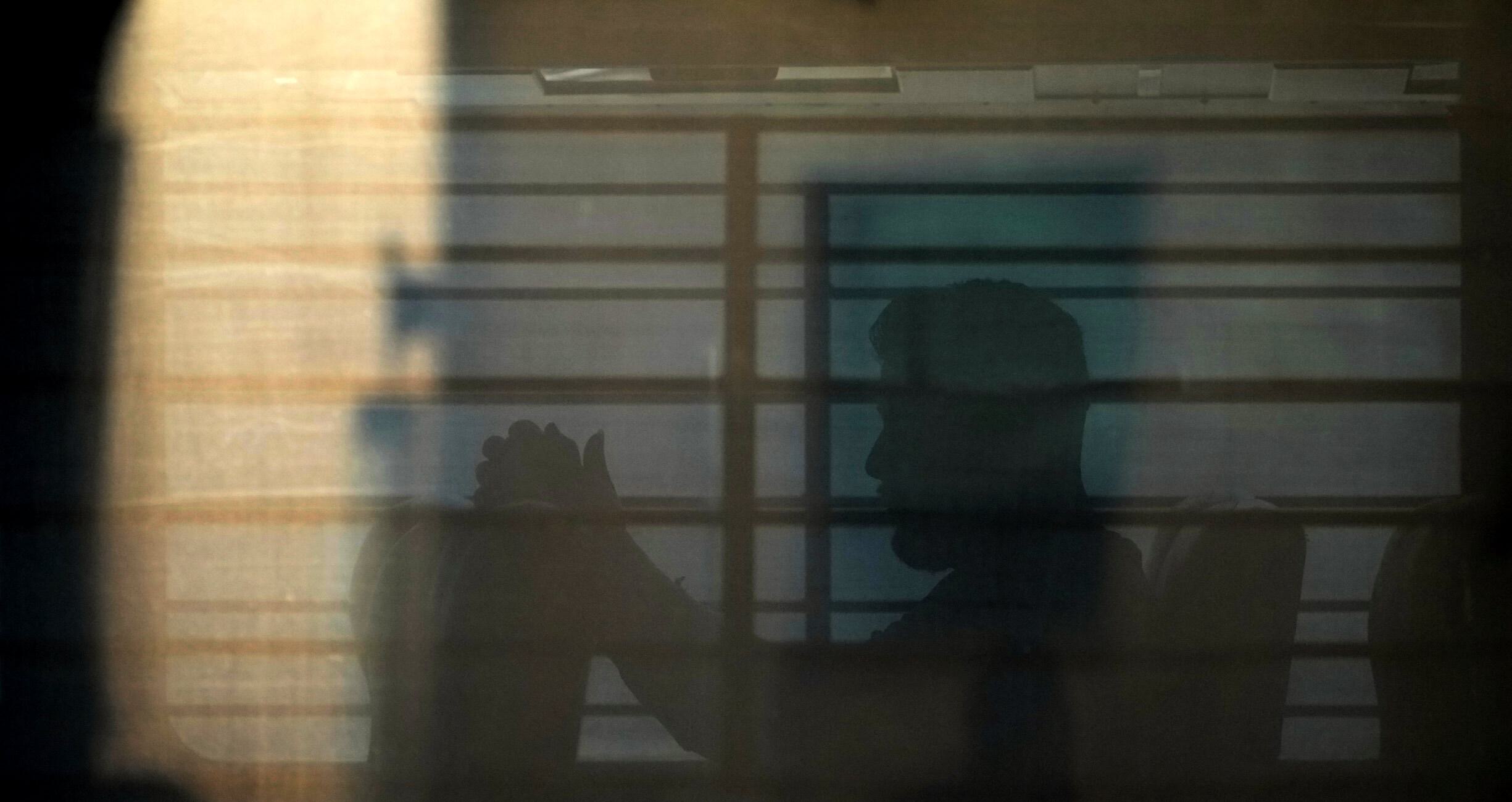
Maria Chavez has seen firsthand the horror her clients are living with. After fleeing violence in Sudan, Yousif* applied for asylum in the United States. Chavez, the legal director for the Partnership for the Advancement of New Americans, represented him through the process. During a break in proceedings as the judge considered his application, the two left to get coffee when an Immigration and Customs Enforcement (ICE) officer approached to take Yousif into custody.
“Please, can I just see a warrant?” Chavez asked.
The next thing she knew, the officer slammed Yousif’s face into the back of the elevator and held him in a position where Chavez feared his arm would pop out of its socket. After this experience, Yousif asked, “How is America different from Sudan?”
Such violent courthouse arrests are becoming common, said Chavez. As the Trump administration tramples on what minimal legal protections exist for immigrants, she and other legal service providers across the country are scrambling to protect their clients in an arena with nearly no rules.
“I need the world to understand that what we’re witnessing right now is unprecedented and deeply disturbing,” says Halinka Zolcik, an accredited representative for Prisoners’ Legal Services of New York. “I have never seen such aggressive, dehumanizing measures taken against migrants.”
Zolcik’s client Rosa* was with her four-year-old daughter at a grocery store in Upstate New York in March when ICE detained her, accusing her of hiding groceries in her child’s stroller. Under a new mandatory detention policy called the Laken Riley Act, Rosa was immediately imprisoned in a local jail, and her child was placed in foster care. They were separated for eight months, during which she was only allowed to speak with her daughter a handful of times. Rosa spent her days bereft and locked in immigration jail cells, praying that her daughter was being fed and cared for as she was shuttled to different detention centers. Up until her arrest, Rosa had been in the process of applying for asylum. She gave up that dream and agreed to self-deport. Though she asked to take her daughter with her, ICE deported her alone. In the chaotic landscape of Trump’s war on immigrants, the mother and daughter might still be separated if Albany County, which had foster care custody of the daughter, hadn’t intervened and sent their social workers to escort the child to Colombia to reunite her with her mother.
Zolcik says that Rosa and her daughter are among scores of immigrants who are experiencing unimaginable suffering as the Trump administration executes its chaotic plans to deport as many people as possible. Attorneys interviewed by Vera report that clients on the path to legal residency are being detained and shipped thousands of miles away from their families to detention centers known for human rights abuses. Even workers with valid legal status have been left to suffer in detention for weeks after federal officers—with a “let them sort it out later” attitude—racially profile them during indiscriminate raids. Zolcik and other attorneys interviewed by Vera report that immigrants who have done everything right and have court dates scheduled to make their case for legal status are choosing self-deportation to escape the hell of immigration jails. Teenagers are being forced to await their immigration proceedings in adult prisons, even while their court dates may be years away.
“Due process is just out the window,” says Margaret Hellerstein, an immigration attorney in Los Angeles. She reports that there are whole communities of people staying inside due to the overwhelming fear of getting swept up in ICE raids. “With these sweeps, if somebody doesn’t have pages of documentation on them, they just round them up,” she says. “Under the current law, anyone who entered without inspection can and will be detained. People are getting arrested when they report to their ICE appointments or when they leave immigration court. It’s a catch-22, because of course if they don’t go, then they can get arrested for breaking the rules.”
But the consequences of detention are severe. People who are detained are losing their jobs. Children are being traumatized as their parents disappear into ICE’s shadowy network of prisons, jails, and privately run facilities where immigrants experience all manner of abuse. “Every day we get a call from somebody whose family member is being detained,” says Zolcik.
In September, the Board of Immigration Appeals issued a decision stating that immigration judges lack the jurisdiction to grant bond to people who crossed the border without authorization. This decision reversed longstanding precedent and all but guarantees that more people will suffer in detention. “We went from, ‘It’s very hard to get bond,’ to, ‘Almost no one is eligible for bond,’” says Hellerstein.
Hellerstein has struggled to maintain contact with clients who are in detention, including one who has a serious medical problem and was taken to Adelanto ICE Processing Center, a privately run immigration prison with a history of human rights abuses that has been operating over capacity. “It’s not as if ICE was ever communicative,” she says. “Now, I have heard of the guards saying, ‘Sorry, we can’t find them.’”
Once people are detained, many lose hope, lawyers say. “Tons of people are self-deporting who could have had a chance at some relief because they can’t stand the conditions,” says Hellerstein.
Chavez emphasizes the fact that things are getting worse. “This is like [the first Trump administration] on steroids,” she says. “Everything that is happening, if you had asked me six months ago, I would have said ‘No, that’s not possible.’ I cannot wrap my head around how the courts are allowing it.”
Chavez and Zolcik both stress that, despite the Trump administration’s messages about ridding the country of so-called violent criminals, these sweeps and arrests are targeting people without criminal records who are trying to follow the rules. “This was never about doing things the right way,” Chavez says. “Every single person being arrested at court is trying to do things the right way. This is about a hatred of people deemed to be ‘other.’”
One of Zolcik’s clients had come to the United States under a legal parole program launched during the Biden administration for Afghans fleeing the Taliban. The man had a court hearing scheduled to determine whether he would be granted legal residency. In July he went to his ICE check-in, as directed, and was informed that his custody status had been “redetermined.” He was immediately taken into detention. He stayed there until mid-September, when he was finally granted asylum and released.
“It is so hard to see people getting treated like this,” says Zolcik. “It’s very harrowing because there has been so much detention and family separation that doesn’t make sense.”
When President Trump took office for the second time, the United States immigration system was already overloaded, dysfunctional, and discriminatory, with approximately 3.7 million people waiting for the outcome of their immigration proceedings at the end of 2024. The Trump administration has made things worse by ramping up enforcement and sweeping more people into detention, while also purging judges, installing unqualified replacements, and gutting federal funding for immigration legal services. These actions have destabilized the field and deprived people of critical services.
In this climate, it is critical to have legal representatives who can try to protect people’s rights. This year, Vera has found that, across both the state and local levels, jurisdictions are wisely investing approximately $350 million for immigration legal and support services, with four new states started investing in deportation defense in 2025. And legislative solutions have been introduced at the federal level (through the Fairness to Freedom Act and the Securing Help for Immigrants through Education and Legal Development (SHIELD) Act) and state level (through the Access to Representation Act and BUILD Act) to ensure that everyone facing deportation has the right to an attorney if they cannot afford one—and to help develop the workforce needed to implement that right.
In this bleak landscape, no one should have to appear in court alone without an attorney to protect their rights. “It’s hard to tell people to stay hopeful because I don’t see things getting better anytime soon,” says Hellerstein. “But you keep doing what you do, you can’t give up. There are still reasonable judges for now. You just try to help as many people as you can.”
*Names have been changed to protect subjects’ identities.