
ICE Accountability Depends on Publicly Funded Immigration Attorneys
Publicly funded attorneys are a critical tool in states’ ICE accountability efforts.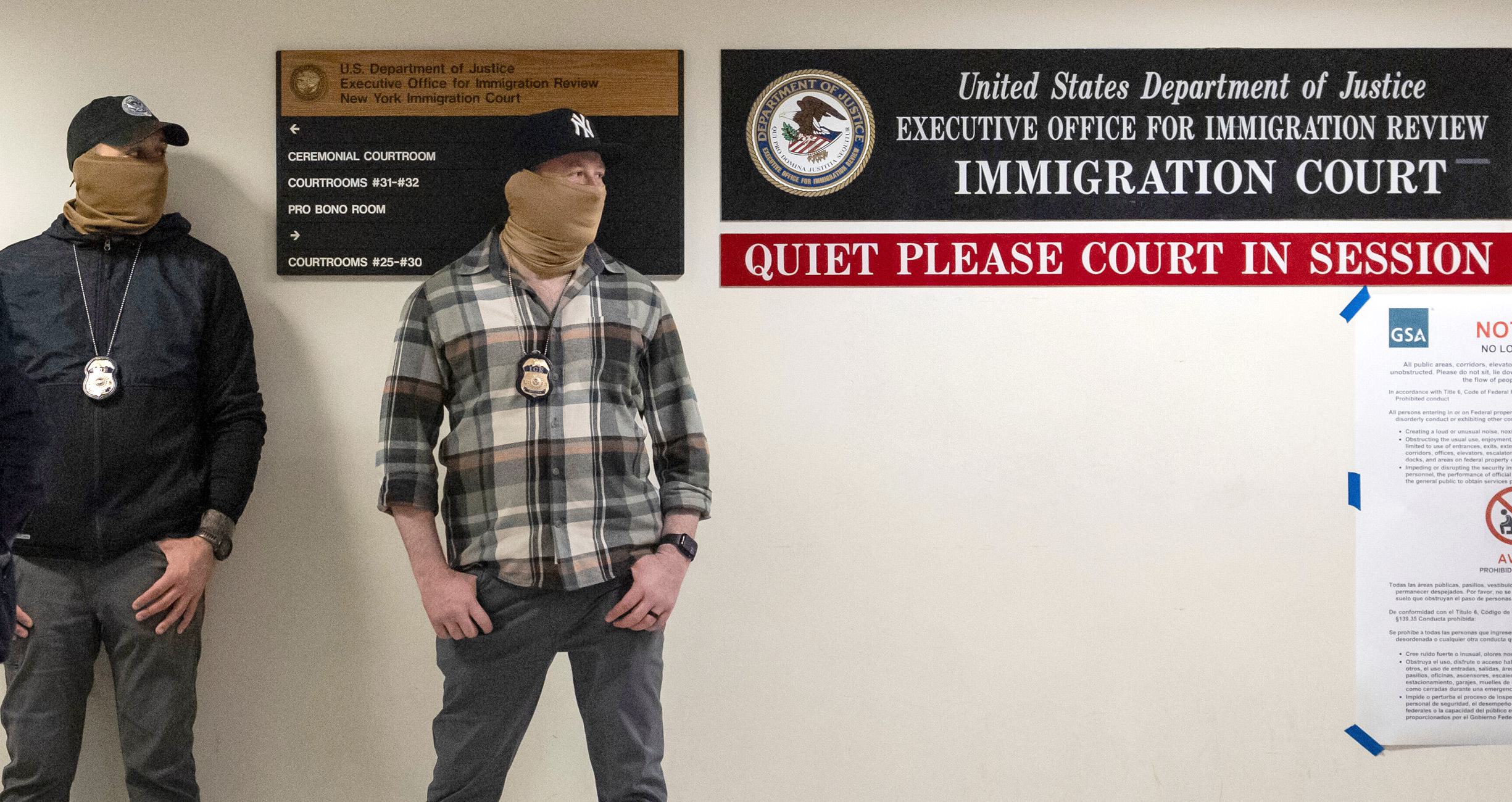
Andry José Hernández Romero was on the path to legal residency when the Trump administration labeled him a member of a Venezuelan gang and sent him to a Salvadoran mega-prison, where he spent 125 torturous days. The evidence against him? Tattoos of a crown on each wrist, one with the word “Mom” and the other with the word “Dad.”
On the one-year anniversary of his unlawful disappearance into El Centro de Confinamiento del Terrorismo (CECOT), Immigrant Defenders Law Center (ImmDef) sued the United States Department of Homeland Security (DHS), seeking justice for Romero and others unlawfully detained and tortured in CECOT.
Immigration legal services providers like ImmDef need support as they fight for Romero and countless others who suffer greatly as a supercharged U.S. Immigration and Customs Enforcement (ICE) agency tramples due process and human rights using unprecedented resources to execute mass deportations.
ICE abuses demand oversight
Following the agency’s deadliest year in two decades, public opinion is turning against ICE enforcement. Federal, state, and local legislators have proposed numerous bills to place checks on ICE, increase transparency, and allow people to sue federal agents when their rights are violated. But the system needs on-the-ground eyes and ears to monitor ICE’s conduct and identify these violations of law, and there already is a cadre of people who are best positioned to do so: immigration attorneys. These lawyers are on the front lines of deportation defense, able to witness and intervene to address ICE’s offenses. And so, as leaders seek to rein in immigration enforcement, publicly funded immigrant legal services must be part of the equation.
Attorneys have always been a critical line of defense against civil and human rights violations in the United States’ labyrinthine immigration courts and shadowy detention system. They intervene when immigrants are forced to sign voluntary deportation documents they can’t read and when judges order people released from detention but ICE refuses to free them. They help locate immigrants with disabilities when ICE abandons them on the streets without contacting their families, and they file suit when people are held without access to counsel or in conditions that violate their religious rights.
During this era of war on immigrants, it has become even more important both to pass legislation at all levels of government that promotes ICE accountability and to increase the number of publicly funded attorneys who can watch for ICE’s transgressions. For ICE accountability measures to truly function, immigration attorneys are needed to witness and document rights violations and connect people to the right enforcement mechanisms.
Immigration attorneys on the front lines
Examples of such attorney interventions abound. Attorneys with the Amica Center for Immigrant Rights and the National Immigration Project have filed a federal class action lawsuit on behalf of two women who were unlawfully detained in inhumane conditions in a federal building in Baltimore. Amid extreme overcrowding, ICE locked people in cage-like cells for days—without blankets, mattresses, showers, or medical care—in violation of its own policies. In a recent victory, a federal judge ordered ICE to end the inhumane conditions in the Baltimore hold room.
“This lawsuit is critical to stopping ICE from one of its most egregious abuses of power and ensuring that no human being is subjected to this inhumane, animal-like treatment that has no place in the United States,” said Adina Appelbaum, program director for the Immigration Impact Lab at the Amica Center for Immigrant Rights.
ImmDef attorneys who represented Romero and some of the 250 other Venezuelan men who were deported without due process to CECOT are suing DHS to help prevent others from experiencing this injustice. “If Donald Trump and Stephen Miller get away with sending people without due process to prisons in foreign countries to be tortured, then what happened to Andry can happen to any one of us,” said Lindsay Toczylowski, CEO and cofounder of ImmDef.
Investing in immigration legal services
Unlike in criminal court, people facing deportation in immigration court do not have a right to an attorney if they cannot afford to hire one themselves. As a result, far too many people who could have established a legal right to stay in the United States are deported to dangerous conditions, simply because they can't pay for an attorney to help them navigate the complexities of immigration law.
State leaders nationwide have worked to sustain, build, and grow public defender–style programs that provide free legal services to people threatened with family separation and exile from their homes. Last year, state and local jurisdictions wisely increased investment in immigrant legal services to approximately $350 million—from the previous year’s approximately $250 million—to give more immigrants a fighting chance against a hostile government. In 2025, four new states invested in state-level deportation defense programs, bringing the total to 14.
State legislators in New York should be commended for proposing more than $175 million for immigration legal and social services in the fiscal year 2027 state budget. Governor Kathy Hochul should enact this nation-leading investment in publicly funded immigration services, and legislators across the country should follow New York’s lead.
As immigrant families across the United States face increasingly violent and lawless federal attacks, more attorneys are needed to monitor, document, and fight injustices in detention centers, courts, and communities. Legal representation—regardless of a person’s ability to pay—is vital to hold ICE accountable and prevent further harm to immigrants, their families, and their communities. Lawmakers supporting ICE accountability policies must do so while also funding deportation defense to serve as the on-the-ground eyes and ears to help identify violations.