
ICE Abuses Show the Continued Need for Police Reform
As outrage against the federal agency rises, leaders must demand accountability from law enforcement as a whole.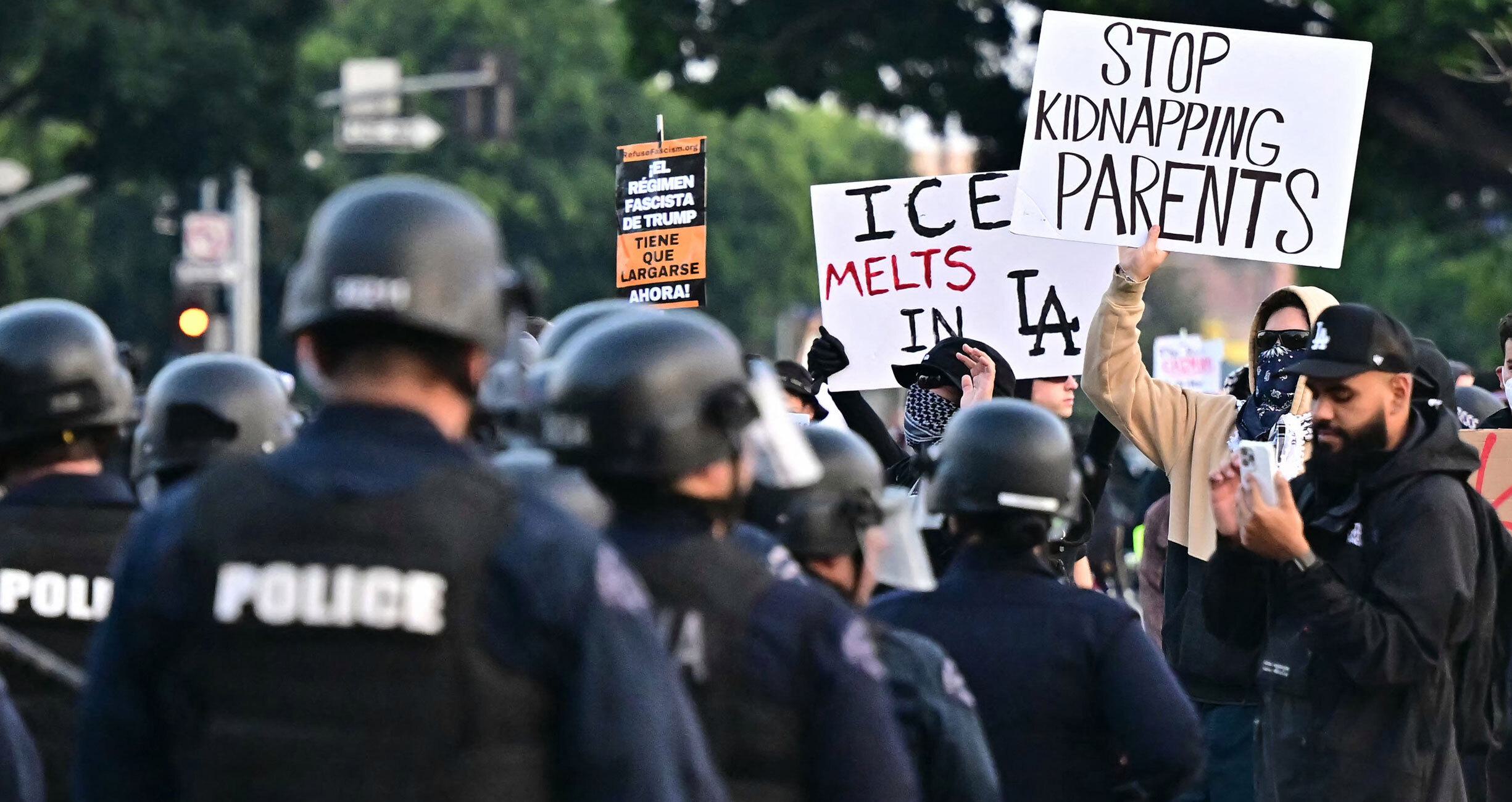
Across the United States, people are furious about the violence and unaccountability of U.S. Immigration and Customs Enforcement (ICE). At the beginning of this year, nearly two-thirds of voters said ICE had gone “too far,” and half said they supported abolishing ICE entirely. In a more recent poll, 58 percent of respondents who heard about the July killings of Lorenzo Salgado Araujo and Joan Sebastián Durán Guerrero supported abolishing the agency, and only 30 percent of people believed ICE’s use of force has been “necessary and justified.”
The federal agency’s violence and recklessness have managed to make local police look astonishingly well-behaved in comparison, but police violence has not slowed. For example, while ICE’s lack of training is often used to explain why their traffic stops so often turn deadly, the reality is that local police themselves still kill far too many people during unnecessary and pretextual traffic stops, even if most departments have been trained not to fire into vehicles as ICE does. When police rightly speak out about ICE eroding trust in local law enforcement, it belies the fact that many communities still do not trust police, and every incident of violence worsens the problem.
The national conversation about federal immigration forces is reminiscent of 2020, when, at the height of outrage over racial injustice and high-profile police killings such as that of George Floyd, 94 percent of people supported some degree of police reform, with 58 percent calling for “major changes.” And while that moment did lead to some major reforms, momentum for police reform has mostly sputtered, even as U.S. police now kill more than 1,300 people a year. Yet, the outrage over ICE actions shows there is continued political will for greater accountability for law enforcement as a whole, and state and local police must be part of that conversation.
Democratic Senator Jacky Rosen underscored the need for accountability, saying: “It’s simple: ICE should be held to the same standards as our local police departments.” Rosen is correct, but as Insha Rahman, president of the Vera Institute of Justice, recently noted, we should hold both ICE and the police to a higher standard of accountability. It’s worth remembering that, even as the Trump administration tries to shield police from accountability, most people still believe police brutality is a serious problem. Rather than demanding that ICE aspire solely to that exceptionally low bar of modern-day police accountability, lawmakers should focus on improving accountability for all law enforcement. After all, people in the United States broadly want to both support the police and hold them accountable.
In practice, most police are not meaningfully opposed to ICE—in fact, in much of the country, they are deeply enmeshed. When, in the face of national outrage over the recent killings, President Donald Trump demanded a “softer touch” to immigration enforcement, Homeland Security Secretary Markwayne Mullin decided to carry out the administration’s mass deportation agenda through more cooperation with local police, using 287(g) agreements. These agreements deputize local police to perform specific federal immigration enforcement duties. The massive expansion of 287(g) agreements throughout the country, particularly in states like Texas and Florida, shows how local agencies have readily adopted the same goals as ICE, effectively functioning as one unified force.
Many local agencies are willing to use excessive force and engage in racial profiling in the service of mass deportation, especially with millions of dollars of incentivized funding for personnel and equipment on offer. Moreover, local police are responsible for a substantial number of violent crackdowns against protesters and legal observers at protests in response to ICE’s tactics. If people living in the United States are going to get accountable immigration enforcement, it will require closer attention to local police as well.
As strategists at the Vera Institute of Justice have written, the shortcomings of prior police reform efforts should inform ICE reform demands. While ICE promised in July that all its offices would have body cameras within 60 days, lawmakers should remember that widespread adoption of body cameras has not stemmed the tide of police violence. Body cameras are in fact more often used to prosecute civilians than hold police accountable. Already, ICE’s new body camera policy says that they will only release body camera footage when is it in their “best interests.”
Most of the proposed ICE reforms, in fact—like body cameras, identification requirements, use-of-force standards, and training—will be meaningless without reliable accountability mechanisms. This is a key lesson of police reform efforts, and it’s one reason many policing experts and legal pundits have argued that the best way to “reform” the Department of Homeland Security would be to give individuals the ability to sue federal agents and even policymakers.
The rise of attention to ICE violence is an opportunity to pivot public and political attention to both longstanding and newer policing issues. For example, ICE’s traffic stop violence should reignite momentum for policies to limit low-level, non-safety-related traffic stops. Difficulties suing federal agents should lead state and federal lawmakers to again question “qualified immunity.” Meanwhile, as ICE’s AI-powered surveillance expands, there is also a backlashgrowing around widespread police abuses of networked surveillance cameras, with officers regularly being caught using license-plate readers to stalk and harass people and being instructed to obfuscate their use of the technology in arrests and stops.
Right now, the attention of many voters and much of the media is on the worst abuses of federal forces under President Trump. Understandably, given how egregious their actions have been, local police look more responsible in comparison. But in the end, ICE and police abuses are not distinct, separate problems, but deeply related ones. If we as a country want accountable law enforcement, we must also continue to demand accountability from law enforcement at the local and state levels as well.