
Traffic Stops Were Already Harmful. ICE Is Making Them Worse.
It’s not just a training problem. Indiscriminate traffic stops are dangerous and unnecessary—no matter who conducts them.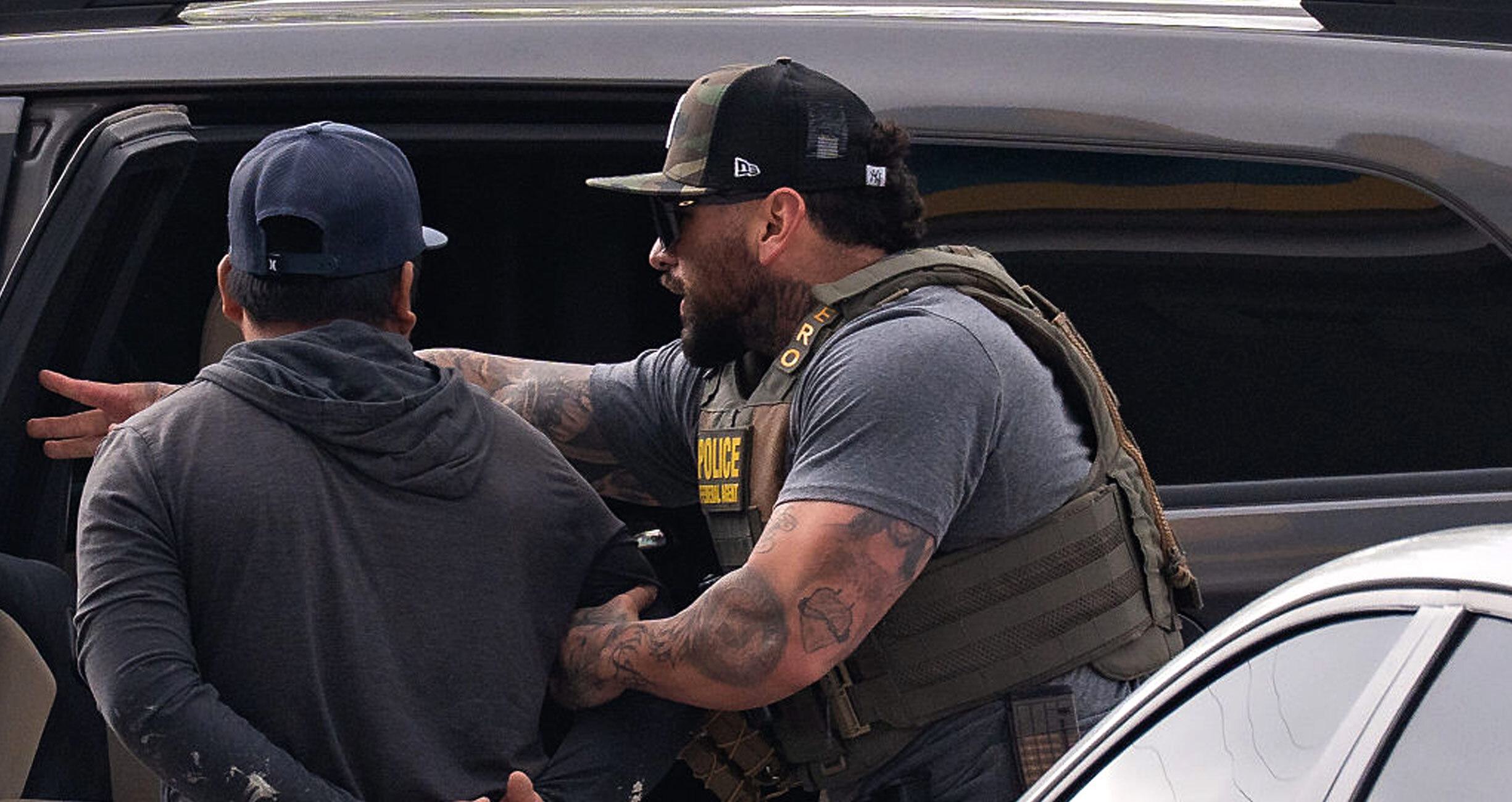
A decade ago, the killings of Sandra Bland and Philando Castile forced people in the United States to reckon with the harms of traffic stops—especially for people of color. In the years since, many jurisdictions have become safer by curbing the use of traffic stops as a law enforcement tool. But in much of the country, the harms have persisted. Now, U.S. Immigration and Customs Enforcement (ICE) is bringing new attention to this issue and why it matters.
In July, ICE agents killed Lorenzo Salgado Araujo and Joan Sebastián Durán Guerrero during traffic stops. These were, unfortunately, not isolated tragedies but the inevitable outcome of ICE tactics under the Trump administration. ICE has failed to heed clear lessons from law enforcement about the safety or efficacy of traffic stops and, with less training and accountability than state and local police, the results have been lethal.
A recent ACLU report on abuses and civil rights violations by immigration agents found widespread evidence of recklessness in traffic stops, stating that agents “appeared to use their cars as weapons . . . drove in a way that endangered people or initiated car chases 15 times, rammed vehicles into people’s cars 14 times, and hit people with cars six times.” Federal agents have shot into cars at least 19 times during President Donald Trump’s second term, a practice so unsafe that many police departments largely ended it decades ago.
Following widespread outrage at the most recent killings, the Department of Homeland Security announced a temporary pause on traffic stops. But President Trump quickly reversed the decision after concluding that abandoning the tactic would make him look “weak.” He declared on social media, “We CANNOT give up one of ICE’s most important and effective Crime Fighting tools, THE TRAFFIC STOP!”
Trump issued the reversal despite ICE officials acknowledging that many of their agents lack sufficient training for vehicle stops. As former ICE acting director John Sandweg told PBS News Hour, “Historically, traffic stops have never been a major part of ICE's operations,” and, as a result, “they've never been a major focus of training, like you’d see with other law enforcement agencies.”
Yet focusing only on training overlooks a larger lesson that many jurisdictions have already begun to recognize: traffic stops themselves are often overused—and can turn deadly. In 2025, police killed 112 people during traffic stops. So far in 2026, data tracked by researchers at Mapping Police Violence shows that number is already more than 90 people. Police are trained to approach every traffic stop as though it could become dangerous—according to a common police expression, there’s “no such thing as a routine stop.” Yet research finds that serious assaults on officers during routine traffic stops are rare compared with the millions of stops conducted each year.
Even when stops do not result in police violence, traffic stops as a whole cause extensive psychological and economic harm, with Black and Latino drivers disproportionately stopped, searched, and subjected to use of force. The frequency of these stops—and their disparate impact on communities of color—only compound distrust in police and prosecutors, who depend on the public’s cooperation to address crime. One study even found that traffic stops depress voter turnout.
President Trump’s insistence that traffic stops are a vital crime-stopping tool echoes a common law enforcement argument, but in reality, the benefits are overstated and outweighed by the harms. Police routinely use the pretext of minor traffic infractions to search cars for guns and drugs. This needle-in-a-haystack approach yields relatively few results. For example, the largest eight California police departments confiscate firearms in only about 0.5 percent of all traffic stops. And many of these stops have little to do with road safety: one study found that, in 2019, California’s 15 largest law enforcement agencies spent more than 80,000 hours making traffic stops that did not even end in a warning.
Fortunately, law enforcement has landed on one solution that can work for ICE: simply stop making unnecessary traffic stops. Across the country, 54 jurisdictions have already limited the use of low-level traffic stops for non–safety-related violations, like having an air freshener or burned-out taillight. This allows law enforcement to spend its time policing real roadway danger, like impaired driving. Research shows that shifting traffic enforcement focus to moving violations rather than non–safety-related infractions can reduce racial disparities in stops and searches, improve road safety, and improve trust in law enforcement—all without any negative impact on public safety.
ICE cannot conduct stops for traffic violations (though it can have local police do it for them). But like police using the pretext of a tinted window to search a car, ICE can stop drivers they suspect of being undocumented on the basis of apparent race or ethnicity (as a result of a Supreme Court ruling in September 2025, Noem v. Perdomo, which reversed a ruling from two lower courts that had barred immigration agents from stopping people without reasonable suspicion). And as with pretextual stops, ICE’s racial-profiling dragnet approach seems similarly ineffective and harmful, as evidenced by the fact that Lorenzo Salgado Araujo was not the person they were looking for. ICE needs to learn the lesson many jurisdictions have already begun to recognize: these stops are not worth the time and potential for harm.
If lawmakers wish to rein in ICE, then ending the use of traffic stops is the obvious answer. Traffic stops should only be used when there is a vital public safety interest, like stopping dangerous drivers—not to pull over drivers ICE suspects are undocumented. Moreover, lawmakers must demand greater accountability for ICE officers, who are prioritizing arrest quotas and choosing aggressive tactics over safety because, in the words of one officer, “they’re going to be protected.”
Senate Minority Leader Chuck Schumer has said, “We simply want ICE to follow the same standards that most law enforcement agencies do.” But even as ICE makes local law enforcement look comparatively restrained, police still kill more than 1,300 people a year. These killings should reignite momentum for state- and local-level policies to reform traffic enforcement. And at the federal level, lawmakers must demand more: ICE should not just meet the minimum standards of local law enforcement. It should adopt the best, evidence-based practices on safe, accountable policing. This means ending the use of traffic stops that do not deliver public safety.