
Holiday Funk: What Christmas is Like in Prison
Facing my 17th holiday behind bars, here’s how I connect and seek joy.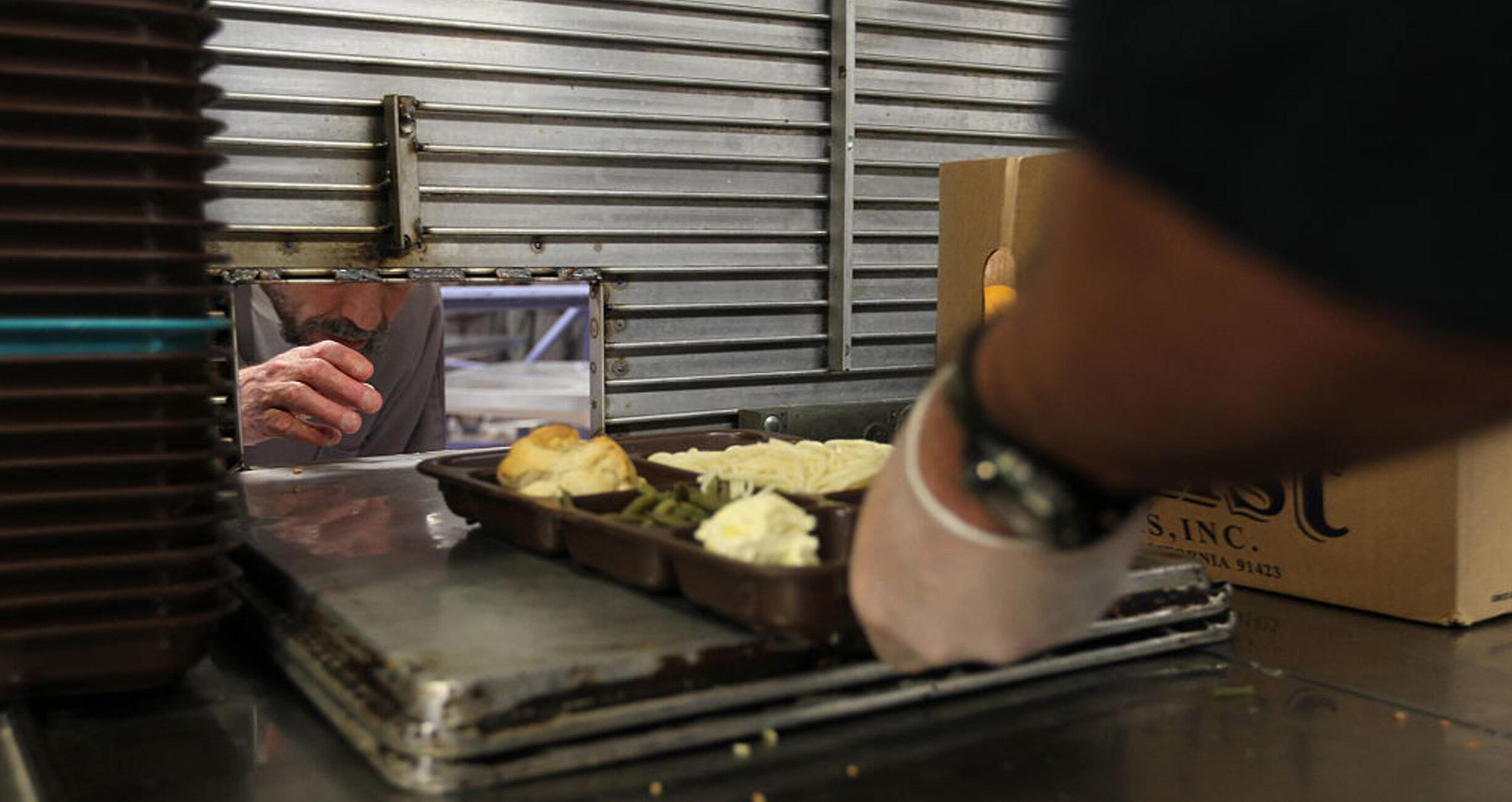
During the holidays, millions of imprisoned men and women struggle with the knowledge that “home” is an unimaginable place. A considerable application to combat this basis is belonging; it is where joy is felt and expressed, where home can be a place incarcerated people share. Joy is essential to keeping a strong connection. How to properly navigate this emotion inside of prison is a question I will try to explain through my gathered experiences.
My holiday morning begins with sending out JPay messages to let family and friends know the time I will call them. Over the past 16 years of Christmases in prison, I’ve learned to keep my email messages short and simple to ensure they arrive promptly. When family doesn’t answer after calling two or three times, a wavering depression sits in me throughout the day. So, it is important to set phone time beforehand. It also minimizes conflict with other incarcerated folks who plan to call their loved ones too. Holidays in prison are all about booking telephone use; it’s like planning a trip to Boston for winter. The vacation is to the snow-covered phones, gripping a cold receiver and an occasional wiping of a runny nose with a tissue. For me, three o’clock is the best time to reach my family and friends. By that time, their bellies will be full of turkey and stuffing, with a banter of holiday cheer.
Inside Michigan prisons, the cheer is not in the food the facility serves. Holiday meals for the incarcerated are a slab of processed meat, dry dressing, and a pumpkin pie that is still frozen when they serve it. Nothing is exciting about prison holiday meals. I, as I have for the past 12 years, will secure a spot in the microwave line and ask a home boy if they want to put in on making a meal: rib tips (made out of store-bought summer sausages), mac and cheese, self-made biscuits (made out of saltines and graham crackers), and banana pudding. This will be on my mind, my holiday dinner. With microwaving a meal of that magnitude in the day room, it will be about the waiting period and attitude of others wanting to make something extravagant too.
Not everybody will be in the best of moods, but people doing time make do. Some incarcerated men make hooch from apple juice and potatoes or play music while slapping cards or dominoes on the metal tables. Some escape from their need to connect with home because maybe that bridge has burned down or been destroyed; maybe hearing from a loved one on Christmas day will stir up mixed emotions and start a conflict over the phone that’ll carry over into the rest of their day.
To recreate a home in prison, the incarcerated will express a belonging with their fellow cellie or cubie. Joy is an infectious emotion, and it has to be carried delicately while in a place that holds misery. Joy has to be spared from this negative environment in order to keep a person sane. But in the back of a mind that is doing time, deep behind the crevasse of soul, there is that loneliness waiting to catch a person on their way to somewhere—maybe to the bathroom or at the sink washing their hands, maybe in a daze standing in line for the microwave or a shower. This loneliness wanders in the minds of the incarcerated; it’s the reason some lose their sanity, holiday by holiday, and become bitter, nasty, and angry—this place from within is what prison creates after time.
Church service is another savior among men and women during the holidays. Praise together lessens the absent feeling of family. This also gives the incarcerated strength to get through the holiday. Joy happens in the collective clapping and singing, in hearing a preacher who is in the college unit practice his best sermon on a congregation. When the time is near to call an ex-lover and wish their new family a happy holiday, for the child’s sake, that shared strength will be pulled from that earlier sermon: love all.
The prison-made card will not be the child’s topic of conversation, but it will be timeless, which means it will matter in the future. It counts. Afterwards, more service or dayroom hooch, holiday cheer, and laughter with people forced to be here because of their choices. Wipe the tears and laugh more; keep laughing until crying is something so funny, no one can tell the difference. Become numb so as not to feel as much shame as the year before, and hope that it is almost over.
On my 17th year of celebration, all I want to do is call family, eat, and get ready for the next day. I call home to make it count, to be involved where it matters. I’ve realized that home—and that space for joy—doesn’t come from a sermon or bottle of spoiled juice; it comes from within. And though my presence is severed by a phone line and my loved ones are thousands of miles away, the power of self can express love with a simple hello, a reminiscence, and a laugh.
Demetrius “Meech” Buckley is the winner of the 2021 Toi Derricotte and Cornelius Eady Chapbook Prize, and his work has appeared or is forthcoming in The Yale Review, The Offing, Scalawag, The Massachusetts Review, Bear Review, Boulevard, The Rumpus, PRISM, The Progressive, Resentencing Now, and elsewhere. He is the finalist in the 2024 Rattle Poetry Prize and received the Editors’ Choice Award in the CRAFT 2024 Memoir Excerpt and Essay Contest. His writing has been honored by the Ghost Story Supernatural Fiction Award and the Soul-Making Keats Literary Competition. Demetrius is hopeful, working as an editor for Apogee Journal’s Freedom Meridian.
Vera believes in using our platforms to elevate diverse voices and opinions, including those of people currently and formerly incarcerated. Other than Vera employees, contributors speak for themselves. Vera has not independently verified the statements made in this post.