
The Harms of Disrupting Prison Family Visitation
For people in prisons, family visits offer a way to help sustain hope. But for almost seven months this year, New York State DOCCS deeply limited them.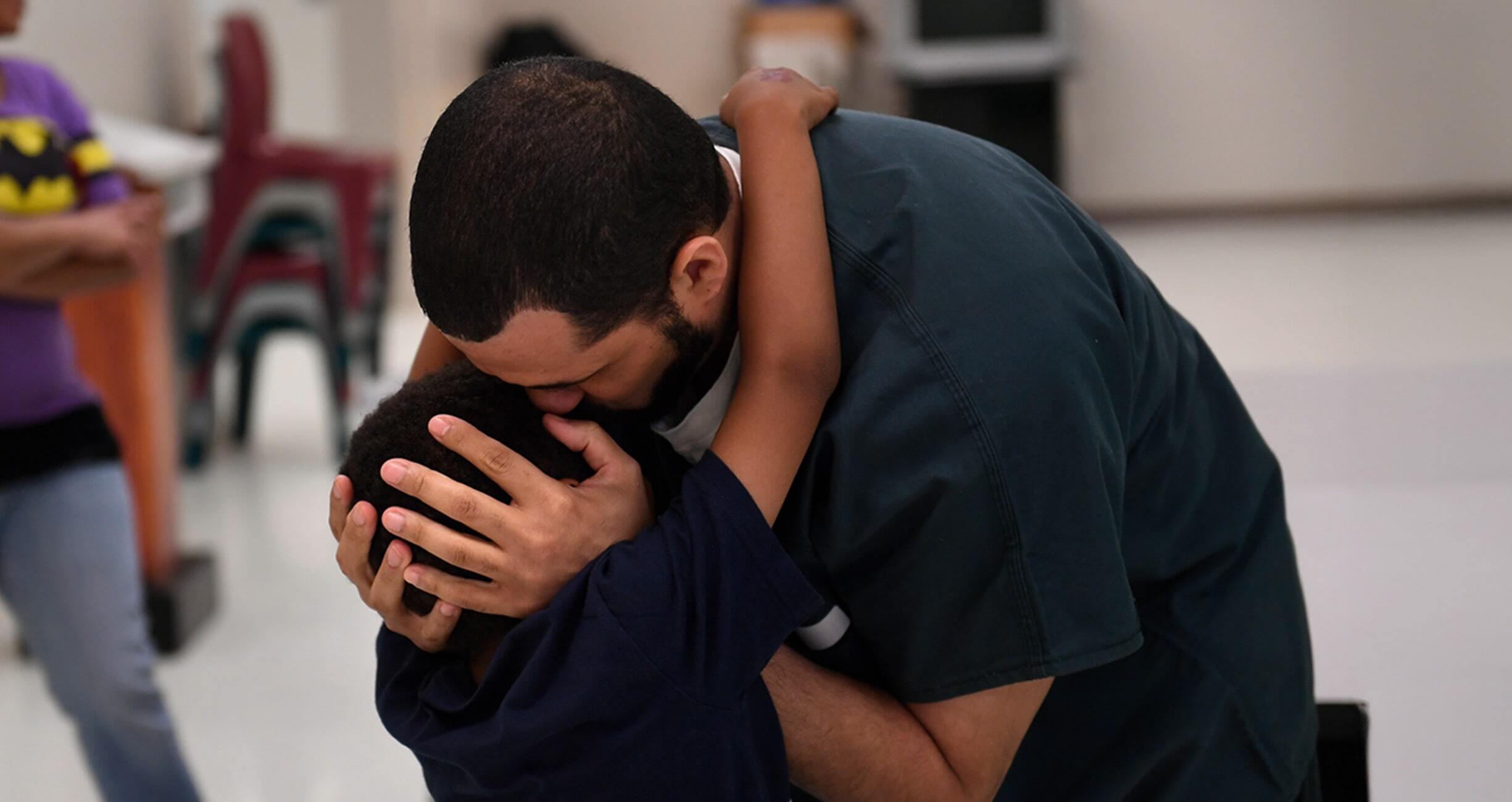
Most people have somewhere they go that makes them feel good, a place to relax and recharge. Most people have moments to look forward to and make time for. For some, it could be a garden, a quiet room, a park, or maybe just a front porch and favorite chair. For my grandson, he enjoys sitting in a storage bin while watching television. Even children need a break.
For the incarcerated, our moments of peace and comfort are spent with our families and friends. However, since the start of the New York State corrections officers’ strike this past February, programs that offered us such opportunities remain suspended or limited in many correctional facilities. For example, the Family Reunion Program (FRP), also known as trailer visits, is designed to provide approved incarcerated people and their families the opportunity to meet in privacy for an extended period of time. The goal of the program is to preserve, enhance, and strengthen family ties that have been disrupted by incarceration. This program was suspended after the strike and was only recently reinstated. Sadly, the times available for these visits are one-third of what they were before the strike, and visits are only available on Mondays to Wednesdays. This means that families who can only do weekend visits because of work schedules are left out. And regular in-person visits are limited to just weekends in most facilities—making it difficult for families and friends to adjust their schedules and causing extremely long waiting times to enter the facility. These current policies are placing burdens on families and friends.
Before the strike began, I had been scheduled for a trailer visit on February 24. My neighbor and close friend had also been scheduled for a visit with his family on February 19. Needless to say, after the strike began on February 17, both of our visits were cancelled. I saw the negative impact it had on him, but it also affected his wife, 10-year-old twins, and six-month-old daughter. His twins couldn’t process what was going on. “Why doesn’t daddy want to see us?” they asked. He told me how difficult it was to comfort and explain the situation to them.
This not only affects people who are actively enrolled in the FRP, but also those wanting to apply or waiting for approval. The program is an incentive for people to participate in educational and therapeutic programming and remain out of trouble. This type of disruption to strengthening our family ties while doing time is extremely stressful, counterproductive, and leaves us all feeling hopeless.
The suspension of the FRP caused suffering in our families and weakened our ties to one another. These anticipated moments brought structure to our lives and a joy that cannot be replaced. We serve our time from trailer to trailer. Doing time is more manageable when you have something to look forward to.
Sadly, these changes have set many men and women back several years in terms of rehabilitation. Many of us feel that accommodations to maintain family ties or make serving time easier to cope with are not being made. Some fear that this will become the norm as we continue to see privileges being taken from us.
The situation will only contribute to the mental health crisis that already exists in our facilities. Just last year, 25 people held by the New York State Department of Corrections and Community Supervision died by suicide, the most in at least two decades. In my opinion, this is a result of hopelessness. These new protocols and restrictions are creating an unhealthy environment and exacerbating an already stressful situation. They are triggers associated with mental health that cannot be overlooked.
Even during times like this, DOCCS must remain focused on its main objective: to keep rehabilitation functioning within prisons. This means pivoting to ensure that much-needed programs remain running and that family ties are thriving. Much more needs to be done to ensure that the men and women doing time are doing it productively. Positive reinforcement changes behavior. Let’s focus on that approach as opposed to wielding the stick!
David Sell is a husband, grandfather, writer, hospice volunteer, and advocate for prison reform. In an attempt to bring about awareness and create change, he writes for the millions of families and people who have been impacted by mass incarceration. He can be reached on JPay at David Sell, 97b2642, NYS DOCCS Inmate Services.
Vera believes in using our platforms to elevate diverse voices and opinions, including those of people currently and formerly incarcerated. Other than Vera employees, contributors speak for themselves. Vera has not independently verified the statements made in this post.