
Children Don’t Belong Behind Bars
States should follow Minnesota’s lead and raise the minimum age of criminal responsibility rather than subjecting young children to arrest, prosecution, and incarceration.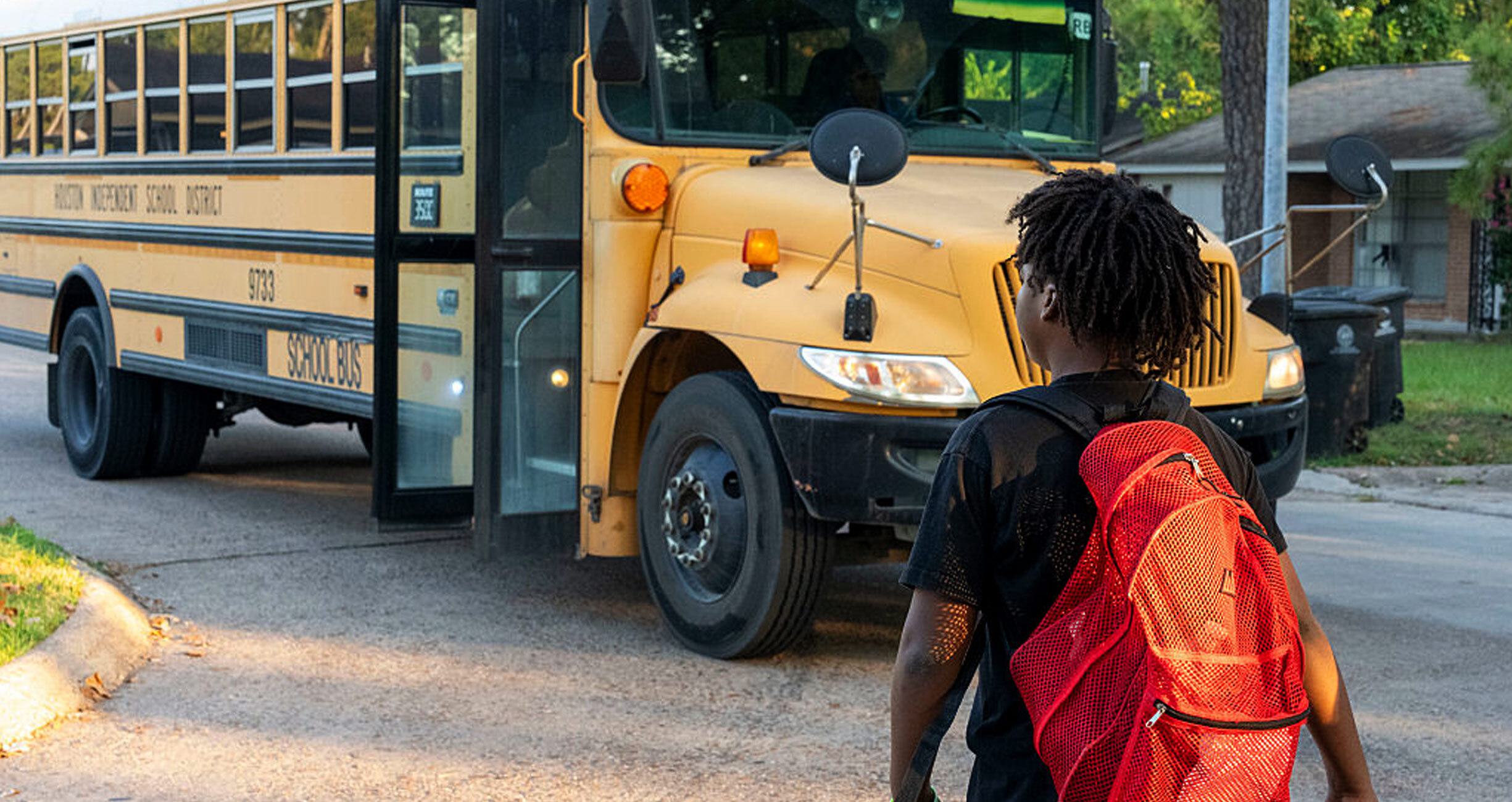
Just two weeks after his 10th birthday, police arrested Tamara Frazee’s son Trystan at an elementary school in Minnesota. Trystan has autism, and he became very dysregulated when police intervened in a disagreement between him and school staff. He was charged with five felonies and spent two days locked in a juvenile detention center.
After Trystan was detained, his psychiatrist wrote a letter saying he had the emotional regulation of a toddler and warned that detention could make his condition worse: “It’s not a criminal illness. It is not bettered with incarceration.” Indeed, in the detention facility, Trystan’s condition worsened, and he suffered a mental breakdown. After his release, Frazee said, Trystan didn’t want to return to school. “He was afraid anytime he went to school he would go to the detention center,” she told the Hennepin County Attorney’s Office. “It’s impacted him pretty severely . . . He really struggles still with trust.”
In August, Minnesota raised the age at which children can be charged with crimes to 13 years old. Other states should adopt similar policies to keep elementary-aged children out of the criminal justice system. Without a clear legal threshold for arrest, children can face handcuffs, prosecution, and detention for behavior they may not even have the developmental capacity to fully understand or control. Young children are often unable to fully understand legal proceedings and judges in Minnesota consistently found them not competent to stand trial, meaning that cases against them could not constitutionally go forward anyway. Raising the minimum age recognizes that young children need age-appropriate responses to challenging behavior, including mental health care, family support, and other resources. Criminal charges are not the answer.
Twenty-two states including Georgia, Illinois, and Michigan, have no minimum age for criminal prosecution. Most states that have a minimum age set it between seven and 10. In Florida, seven-year-olds can be arrested. In Arizona and Washington, eight-year-olds can. Louisiana, Pennsylvania, and Texas set the age at 10. In far too many states, police routinely arrest, handcuff, and jail elementary school children—often for minor misbehavior. Such treatment is developmentally inappropriate, harmful, and does not serve public safety.
The National Juvenile Justice Network lays out several reasons why governments should not detain or prosecute young children:
- Their brains are not sufficiently developed for them to understand or meaningfully participate in criminal proceedings.
- Early contact with the justice system has a negative impact on future behavior.
- Younger children face a high risk of violence and abuse while in custody.
“When we criminalize children, it leads to worse outcomes,” said Sarah Davis, deputy county attorney and director of the children and families division at the Hennepin County Attorney’s Office. Before Minnesota raised the age of criminal responsibility to 13, Davis would bring coloring books to jails where terrified children in jail-issued uniforms were held behind steel doors. “There would be little feet swinging under the table next to me,” she wrote in an op-ed. “Feet that couldn’t touch the ground.”
Research shows that confinement results in higher rates of rearrest and reincarceration for youth compared with community alternatives to confinement, and that incarceration produces counterproductive outcomes for public safety. Yet, young children are facing criminal chargesfor offenses as minor as stealing candy, with Black and Latino children far more likely to be criminalized for developmentally typical behaviors. “It’s really important that we don’t put little kids who need help in jail,” said Sandra Feist, a former member of the Minnesota House of Representatives, who advocated for the change.
Protections for young children like Trystan are especially important in schools, where police officers may be called on to respond to behavior that would be better addressed by educators or mental health professionals. Millions of children attend schools that are staffed with police but have no psychologist, nurse social worker, or counselor.
Schools and communities need to invest in supportive services to address challenges children might face. “We should not be locking elementary age children in jail cells, behind steel bars because we as system leaders have not taken the steps we need to, to make sure the resources that are needed are in place,” said Davis.
Trystan eventually returned to school, though it took him a long time not to hide under his desk whenever he saw the elementary school’s police officer. “We have to do better at meeting our children where they are at,” his mother said. “Locking them up is never the answer at that age.”