
Rikers Was Never Meant to Be a Mental Health Clinic. As the Notorious Jail Closes, Here’s How New York Leaders Can Break the Cycle.
People with mental illness on Rikers are caught in a system that wasn’t designed to treat them. Now the city has an opportunity to replace it with one that centers care and dignity.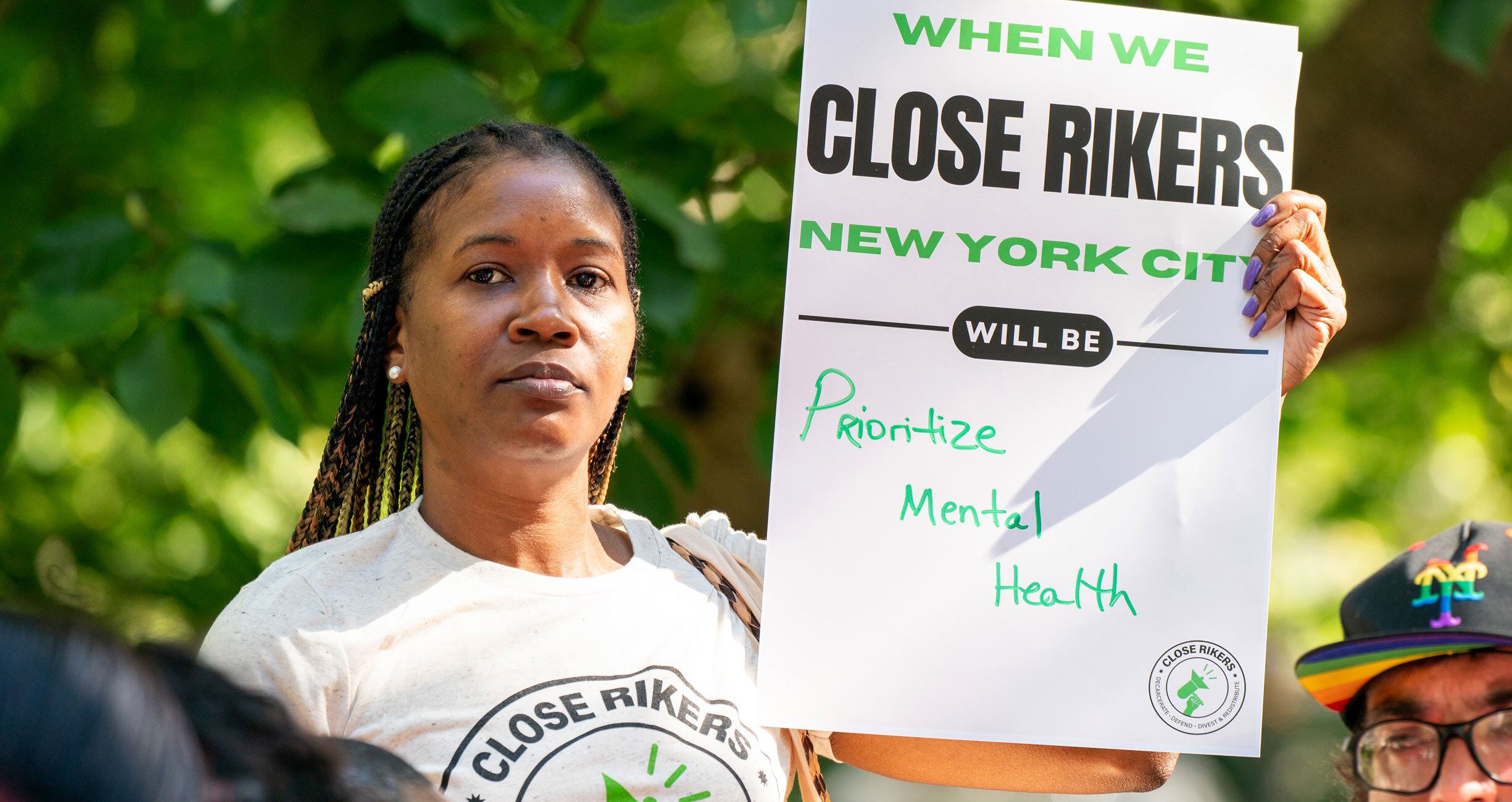
For decades, Rikers has been forced to serve as a mental health clinic—a role it was never designed to play. Now, New York City is beginning to change that. At the end of June, the New York City Department of Correction (DOC) announced the closure of North Infirmary Command on Rikers Island. It began moving incarcerated people with acute medical needs to a new 104-bed therapeutic unit at Bellevue Hospital—essentially, a secure jail facility embedded within the hospital and built around high-quality care. Mayor Zohran Mamdani’s administration has made progress toward closing Rikers Island, and the new facility signals its commitment to providing incarcerated people proper medical care and dignity. The next logical step is to do the same for people with mental health needs.
Rikers Island is New York’s largest mental health provider, a clear indication that something has gone profoundly wrong. In just five years, from 2020 to 2025, the share of incarcerated people needing mental health services rose from 44 percent to 60 percent, while the rate of serious mental illness rose from 17 percent to 22 percent. The crisis is most acute for incarcerated women: four out of five women on Rikers receive mental health services. (DOC does not provide data for transgender or gender-expansive people.) By August 2026, more than 3,900 people on Rikers needed mental health services, and more than 1,400 had been diagnosed with serious mental illnesses—far more than the jail’s 980 specialized mental health beds can accommodate.
How did this crisis in New York City’s jails come to be, and what can city leaders do about it?
Why is Rikers the state’s largest mental health provider?
Most people on Rikers—about 86 percent—have not been convicted of a crime and are still awaiting trial, stuck in jail almost always because they cannot afford bail. People held pretrial are flagged for mental health needs at higher rates: 60 percent, compared to 52 percent for people serving a jail sentence. A significant number of people awaiting trial—several hundred on any given day—are stuck in an overwhelmed competency restoration system to evaluate if they are mentally fit to stand trial. If found unfit, they must wait for a bed to open in one of New York’s state psychiatric hospitals. Once on Rikers, people with mental illness are also more likely to remain in jail: research has shown that people flagged for mental health needs stay on Rikers roughly 69 days, or 33 percent longer, than incarcerated people with no mental health needs.
But Rikers was never designed to be a psychiatric hospital, and corrections officers did not sign up to serve as mental health providers. Missed medical appointments and poor access to medication have been perennial problems. Although DOC’s specialized mental health units do provide better care than general housing, overcrowding forces medical staff to triage, reserving the limited number of beds for only the sickest. Thus, overcrowding can push people who stabilize back into general population too soon. It is sadly unsurprising that suicide is a leading cause of death on Rikers and the Board of Correction reports dozens of self-injurious behavior incidents every month. Since 2019, at least 16 people have died by suicide while in DOC custody. Long waits for mental health screenings, difficulties placing people on suicide watch, premature removal from observation, and poor staffing can all contribute.
How can New York City connect people in jail to mental health care?
The Mamdani administration has already shown it understands the need for action. In his remarks celebrating the opening of the Bellevue outposted therapeutic unit, Mayor Mamdani celebrated the emergence of “a system that delivers real care, treats people with dignity, and makes our city safer for everyone—incarcerated people, corrections officers, and all New Yorkers.” So how can the administration reduce the number of people with serious mental health needs in city jails and connect them to support?
- Treat people before they reach the point of crisis by investing in community-based care before a mental health crisis becomes a jail stay. There are approximately 1,500 New Yorkers waiting for community-based mental health treatment from the city’s and state’s Intensive Mobile Treatment and Assertive Community Treatment teams. These teams connect New Yorkers with mental health needs to medication, counseling, case management, and referrals. Adequately funding these multidisciplinary teams at both city and state levels can help people to remain in their communities and manage their mental health before it becomes a crisis. Doing so will help reduce the number of New Yorkers with mental illness who wind up arrested and in jail.
- Divert people with mental illness from jail when treatment is the better answer. Currently, judges can divert people with substance use disorders to drug treatment court, where they can receive connections to treatment instead of jail or prison. The Treatment Court Expansion Act, which Albany lawmakers are considering, would expand this model to people with mental illness. The act would allow judges to refer people accused of crimes to mental health court for treatment. One study showed that participants diverted to Brooklyn’s Mental Health Court—opened in 2022 and the first of its kind in New York City—were 46 percent less likely to be rearrested than people in a comparison group.
- Overhaul competency assessments by expanding community-based competency restoration. The current wait times for competency assessments and restoration are clogging up an already overburdened court system. Rather than wait years for the state to expand its psychiatric hospital capacity, the city could mobilize a pilot to offer outpatient restoration in the community and educate judges about how best to use them. Many states, including California, Florida, and Texas, already have outpatient competency restoration systems that work. This could ease the burden on inpatient facilities while still connecting people to timely mental health treatment.
- Make reentry plans part of treatment long before someone’s release date to help them thrive once they return home. In 2026, educational, reentry, therapeutic, and substance abuse programming returned to Rikers, reversing a previous $17 million funding cut. But the current programming still doesn’t do enough to prepare people for successful reentry. People should not leave Rikers only to come back a few weeks or months later. DOC should partner with reentry specialists to improve programming and reentry planning to help break that cycle—reducing the jail population and the number of people with mental illness who end up incarcerated while making New York’s neighborhoods safer.
The Rikers closure will bring about many changes for the good. And it will require building a system in which people with mental health issues can get care before they reach a jail cell—and support when they return home.