
The Evidence That Building Community Makes Prisons Safer
A new Vera report shows how evidence-based approaches to prison culture change have built safety and community in South Carolina prisons.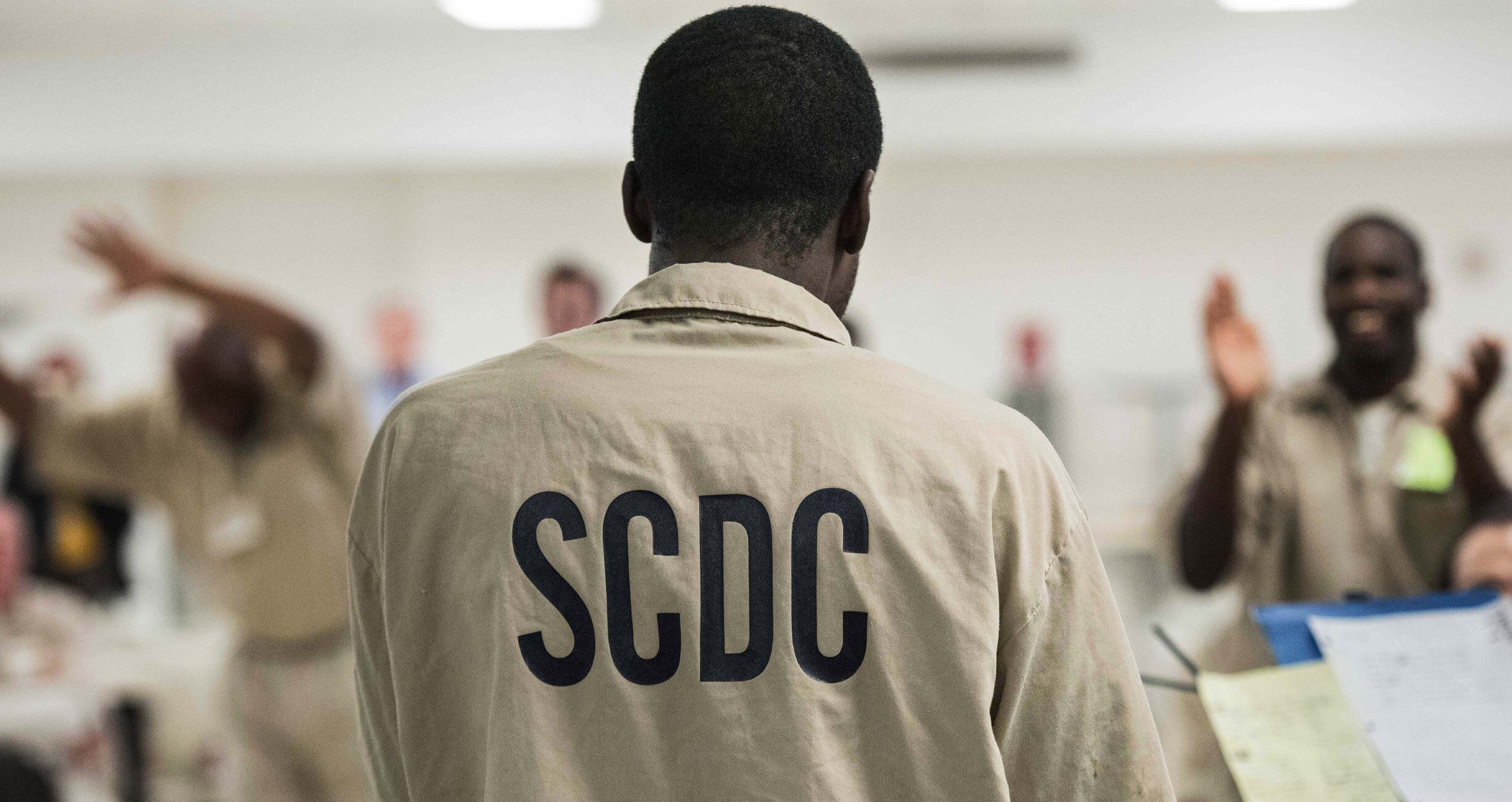
At Cadre of HOPE, a housing unit at Lee Correctional Institution in Bishopville, South Carolina, incarcerated people wear Crocs. This may not sound remarkable, but elsewhere in the prison, this footwear choice would be unthinkable.
In all other units at Lee, they wear boots—even in the shower, because, as one person put it, “it’s the best time to get you.”
At Cadre of HOPE, however, residents feel safe and relaxed, sentiments that are rare within a prison, and especially at Lee.
Cadre of HOPE—an acronym for “Helping Other People Evolve”—is the result of a partnership between the South Carolina Department of Corrections (SCDC) and Vera’s Restoring Promise initiative, which has partnered with corrections agencies for more than eight years to design housing units that foster dignity, accountability, and healing for people in prison. Cadre of HOPE is one of two Restoring Promise housing units in South Carolina and one of seven operating across five states: Colorado, Connecticut, Idaho, North Dakota, and South Carolina.
Trained corrections professionals and mentors—incarcerated adults over age 25 who are serving long (often life) sentences—lead Restoring Promise housing units. These mentors live in the unit and offer guidance to mentees, who range in age from 18 to 25.
“We come in with tools, and then the staff and the incarcerated people are really applying them and figuring out how to make it work in that culture and in those conditions,” said Ryan Shanahan, director of Vera’s Global Justice Exchange and former director of the Restoring Promise initiative.
Research shows that Restoring Promise’s approach works to make prisons safer. In 2023, a study conducted by Vera in collaboration with a team of people incarcerated at Lee and found that young adults living in a Restoring Promise unit experienced a 73 percent decrease in their odds of receiving a violent infraction and an 83 percent decrease in their chances of experiencing a stay in a restrictive housing unit—commonly known as solitary confinement—compared to those in the general population.
Following up on that study, Vera released a report this September that captures the stories behind those statistics. Researchers conducted interviews with participants in a randomized control trial—young adults who were either randomly assigned to Cadre of HOPE or to a standard housing unit at Lee. These interviews shed light on the similarities and differences between the two groups’ experiences. Young adults at Cadre of HOPE, for example, report no violence or weapons in the unit, while people living in the general population spoke about regularly witnessing and experiencing violence.
“The first thing they say [when you get to prison] is if you buy anything, buy a knife,” one resident in the Restoring Promise unit said. But that advice doesn’t apply at Cadre of HOPE. “Never in Restoring Promise have I ever felt that I needed a weapon.”
“There’s no need for weapons because we use our words,” shared another young adult in the unit.
These statements are especially remarkable considering that, at the start of Restoring Promise’s partnership with SCDC, the state’s prison system was deemed one of the deadliest in the country.
Residents also comment on the community that has emerged within Cadre of HOPE. In all Restoring Promise units, staff and residents employ restorative justice practices, such as healing circles, where they gather to have open discussions to resolve conflict. These practices have contributed to their feelings of safety and have helped build community.
“I know no one here is going to put me in harm’s way; I don’t feel like I need to guard myself,” one Cadre of HOPE resident said.
Residents also speak about a sense of purpose that helped build community. In Cadre of HOPE, they take classes, participate in activities ranging from basketball to origami, and spend significant time connecting with peers, mentors, and staff.
“Over here, you can go talk to anybody,” one resident said.
Relationships—both inside and outside prison—are key. Restoring Promise’s approach emphasizes the importance of maintaining connections with loved ones during incarceration, which is associated with lower levels of depression and anxiety, a lower likelihood of reincarceration, and improved physical health outcomes.
“In this kind of work, relationships and mentorship are crucial,” said Selma Djokovic, Restoring Promise’s associate director of research. “They are such a critical part of each unit’s success. The feeling of community, of having relationships inside, has contributed to young people’s overall growth and development.”
“I reach out to my people every day,” one resident said. “When we had a [family] orientation here, that made them [my family] feel a lot better. They see where I’m now. . . . They don’t have to worry about me being in incidents.”
These moments of connection show what is possible. Culture change in prisons doesn’t require sweeping reforms to take root—it starts with creating spaces where safety, dignity, and community can flourish. When incarcerated people feel more connected to loved ones, mentors, and staff, prisons can be transformed into places that support healing and growth.