
Sending in the National Guard Won’t Make Our Cities Safer
The federal government has a role to play in public safety, but a military takeover isn’t it.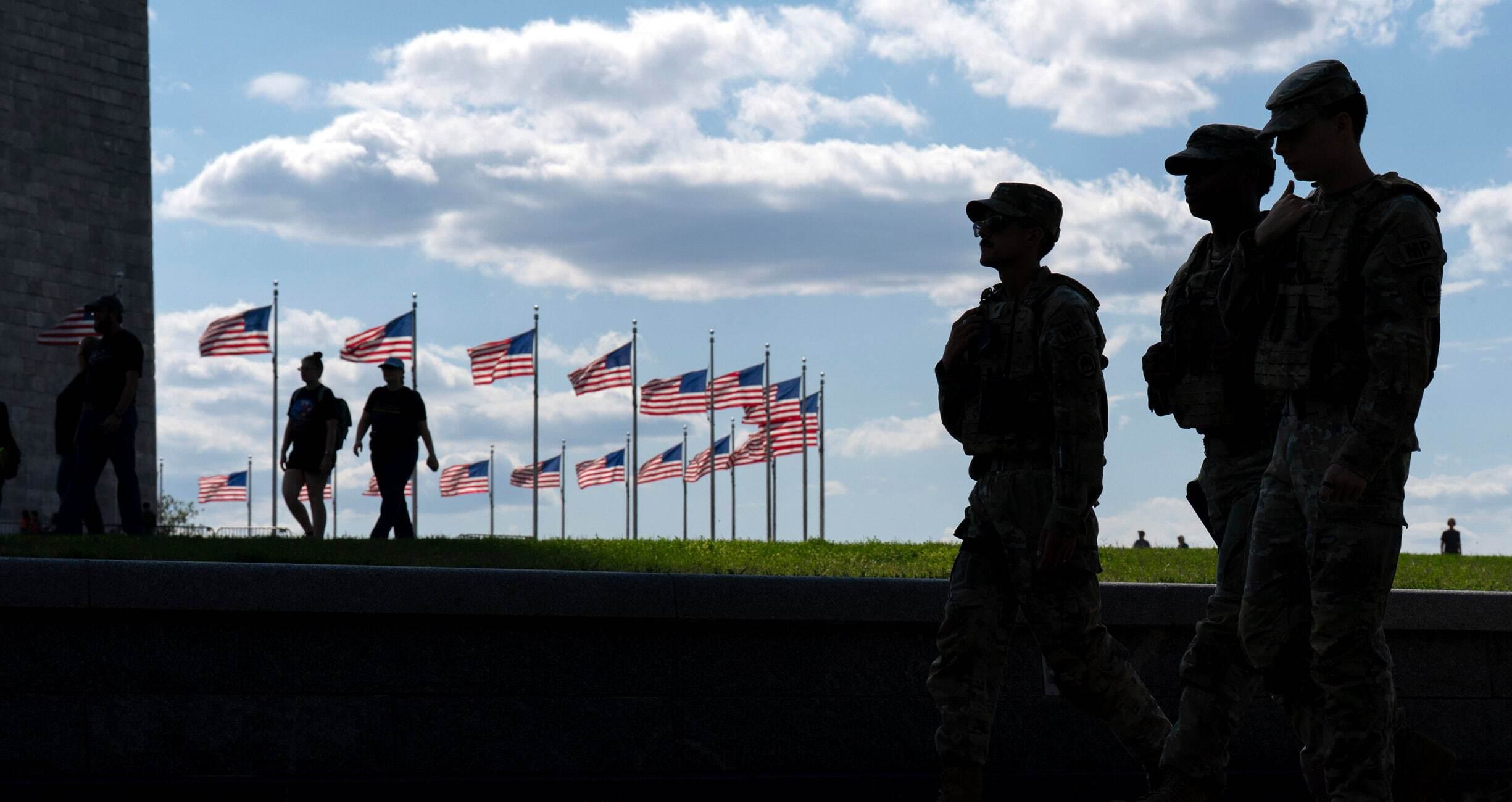
When President Trump began his federal takeover of Washington, DC, in August, uncertainty loomed over the city. Now, six weeks later, as the National Guard prepares for deployment to Memphis at Trump’s direction in the ostensible name of “public safety and order,” the picture is much clearer. As in the nation’s capital, Memphians will face a military deployment that is likely to disrupt daily life, sow fear among immigrant residents, and reignite fissures in a community still reeling from the 2023 police killing of Tyre Nichols.
Despite each city in President Trump’s crosshairs for potential deployment boasting historically low crime rates this year, public safety is a serious concern across the country, and there remains much work to be done to tackle gun violence, homelessness, the overdose epidemic, and making neighborhoods and streets safe. Sending the National Guard and federal troops in is the wrong solution to an important problem.
In Washington, DC, 79 percent of polled residents oppose the militarization of their local law enforcement and 61 percent say the military police presence has made them feel less safe. Similarly, many Memphians are fearful of the federal takeover or skeptical that it will improve safety. The National Guard itself knows this, noting in internal documents about its deployment in DC that people view it as “leveraging fear, not security” and undermining trust in the military.
In both DC and Memphis, the mayors have taken a largely conciliatory approach toward the president and his military incursion. Undoubtedly, these mayors are in a uniquely vulnerable situation—DC lacks statehood and autonomy from the federal government, and Tennessee’s governor welcomed the National Guard into Memphis. The limitations here are on full view in DC: in an attempt to “get out of the emergency” and prevent further occupation, Bowser recently issued an order directing the city to “ensure coordination with federal law enforcement to the maximum extent allowable by law.” Although the mayor’s order succeeded in convincing Congress not to extend the president’s takeover of DC’s Metropolitan Police Department (MPD), it dashed hopes that the city would soon be free of its occupation by federal troops. While the National Guard has not yet been deployed to Memphis and the story there is still unfolding, Memphis Mayor Paul Young has been similarly placating, saying that he is “certainly not happy” but hopes the Guard will “amplify” the city’s work on public safety.
In contrast, state and local leaders elsewhere are taking a strong position and showing how to protect their cities from federal overreach. When Trump threatened Baltimore and Chicago, both cities’ mayors were unified with their governors in resolute opposition to deployment. Chicago Mayor Brandon Johnson made clear he would do everything in his power to protect the city, including issuing an executive order establishing the Protecting Chicago Initiative, which limits local police from engaging in immigration enforcement, ensures know-your-rights trainings, directs Freedom of Information Act (FOIA) requests related to immigration enforcement, and prevents law enforcement from wearing masks, among other protections. In Los Angeles, where Trump deployed the National Guard despite vocal opposition from Governor Gavin Newsom, Mayor Karen Bass held a press conference at MacArthur Park to reassure her constituents within minutes of the first report that the Guard was stopping and potentially arresting Angelenos vending or enjoying a day out.
Not only have theseofficials shown examples of strong, assertive leadership to protect from federal overreach, they have also acted on clear evidence that military deployment could harm their cities. In DC, United States Magistrate Judge Zia M. Faruqui, who has presided over many criminal cases resulting from arrests since the federal takeover began, described people being arrested without cause, minor cases charged as felonies, and people left to suffer in jail for days or weeks until “implausible, illegal, [and] immoral” charges against them were dismissed. “The rule of law is being flushed down the toilet,” he said, and suggested that people are getting the message to “be very afraid.” Additionally, grand juries have rejected prosecutors’ requests for indictments in at least seven cases over the past three weeks.
An intimidating, militarized police presence may temporarily suppress crime by scaring people enough that they stay indoors, but it is neither a short- nor long-term solution to the challenge of making neighborhoods safer, and the risk of undermining community trust and civil liberties outweighs any possible rewards. In DC, a majority of residents say that crime is a concern and they want solutions that the federal government can help deliver and fund, like economic opportunities and stricter gun laws. Public safety would be better served if the nearly $2 million daily cost of stationing service members in DC went to measures that prevent crime and address specific public safety concerns, such as tackling gun violence, providing housing, building up mental health crisis response, expanding youth programs and job opportunities, and giving the police department the support it needs to respond faster to 911 calls and focus on solving more serious crimes. Yet in April, President Trump cut $820 million in funding for programs like these that prevent crime and save lives. These evidence-based, tailored approaches—which have been successful in cities like Baltimore, Boston, and Chicago—would be far more effective than the overly broad and dangerous approach currently on display in DC.
To supercharge his efforts to enforce “law and order,” Trump recently issued an executive order directing each state’s National Guard to be “resourced, trained, organized, and available to assist Federal, State, and local law enforcement in quelling civil disturbances.” Further deployments may be challenged in court, as Los Angeles did when it sued the Trump administration for illegally sending thousands of military troops to the city to conduct civilian law enforcement activities without the consent of the governor. A recent ruling found the deployment to be illegal, but the White House is seeking an appeal. And as Trump continues to threaten to deploy the Guard and other federal agents to cities like Baltimore, Chicago, New Orleans, Oakland, and St. Louis, the administration seems unworried about the law.
Deploying the National Guard for such purposes is more than merely ineffective and potentially illegal. For one, stationing thousands of officers in DC, Memphis, and other cities means they are not available for the next emergency. Randy Manner, a retired U.S. Army major general and former vice chief of the National Guard Bureau, said the National Guard should provide rapid response for emergencies like floods and hurricanes, not “public order.” Sending the National Guard to patrol cities, he told PBS, is “unneeded and very dangerous.” For their part, the federal agents patrolling DC have been diverted from critical work like investigating financial fraud and public corruption.
National Guard officers are also not the right first responders for everyday police responsibilities. Guardsmen are not well trained in traditional law enforcement activities, such as responding to 911 calls, conducting investigations, and carrying out patrols. And we have already seen abuses of civil liberties and wrongful arrests in recent weeks: in August, a federal judge dismissed a case against a man who was held in jail in DC after federal agents and MPD officers subjected him to what the judge called “without a doubt the most illegal search I’ve ever seen in my life.” He was separated from his pregnant wife and children for a week before the charges against him were dropped. Not only is this a civil rights violation, but incidents like this only serve to further undermine trust in law enforcement, making people less likely to help police solve crimes.
Additionally, the National Guard troops in DC are now carrying rifles and pistols. “That would make me extremely nervous,” retired Marine Corps Colonel and Center for Strategic and International Studies Senior Adviser Mark Cancian told NPR. “The police are trained at length about when they can use deadly force, and even then they get it wrong.” Americans need only remember the 1970 tragedy at Kent State, in which the National Guard killed four student protesters, to consider what could happen here.
Finally, the dragnet approach to policing that the National Guard and federal agents are practicing in DC—making thousands of low-level stops for things like window tint and double parking to conduct searches for contraband—is ineffective, results in racial profiling, and risks escalating interactions between police and residents. Stop-and frisk policing has been shown to result in relatively few gun and drug seizures, with Black and Latine people disproportionately bearing the brunt of these interactions. Even if someone is released and no arrest is made, the interaction carries substantial social costs. Courts records show that federal agents in DC are overwhelmingly arresting Black people and concentrating arrests in already overpoliced neighborhoods. Moreover, more than 80 percent of arrests made so far during the DC takeover have been for misdemeanors, and a significant number are solely related to immigration. The uptick in arrests has added strain on court and jail systems—all without the kind of public safety gains DC needs.
If the National Guard engages in the same pernicious tactics in Memphis, it will reopen fresh wounds between police and the community. A 2024 Department of Justice investigation (since retracted by the Trump administration) following the killing of Tyre Nichols found that the city police department engaged in a pattern of using excessive force; conducting illegal stops, searches, and arrests; and discriminating against Black people and people with behavioral health disabilities.
Public safety must be a priority—in Memphis, DC, and the rest of the country—but sending militarized police to serve as additional local law enforcement is not the answer. As five mayors wrote in the Hill earlier this month, instead of weaponizing the National Guard, the federal government could help by bolstering the Bureau of Alcohol, Tobacco, Firearms and Explosives to investigate firearms trafficking, support ballistics testing, and work in coordination with local law enforcement—not supplant them. “Real progress happens when Washington partners with local leaders,” they wrote, “not when it sidelines them.”
As President Trump uses crime as a pretext to threaten more cities and justify a power grab, the right answers to the question of what works to make cities safer become even more urgent. Americans need more elected leaders to loudly call out President Trump’s ruse and advocate for what actually works to make cities safe. The federal government has a role to play in public safety, but a military takeover isn’t it.