
Public Defenders Are Underfunded. Justice Pays the Price.
In United States criminal courts, the right to a lawyer for the accused is guaranteed—but without adequate funding for public defenders, that promise falls short.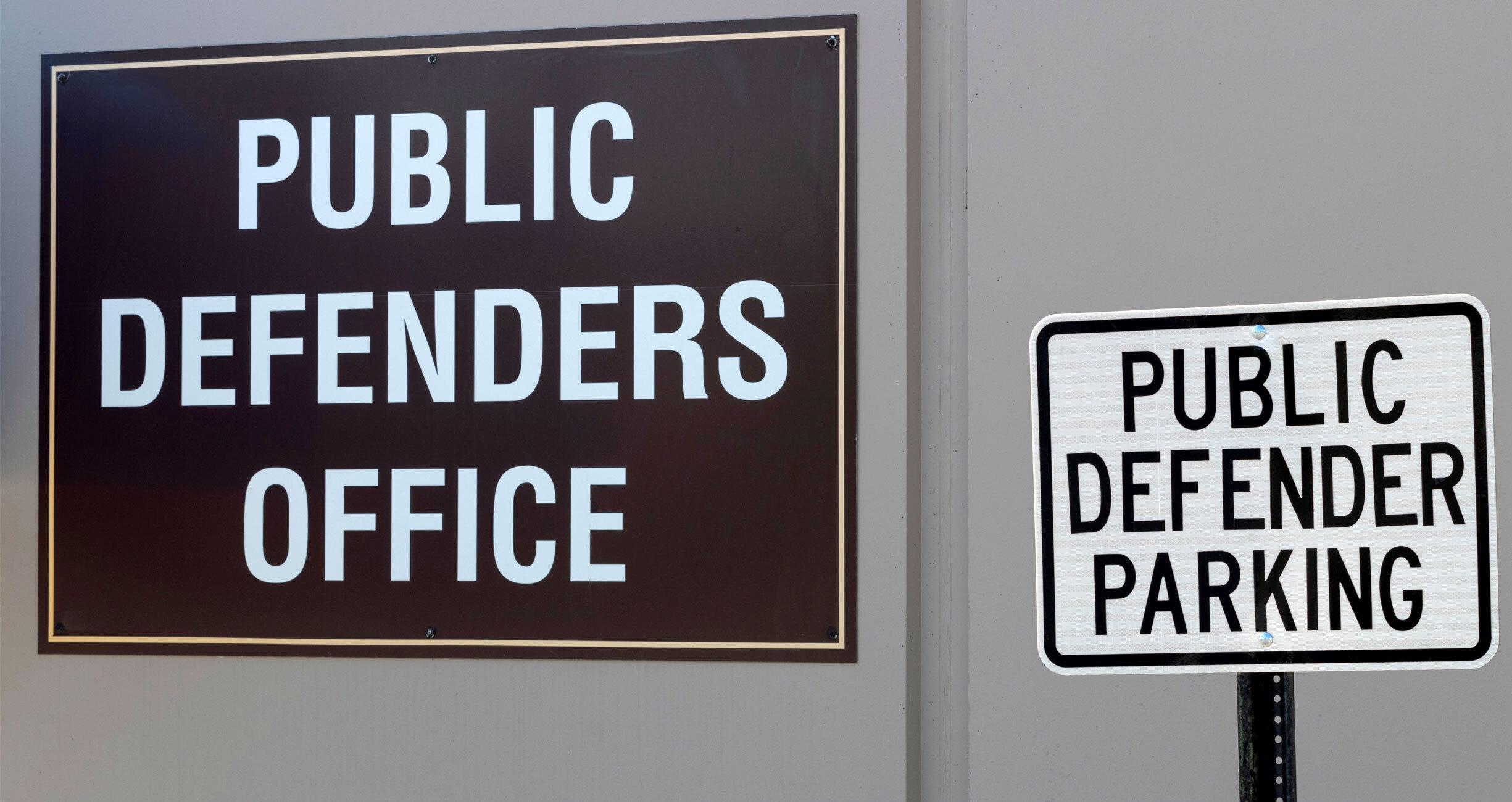
“You have the right to an attorney.”
It’s a familiar line from countless TV procedurals. Miranda rights are derived, in part, from the Sixth Amendment, which guarantees the right to counsel. What’s far less familiar is how fragile the promise of public defenders can be in practice, especially for people who cannot afford their own attorney.
People like Cyrus Gray, who spent four and a half years incarcerated at the Hays County Jail in Texas. The county did not have a public defender’s office at the time, so the court appointed Gray a private lawyer who, in turn, did not return any of his calls.
“I really want people to understand, just because you are in jail does not mean you are guilty,” said Gray. “Some people are just there because they don’t have the finances to afford bail or an attorney who cares enough to try to win their freedom.”
Public defenders are mandated by United States law in all felony cases and for misdemeanors when incarceration is a possibility. In 1963, the U.S. Supreme Court ruled that people who cannot afford an attorney should be assigned one, writing about this right to counsel that, “in our adversary system of criminal justice, any person haled into court, who is too poor to hire a lawyer, cannot be assured a fair trial unless counsel is provided for him.”
The law is clear, yet the equitable implementation of this right to public defenders remains far from being fully realized. Many jurisdictions still fail to ensure that everyone has access to adequate counsel.
Differing models of public defense for indigent people
Each jurisdiction—state, county, or city—determines its own approach to providing indigent defense (criminal defense for people who cannot afford it). This has led to a complex and incredibly uneven patchwork of systems across the country. For starters, many places do not have a public defender’s office—where salaried attorneys work together on a part-time or full-time basis in a setting akin to a law firm to provide indigent defense—even though it is widely recognized as the most effective approach. Instead, many jurisdictions rely on assigned counsel and contract counsel:
- Assigned counsel are private attorneys appointed by the court to provide criminal defense for low-income people on a case-by-case basis. They are generally paid an hourly rate or a predetermined amount based on the type of case being tried. That rate is typically very low, and fee caps may also dictate the maximum amount an attorney can earn on a given case, which can incentivize them to do less work on a case once they reach that threshold.
- Contract counsel are private attorneys who contract with jurisdictions to provide indigent defense for a set flat fee—a set-up that can financially incentivize attorneys to do as little work as possible on each case. States that employ this system often award contracts to the lowest bidder, though some jurisdictions have banned it entirely.
Despite the obvious downsides to relying on assigned counsel or contract counsel for indigent defense, these models are pervasive. According to estimates, one-third to half of all people who qualify for public defenders are represented by assigned counsel or contract counsel.
The public defender’s office
Even in jurisdictions that have established public defender’s offices, those offices often face challenges. Just because a jurisdiction has a public defender’s office does not mean that office will have the capacity to take on all indigent defense cases; jurisdictions may still rely on assigned counsel to fill gaps. Public defender’s offices may, for example, only take on certain types of cases or a certain percentage of cases. Counsel may not be available at first appearance, which is the first time a person appears before a judge or magistrate and when critical decisions about bail and release are made. The first time many people interact with a judge or face a prosecutor, they are often on their own. Without a lawyer present, people rarely know how to request release from jail pending trial or challenge unfair bond amounts. It may be days or weeks before they meet an attorney for the first time.
A jurisdiction’s public defender’s office may be a nonprofit—or several nonprofits. In New York City, for example, the Mayor’s Office of Criminal Justice contracts with five nonprofits, including the Legal Aid Society and the Bronx Defenders, to provide indigent defense. In some instances, public defender’s offices serve entire regions. Texas, for example, has three regional public defender’s offices, in addition to 14 single-county programs.
Chronic underfunding for public defense
It is up to states to determine whether they will fund indigent defense. Although every state now contributes some level of funding for indigent defense—a milestone reached only in March 2024—the amounts and structures of that support vary widely, subject to the whims of annual budget negotiations and legislative politics. Where indigent defense is not fully funded at the state level, the responsibility falls to local jurisdictions. When that happens, localities may end up funding the public defense they can afford rather than what is constitutionally required—at drastically lower levels compared with funding for law enforcement and prosecutor’s offices.
Unsurprisingly, indigent defense systems across the country have been “chronically under-resourced for decades”—a stark contrast to the far more robust resources often afforded to prosecutor’s offices. This disparity provides prosecutors with extraordinary power within the U.S. criminal justice system and often shifts outcomes in their direction. The threat of mandatory minimums and the horrors of pretrial detention can make people feel they have no choice but to accept whatever plea deal a prosecutor offers. As the Brennan Center for Justice has written, “In an era of mandatory minimums and enhanced sentences, the power to charge is ultimately the power to dictate the sentence.”
Meanwhile, public defenders are overworked, underpaid, and frequently lack access to basic resources afforded to prosecutors, such as investigators and expert witnesses. They face crushing caseloads and often earn far less than their counterparts in prosecutor’s offices.
Why public defenders matter
One study found that people with appointed counsel versus public defenders spend more time behind bars, and they are more likely to be convicted. Wrongful convictions are also more common: inadequate legal defense has contributed to a number of wrongful convictions since 1989, as tracked by the National Registry of Exonerations.
Meanwhile, robust, well-resourced public defender’s offices provide higher-quality representation than other forms of indigent defense. Public defenders also obtain better outcomes for their clients, who spend less time in pretrial detention and are less likely to be convicted than those represented by assigned counsel or contract counsel.
And strengthening indigent defense doesn’t necessarily mean spending more money. In fact, public defender’s offices can actually lower systemwide costs because other indigent defense systems are often structured so inefficiently that they cost states more than necessary while still producing worse outcomes for people facing charges.
A study in Texas found that switching to a statewide public defender system could lead to savings of $13.7 million per year. Studies elsewhere have also found that cases handled by public defender’s offices cost less.
The price of pretrial detention, long sentences, and wrongful convictions is steep—both for public budgets and for communities. Failing to fund public defenders doesn’t save money—it shifts costs onto communities, families, and future budgets.
Holistic public defense
In April 2023, Hays County, where Gray was incarcerated, opened a public defender’s office—a major victory for Mano Amiga, an advocacy group that led a three-year campaign for the office’s creation. Today, people in Hays County have earlier access to counsel, more consistent representation, and a system better equipped to protect their rights. It’s the kind of systemic change that can make all the difference.
The gold standard for Hays County, ultimately, is to provide holistic public defense, which means that a public defender’s office not only represents its clients in court but also provides individualized services to help clients avoid future criminal justice system involvement. That can include addressing issues related to, for example, substance use, mental health conditions, or housing instability.
Gray, who now serves as a researcher for Mano Amiga, has turned his experience into advocacy. Organizations like Mano Amiga are pushing for more funding for public defender’s offices across the country, working to ensure that no one else endures what Gray did—four and a half years without adequate representation, simply because he couldn’t afford it.
Public defender’s offices are a cost-effective solution that strengthens public safety and makes the justice system more efficient. Funding public defense is not just a legal obligation—it is a moral and economic imperative. Establishing a public defender’s office is a step toward pretrial justice and ensuring that those who cannot afford a lawyer do not see their rights trampled on by a system that punishes people for being poor.