
In Memory of Susan Rai, Who Served the Vera Institute of Justice for 40 Years
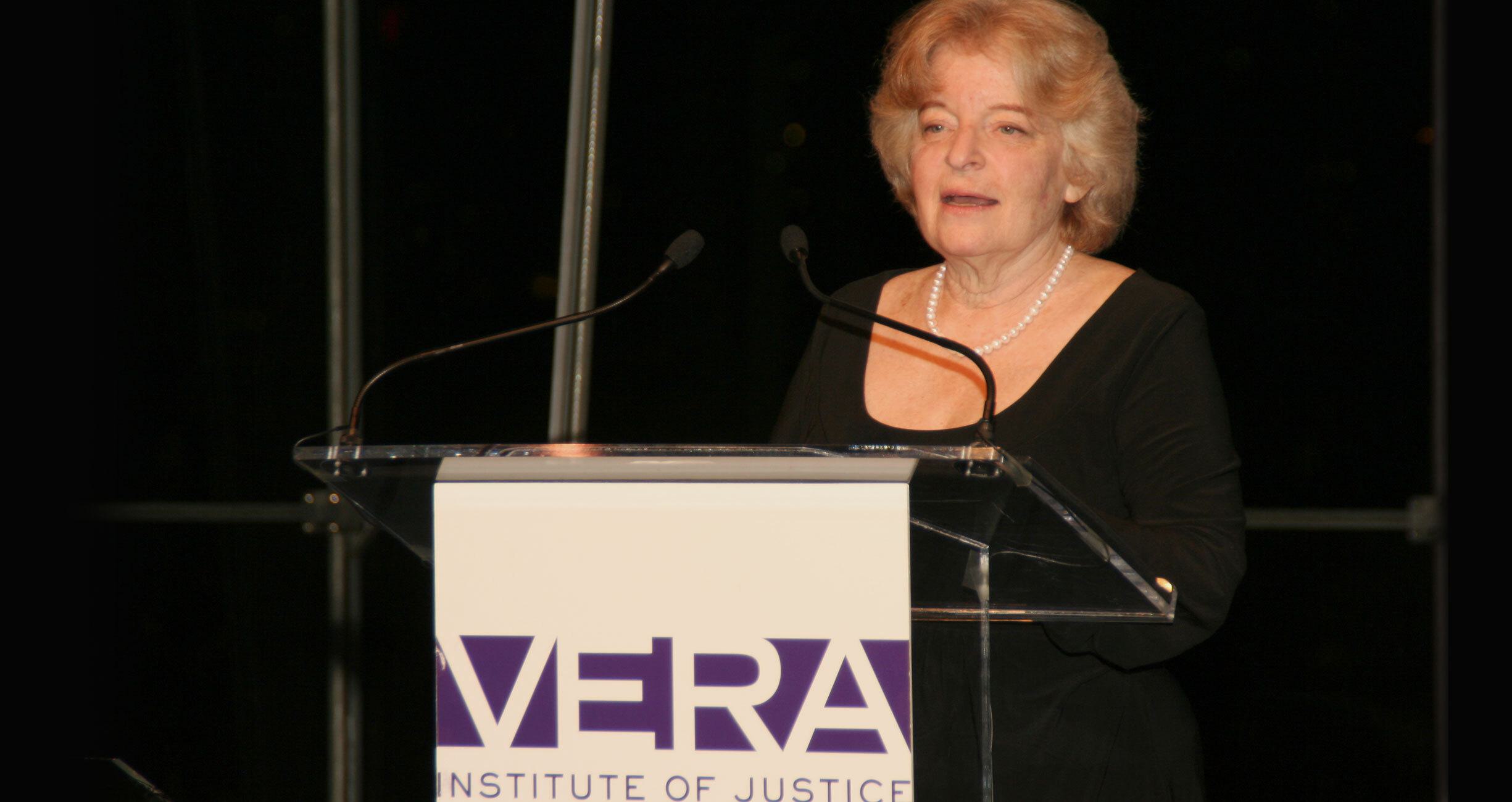
“May her memory be a blessing.” This is the phrase that many Jewish people pass on to share in times of mourning, and maybe the most graceful in a circumstance where language often becomes clumsy. It is particularly apt in talking about Susan Rai, a Vera legend who had a profound relationship with the organization’s memory and who is inextricably woven into the memories of so many who have been part of its work.
Susan Segal Rai was a force in this world—kind, intelligent, generous, committed, and full of energy for what could be. Among the many things she was and did, she was part of the Vera Institute of Justice for 40 years.
I volunteered to write about Susan Rai as one of the people still at Vera who knew her best and worked with her longest, and maybe the one who owes her the greatest debt. And now with the keyboard in front of me, I am daunted by the task, by how relatively brief the years we worked together are against the backdrop of a 40-year tenure and a wide-ranging life driven by curiosity and generosity.
Susan was generous with her memories, including the bad ones. As glad as she always was to talk about joining Vera in 1975 and becoming part of a problem-solving culture—doing everything from becoming a bail bondswoman to the utterly thankless necessity of crafting retirement plans—she would also, if you asked, tell stories that were less adventurous and fun. The projects that did not work as hoped. The law school classmates who tried to bully her out of taking a seat supposedly better deserved by a man. The acute awareness that the life she was able to build—with work, with family, with many friends, with opportunities to foster others—was an extraordinary privilege.
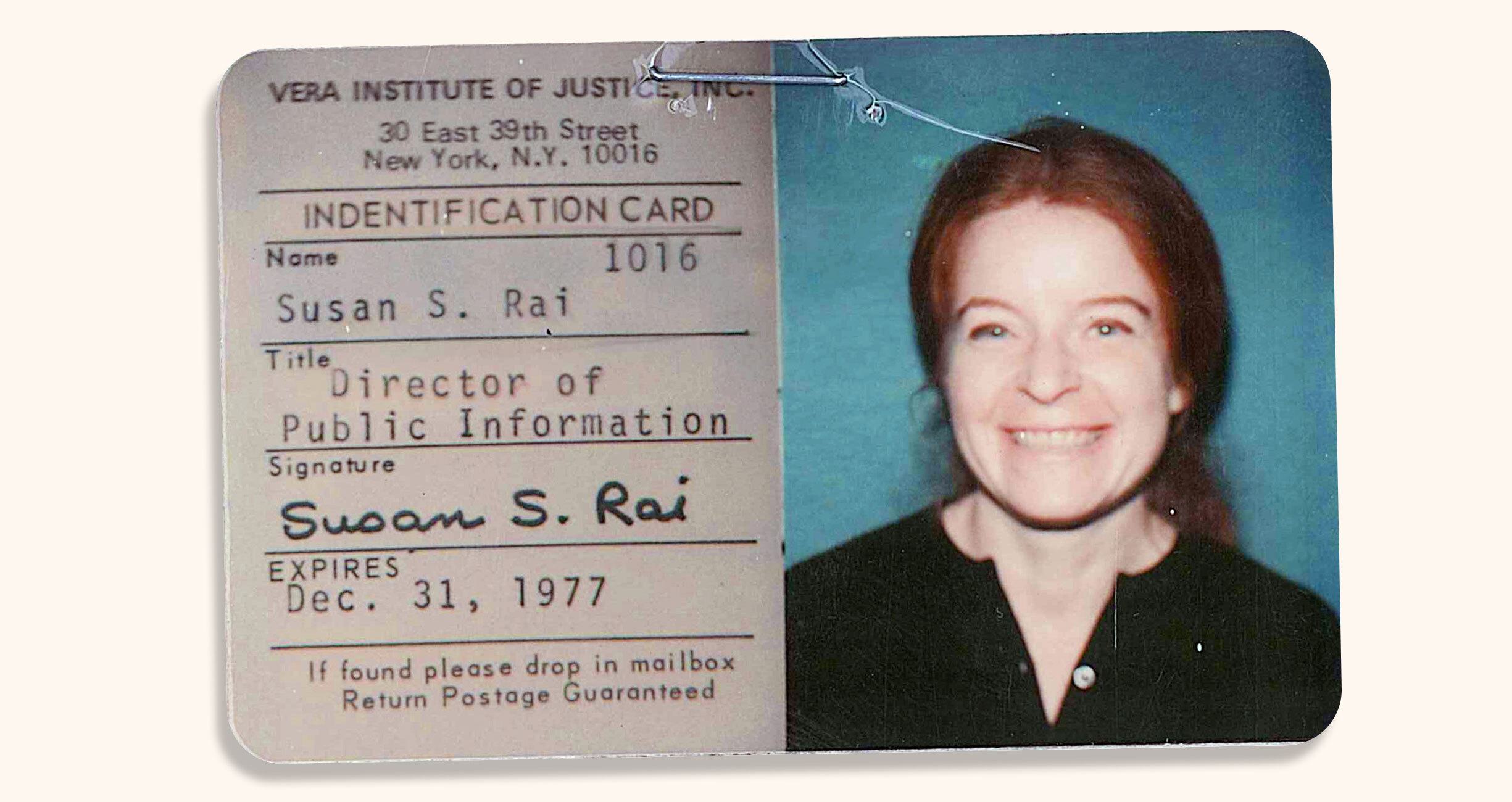
Susan owned her role as Vera’s institutional memory—she gave herself the name many times—but also had her misgivings about it becoming the sole description of her role. She was an attorney, a negotiator of relationships, and an adviser in difficulties. She was not a filing cabinet bursting with nostalgia and wearing cool glasses. (Though it must be noted that her eyeglasses were indeed chic with a kick.) Yes, she baked cakes; yes, she hosted many students and artists in her home over the years, making it possible for them to pursue their paths. Yes, she loved her husband and her children and doted on her grandchildren. But she was also a lifelong advocate, in every practical way she could get her hands on, for a justice system that is worthy of the lives, work, and fates it holds.
Sorting through her own memories, she described herself as a proponent of the “great man” theory of history—the belief that key figures transform or create pivotal moments rather than being a product of them—and there is no doubt that she believed Herb Sturz, the founder of Vera and champion of many reforms now taken as given, to be the great man of her time. But he was not the only figure whose greatness she believed in, and that genius of his for reform was not the only kind she credited. Her admiration for colleagues who dared propose something new—be it Judy Greene and her bail agency or India Baird and her work in South Africa or Danielle Sered convincing the Brooklyn District Attorney to try restorative justice for serious offenses—was boundless, and her efforts to support, advise, protect, and foster their work were tireless. She spoke of Vera’s history not just because she was proud of it, but because she believed that the creativity and commitment it embodies needed to live on. She took hundreds of interns to lunch over the years not just because she was generous, but because she was always looking to see whether that singular flame she had so admired in particular colleagues was also lit in other souls—and if she could foster it.
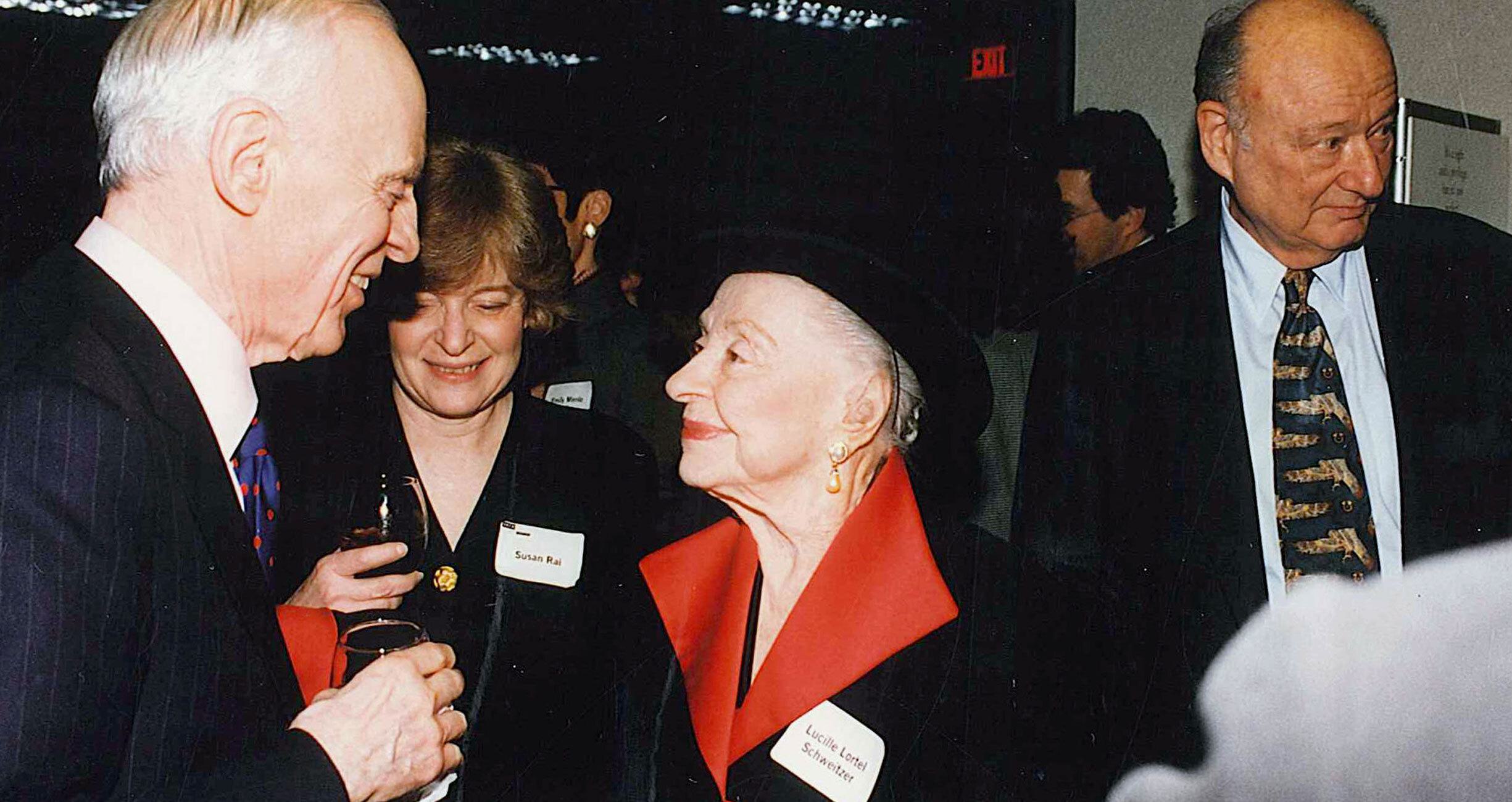
It was with this in mind that, shortly before she left Vera in 2015, I remarked to Susan that young people were her favorite thing. She promptly set me straight. Her favorite thing was Lindt Intense Orange Dark Chocolate. Next was Oreos. An apt third was, and I quote, “confirming that things are correct.” Not quite making the podium but still finishing respectably came “young people.” We should all bring such enthusiasm to our fourth-favorite passions that leaders across the justice and nonprofit sectors owe elements of their growth, their critical thinking, their self-belief, their commitment, and the changes they have been able to make in the world to our support. That is a debt that many, many past and present Verans owe to Susan Rai, and one she would exhort us to pay forward.
One of the last conversations I had with Susan was when her steel-trap mind was becoming less reliable and her illness had weakened her. She wrote about her struggles with her “atrocious memory,” but said, “This sounds grim, but I actually feel very lucky. And happy. There is so much that I like to do and still CAN do,” while describing her friendships and music and the meals she planned and made for others. This clear-eyed good cheer, this stubborn refusal to be blind to what is possible, and the sustenance she found in family and community, are testaments to her quietly insistent and indelible character. Vera benefited in thousands of ways from her skills and her spirit, as did thousands who will never know her name.