
A New Federal Grantmaking Rule Could Put Community Safety Programs at Risk
A new rule from the Office of Management and Budget would give political appointees sweeping new power to cancel federal grants at will. Vera explains what's at stake and why we're pushing back.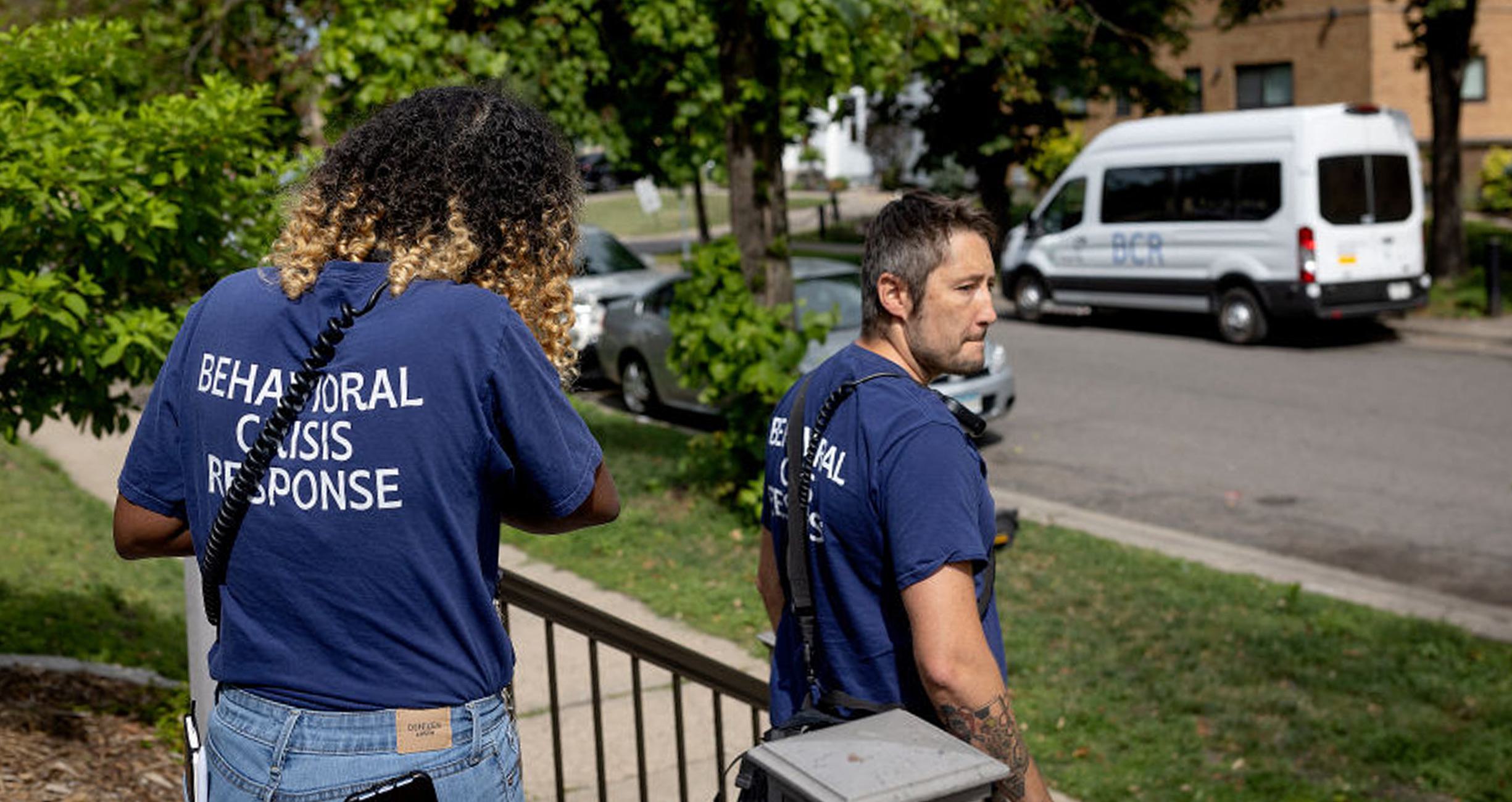
Across the country, thousands of organizations rely on federal grants to do essential work: reduce gun violence, shelter domestic violence survivors, treat people with addiction, protect children from abuse, and help police departments do their jobs better. A new rule proposed by the Office of Management and Budget (OMB) would put all of that at risk.
What OMB’s new grantmaking rule does
OMB’s proposal would rewrite the rules that govern how the federal government solicits, awards, and manages more than $1 trillion in grants every year. It would apply to state and local governments, Tribal Nations, universities, hospitals, and tens of thousands of nonprofits and community organizations.
The most alarming piece: political appointees, not career staff, would have to sign off on every discretionary grant and certify that it “demonstrably advance[s] the President’s policy priorities.” Agencies would also get broad new power to impose new funding conditions or cancel grants at any time for vague reasons like failing to “effectuate program goals” or supposedly damaging the government’s “reputation.” None of these terms are defined, and that vagueness is precisely the point: the rule gives the Trump administration wide latitude to target organizations the administration views as at odds with its own aims.
Recent reporting shows the consequences of this kind of vagueness. Weeks before OMB announced the rule, the administration circulated a memo directing federal agencies to catalogue all grants to “certain nonprofit organizations,” including the American Civil Liberties Union, the National Urban League, and legal aid groups. Around the same time, the United States Department of Justice (DOJ) brought an 11-count fraud prosecution against the Southern Poverty Law Center. Both cases build on Trump’s National Security Presidential Memorandum, signed last September, which directed agencies to “investigate, prosecute, and disrupt” organizations “engaged in acts of political violence.” That same day, DOJ ordered prosecutors to investigate George Soros and his Open Society Foundations, a longtime target of Trump’s. OMB’s rule would hand this administration, and every one after it, a far more durable tool for the same kind of targeting.
Criminal justice grantees know firsthand the devastation that comes from having grants terminated. Last year, DOJ’s Office of Justice Programs (OJP) canceled roughly $500 million in grants to 221 organizations because their work no longer “effectuated Department priorities.” Vera was one of the first organizations to lose funding: $5 million that supported work to make prisons safer, expand alternatives to incarceration, support crisis response for behavioral health emergencies, and serve Deaf survivors of crime and trafficking. Organizations across the political spectrum working to prevent gun violence, reduce truancy, combat antisemitism, end sexual abuse in prisons, and protect elderly people against financial exploitation also had their funding slashed. Unable to cover payroll or wait out a lengthy appeals process, many have since shuttered or scaled back services. Criminal justice and crime experts credit programs like these for the decline in serious crime that the administration once dismissed and now claims credit for. By cutting programs proven to reduce crime, these cuts have likely made communities less safe.
The rule was open for public comment through July 13 and is expected to be finalized by October 1.
Why OMB’s rule is harmful
The uncertainty OMB’s rule creates erodes the foundation of public safety work, which depends on consistent effort, long-term planning, and stable resources. When agencies can terminate grants at will—or dangle threats of new, politically expedient conditions after awards are made—grantees cannot reliably plan for, let alone meet, their communities’ needs.
OMB’s proposal also threatens one of the defining features of modern criminal justice grantmaking: the use of subawards to deliver federal resources to the organizations best positioned to improve public safety. Across the criminal justice field, primary grantees partner with community-based organizations—often small, rural, or understaffed—that have the relationships and trust needed to do the work but lack the capacity to apply for and manage federal grants on their own. The subaward model exists precisely to bridge that gap, letting larger organizations secure funding, provide technical assistance, and channel resources down to the local partners best equipped to deliver it.
Equal Justice USA (EJUSA) was one such intermediary. For years, the national violence prevention nonprofit channeled federal dollars to community-based organizations doing the work of building trust and safety block by block—supporting mothers who have lost children to violence and backing street outreach workers embedded in the neighborhoods they serve. When EJUSA lost its own more than $3 million federal grant last spring, the damage did not stop there—its community partners lost their funding too, and last July, after more than 30 years of life-changing work, EJUSA closed its doors for good. EJUSA’s story is a preview of what OMB’s rule would make routine—pull one thread, and an entire network underpinning safety can unravel.
OMB’s proposal would also require primary grantees to more rigorously monitor and report on every subrecipient’s performance and ensure those partners never take actions that could “damage the reputation” of the grantee, the agency, or the federal government. This is, again, an undefined standard that leaves primary grantees policing their partners under threat of losing their own funding. Last year’s OJP cuts show what is at stake: nearly two-thirds of the organizations that lost funding were subgrantees.
How Vera responded to OMB’s proposal
Weeks before the July 13 comment deadline, Vera developed a guide to help criminal justice grantees draft and submit their own comments and shared it with nearly every organization that had lost OJP funding last April. On July 13, Vera filed a formal comment opposing the rule, joining nearly 500,000 individuals and organizations. The comment lays out how the rule would inject uncertainty into funding decisions, weaken evidence-based public safety investments, destabilize long-standing grants that support safer communities, and make it harder for federal funds to reach the communities they are meant to serve.
Looking ahead: A coalition is building to defeat this threat
OMB’s rule is unprecedented in breadth and scope. No federal agency is untouched, and more than $1 trillion in grants, spanning everything from scientific research to the criminal justice system, is on the line. But the scale of the threat has surfaced something worth holding on to: coalitions are emerging across issue areas within the broader democracy movement. Groups including Democracy Forward, Stand Up for Science, Lawyers for Good Government, and the National Council of Nonprofits have seized the moment to help mobilize the field and empower people to fight back, breaking through the silos that have long confined advocates to their individual issue lanes. This coordinated response to the administration’s harms is only the beginning. The longer-term challenge is sustaining that collective in service of an affirmative vision for safety and justice, not just a defensive one.
OMB’s rule is currently slated to take effect October 1, though litigation, which many of these groups are actively exploring, will likely delay that timeline. Each comment must be reviewed by OMB and will help build the administrative record needed to contest the rule in the months ahead. The Trump administration is trying to seize greater control over the power of the purse. In doing so, it may also have planted the seeds of a coalition strong and durable enough to stop it.
Read Vera’s comment to OMB and DOJ here.
Related
NEWS
The Federal Government Pulled Back $500 Million from Public Safety Organizations. One Year Later, Communities Are Still Reeling.
NEWS
Trump’s War on Nonprofits Will Make Us All Less Safe
NEWS