
The Federal Government Pulled Back $500 Million from Public Safety Organizations. One Year Later, Communities Are Still Reeling.
After sweeping grant cancellations, justice organizations have scaled back or shut down, disrupting proven programs and leaving lasting damage.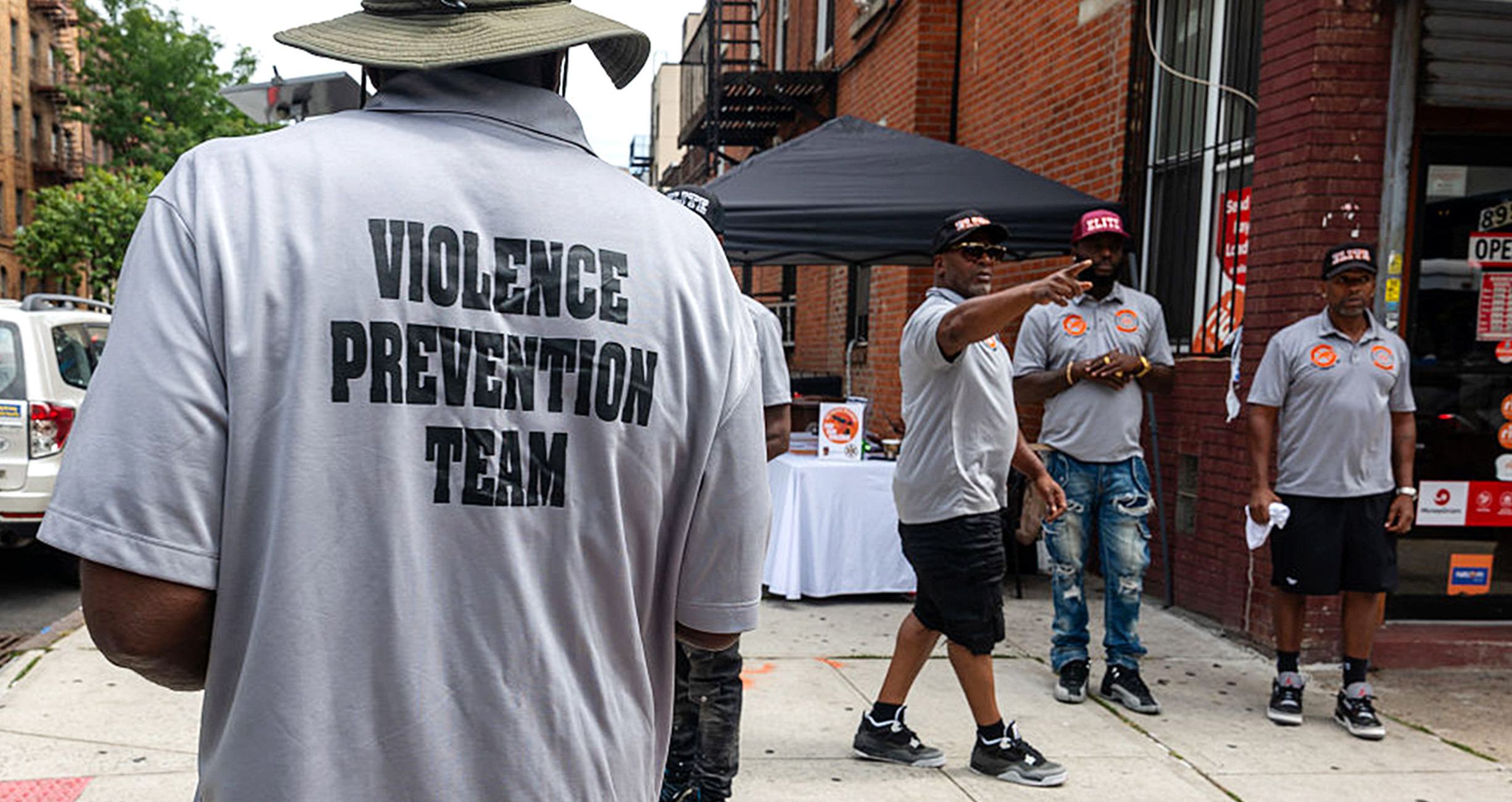
One year ago, the United States Department of Justice (DOJ) abruptly terminated roughly $500 million in federal grants to more than 200 organizations and state and tribal governments working on safety and justice issues, devastating the criminal justice field and harming countless vital programs across the country. After a year of delays, uncertainty, and disappointment, many of the criminal justice organizations doing that crucial work are on life support, rolling back programs and reducing services. Some have closed entirely. A year on, the work nonetheless continues, albeit under more difficult circumstances.
The rescinded funds, most of which had been appropriated by Congress, were meant for programs that work to reduce overdose deaths in rural communities, combat sexual abuse in prison, address hate crimes, prevent juvenile violence, and deliver other safety and justice initiatives. The breadth and scope of the cuts made little sense. As a Council on Criminal Justice analysis showed, the cuts affected programs in 37 states—with even “red states” like Kentucky and Florida hit particularly hard—and included issues the Trump administration claims to prioritize, like support for victims of crime. Criminal justice experts attribute the decline in serious crime to programs exactly like these—the decline that President Trump once ignored and now takes credit for. While the impacts may not be seen in the official crime statistics immediately, these cuts have likely made countless U.S. communities less safe. For an administration that remains hyper-focused on crime in its messaging, it seemingly has little interest in the work that could actually prevent it.
The Trump administration’s legal justification for the cuts lies in an obscure rule promulgated by the Office of Management and Budget (OMB) in Trump’s first term, which declares that the federal government has the right to cut funding “if an award no longer effectuates the program goals or agency priorities.” OMB considered removing that language under President Biden, but ultimately left it intact, keeping the door open for the second Trump administration’s attack on public safety programs.
In May 2025, the Vera Institute of Justice (Vera) and four other plaintiffs led a class-action complaint in coalition with more than 200 organizations affected by the cuts. The court dismissed the complaint, but the decision is currently on appeal. Whatever happens, in lawsuits or future elections, the damage to the criminal justice field cannot simply be undone. Restoration of funding will not bring back Equal Justice USA, a 20-year-old nonprofit focused on community violence intervention, among other projects, that was forced to close its doors for good within weeks of losing its congressionally allocated DOJ grants.
Amy Solomon, formerly the director of DOJ’s largest grantmaking office, the Office of Justice Programs, and currently a senior fellow at the Council on Criminal Justice, argued that among the most devastating cuts was nearly $100 million to “intermediary organizations,” nonprofits that bridge the gap to direct microgrants and support smaller community-based groups. “When [the Department of Government Efficiency] DOGE pulled the plug, it was not only the intermediaries that suffered losses, but the smallest, least resourced communities in America,” Solomon wrote in Government Executive. Even if large organizations can weather this period, they will be less able to reach these communities without such local groups.
In New York City, Gothamist spoke with staff at multiple nonprofits affected by the cuts, many of whom feared that the cessation of their work would directly lead to more violence in the communities they served. “There are a few participants that I actually fear for their life if we are not there, because of the activities and stuff that they're involved with,” said Cincere Wilson, a laid-off peace broker with Exodus Transitional Community, a group providing meals, transportation, and connection to mental health and workforce services in East Harlem.
In Philadelphia, cuts came for Cure Violence, a program to combat street violence and connect people with mental health services. Studies have shown that community violence intervention programs like Cure Violence reduce violence in communities and contributed to Philadelphia’s recent historic decrease in homicides. But without federal investment, the future of these essential grassroots organizations remains uncertain.
Because the work is so vital, many of the people doing it have vowed to keep at it despite the existential threat to the entire field. Wilson, the East Harlem peace broker, has already started another organization with former colleagues, which is searching for private funding. As The Marshall Project reports, local justice groups across the country—like The BRidge Agency, a program to reduce violence in Baton Rouge, Louisiana; Moms on a Mission, a group supporting victims of violent crime in Shreveport, Louisiana; and Brightside Child and Family Advocacy, a program to prevent child abuse and neglect in Savannah, Georgia—are now raising funds directly from the communities they serve. Communities long accustomed to disinvestment are once again on their own.
A future change in the political environment may help reverse some of these cuts—though restoring massive cuts across high-priority issue areas like health care and education may take precedence. And should these cuts eventually drive crime rates back up, politicians of all stripes will once again face pressure to steer funds toward police and prisons despite the success and popularity of a broader approach to safety. Private donors and state and local governments (themselves suffering from federal cuts) can—and should—step up to keep this work going. To stabilize this work in the long term, though, Congress must enshrine these proven, successful safety programs in federal law, finally insulating this work from shifting political or philanthropic winds.
But that change will come too late for numerous organizations no longer able to do important safety and justice work, nor the untold lives that will be lost or derailed without these vital services.