Increased access to spending data helps build community power, input, and oversight of the annual budget cycle. Analyzing this data can expose where funding should be cut, reallocated, or invested anew in agencies and services that promote real public safety and health. Where detail is lacking, communities can advocate for greater transparency and involvement.
Vera collected data from the county’s annual budget. The details of the prosecution budget are provided below.
Prosecution budget data can reveal office priorities and practices based on staff spending and operational costs, like travel and ammunition, and also on diversion, alternatives to incarceration, and victim services. With access to a prosecutor’s budget, you can assess whether the office’s investments are truly focused on your community’s well-being and, if not, how those funds should be spent.
In fiscal year 2021, *County* budgeted *2021 Prosecution Total* for the prosecutor’s office. Total prosecution spending amounts to *Per Resident Cost Prosecution* per county resident annually. In *County*, the prosecution budget has *Prosecution budget increased_decreased* *2011 2021 Prosecution % change* percent since fiscal year 2011.
In the 58 counties Vera studied, 43 included information about the sources of funding prosecutor’s offices receive. Of the prosecutor’s offices that reported data, the county’s general fund paid for an average of 88 percent of their overall funding. The remaining 12 percent of funding came from federal or state grants, often intended for specific activities or the prosecution of specific crimes, such as auto theft, anti-gang initiatives, gun crime strategies, or drug courts.
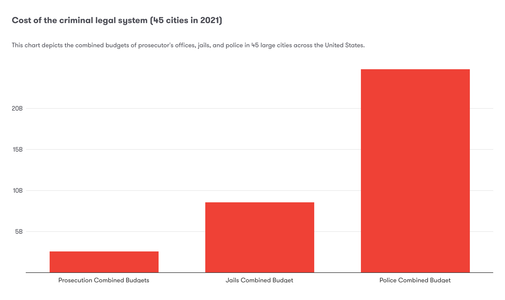
Even though prosecutor budgets are a relatively small expenditure compared to policing and jail budgets, prosecutorial decisions—reflected in their funding—have an outsized impact on the rest of the criminal legal system. To deliver on justice and public safety, prosecutors should heed the call for reform. Now is the time to evaluate what more just and effective investments in public safety could look like.
Advocating for greater transparency and reform
A prosecutor’s budget should reflect their values and priorities. Look at your local budget and learn whether it allows you to answer these questions. If not, join your county’s budget hearing to demand greater transparency in budgeting and your justice system.
- What is the organizational structure of the prosecutor’s office and how are staff allocated within each division?
- How many staffers are assigned to the prosecution of low-level offenses?
- How much money does the office spend on diversion or reentry services?
- How have staff assignments changed over the last ten years?
- What grants does the office receive, and how are they used?
- How much money does the office receive from asset forfeiture practices, and how is that money spent?
Recommendations for more just prosecutors’ budgets
- Commit to being transparent with your budget and how the money is being spent.
- Create community reinvestment grants.
- Divest from low-level offense prosecution units.
- Adopt policies that narrow the net of policing and the use of jails, freeing up even more money for investment in communities.