
Second Look Laws Are Passing—When Advocates Frame Them as Righting a Wrong
Second look laws are gaining momentum as advocates reframe them as a way to right past harms.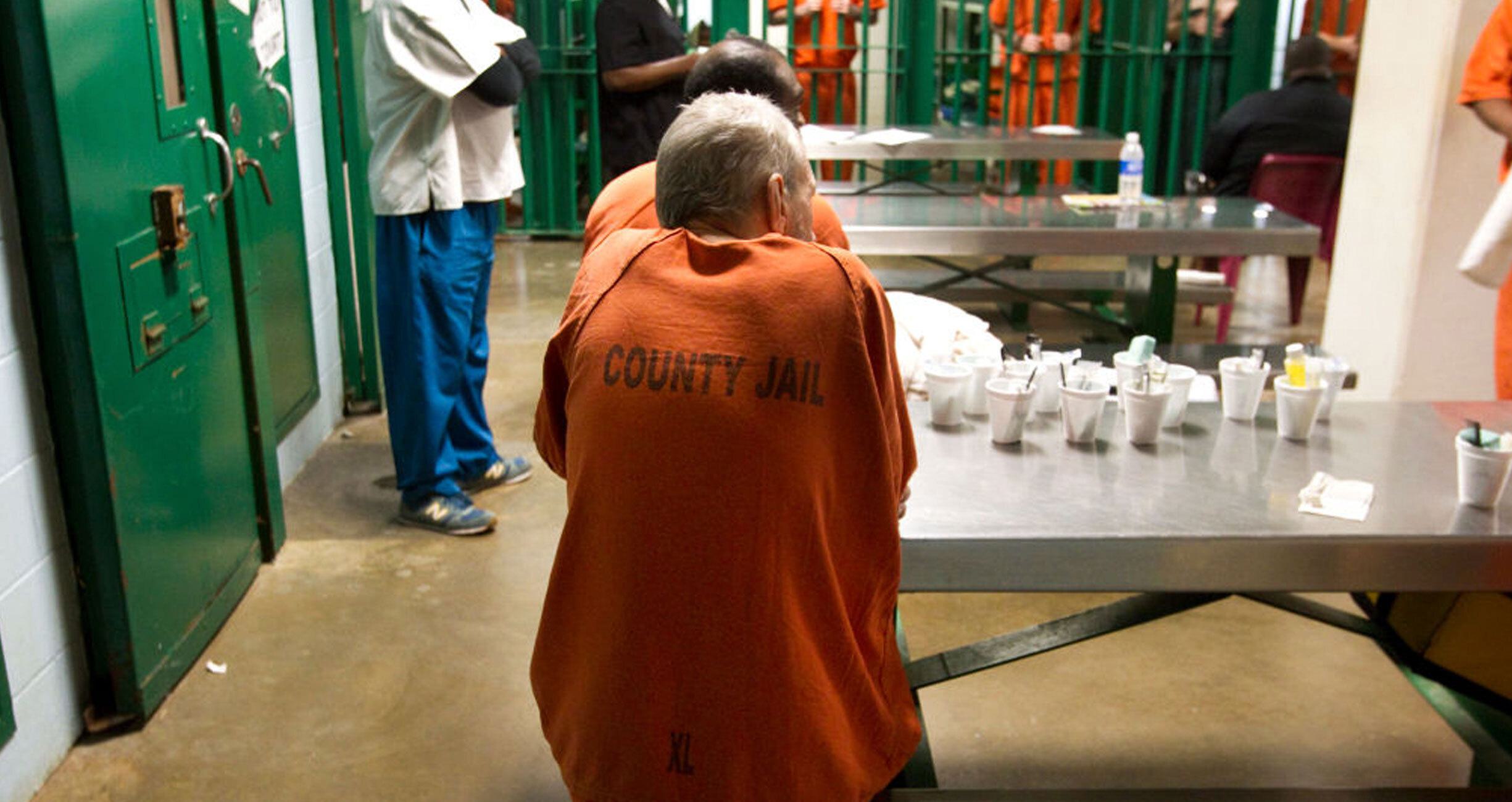
Second look laws offer a second chance to revisit long prison sentences that no longer serve public safety and recognize that people can change and evolve during their time in prison. Read on to learn how advocates in four states advanced second look sentencing reform by pairing evidence with values-driven narratives that helped overcome political resistance.
What Are Second Look Laws?
Second look laws, which allow judges to revisit the sentences of people serving long prison terms, emerged a decade ago to address two practical and moral challenges of the U.S. mass incarceration system.
- First, the number of people serving these sentences has grown as a percentage of the prison population, as people given decades-long sentences under mandatory minimum laws put into place in the 1980s and 1990s remain incarcerated. Caring for these increasingly older people raises questions about how long to punish and hold people for crimes that occurred decades ago, especially amid well-established data showing that people typically age out of crime.
- Second, parole systems were not assessing whether someone could, after a period of time, be safely returned to the community. Allowing courts to resentence people after a significant period of time provides a commonsense alternative.
Second look law reforms also poll well at the national and local levels, giving advocates and legislators an opportunity to advance change. Seventy-nine percent of all voters across party lines support second look resentencing, including 75 percent of both Republicans and independents.
Why Had Second Look Laws Stalled?
Despite these benefits, until recently, second look laws had stalled. Of the dozens of bills filed in almost every state, only 16 have passed outside of the context of mandated resentencing for youth sentenced to life without parole. Many of these laws do not allow incarcerated people to petition the court on their own behalf for second look resentencing, instead requiring a law-enforcement intermediary, such as a prosecutor or a corrections department, to do so for them.
Legislators face a central tension: how to balance accountability and rehabilitation for people serving decades-long sentences with fairness. Supporters argue that people can change and that public safety does not require extreme punishment, while opponents contend that revisiting sentences after a period of confinement undermines finality for victims and survivors of crime.
How Advocates Can Pass Second Look Laws: The Power of the “Righting a Wrong” Narrative
Passing second look laws requires a narrative that acknowledges this complexity rather than sidestepping it. In four recent campaigns, advocates framed second look laws as a way to right a wrong. That “wrong” varied from state to state, but despite those differences, this narrative resonated, leading to advocates’ success.
Maryland: Second chances to correct racial disparities in sentencing
The Maryland General Assembly passed the Second Look Act in April 2025, allowing people convicted of crimes (including murder) committed when they were between the ages of 18 and 25 and who have served at least 20 years of their sentence to be resentenced and potentially released. Advocates had pushed for Second Look for two years, but in 2025, with Black leadership in the state House, Senate, and the governor’s office, an opportunity opened.
In 2023, more than 70 percent of Maryland’s prison population was made up of Black people, despite Black people accounting for less than 30 percent of the state population. The state, advocates argued, needed to right this wrong. A second look law would be a critical step toward correcting this injustice, which sent—and still sends—Black boys and young men to prison for decades. “This bill will rebuild our community,” said State Delegate Cheryl Pasteur, the bill’s sponsor.
The campaign showed that people who had spent decades behind bars could grow and change. Formerly incarcerated speakers met with legislators and testified in committee hearings, sharing their stories of personal transformation. Advocates bolstered these narratives with Maryland-specific data showing that people who had been released through previous resentencing mechanisms after serving long sentences had extremely low recidivism rates.
These tactics helped convince the state’s Black Legislative Caucus to prioritize the bill during the 2025 session, a critical win for the campaign. After that, the coalition engaged in relentless advocacy. It tabled outside the State House, engaging with legislators as they passed by. It activated currently incarcerated individuals to call their representatives—sometimes using their only phone call that week. There was expected opposition from some victims’ groups, but other crime survivors supported the bill, noting that their healing can be served when people who do harm are able to change and grow.
Advocates successfully emerged with a law that covered most sentences for crimes committed by people who were less than 26 years old, with limited exclusions for life without parole, certain sex offenses, and murder of a first responder in the line of duty. They have vowed to work to remove these exceptions in future campaigns.
Colorado: An opportunity to align long sentences with a new criminal code
In June 2023, the Colorado Legislature passed House Bill 1292, which allows people sentenced under the state’s “habitual offender” law a chance to petition for resentencing after they have served at least 10 years of a sentence of at least 24 years. Advocates in the state succeeded with a completely different narrative, one that leaned into the need to update outdated laws.
The process began in 2020 when Governor Jared Polis charged the state’s Commission on Criminal and Juvenile Justice (CCJJ) with recalibrating sentencing. After reclassifying misdemeanors, the commission turned its attention to felony resentencing but was stymied by a national spike in crime driven by the COVID-19 pandemic.
As the landscape shifted, the task force concentrated on two sentencing schemes in need of a fix: long sentences under the “habitual felony offender” law and Colorado’s unusually harsh mandatory consecutive sentencing for convictions arising out of the same incident.
Even as concerns rose about crime, Colorado’s legislature was able to turn to a narrative it had been committed to since 2007, when the CCJJ was created: the need to modernize and rationalize criminal law through a deliberately technocratic process, relying on evidence-based analysis and bipartisan agreement. It passed second look review to ameliorate the outmoded “habitual felony offender” law, even though by 2023 the CCJJ had sunset. The deliberate depoliticization of reform through a commission culture can be successful.
Georgia: A second look for criminalized crime survivors
The Georgia Survivors Justice Act passed unanimously in the 2025–2026 state legislative session, creating less punitive sentencing and resentencing for people serving prison sentences for certain crimes related to being victimized, including fighting back against their abusers and being forced to help their abusers commit crimes. Although the law is gender-neutral, it would impact the approximately 80 percent of women in prison who have histories of victimization—and who are often severely punished for these crimes. For example, a field review of more than 200 domestic violence survivors in Georgia prisons found that more than half were serving a life or life without parole sentence.
The Georgia Coalition Against Domestic Violence, along with criminal justice reform organizations, led a two-year campaign to reframe legislators’ understanding, encouraging them to see these people first and foremost as crime survivors. Viewed through this lens, legislators could think about how to sentence these survivors in a way that recognizes and holds compassion for the trauma of their experiences.
The bill’s sponsor, Representative Stan Gunter, characterized the bill as a pathway for the state to right the wrong that had been done to survivors, usually women. “As a former prosecutor and judge, I know that our current system does not always get this right,” he said. “[This bill] is an opportunity to modernize our sentencing law and give judges additional context, balance fairness and accountability, and better protect victims.”
Reframing the incarcerated beneficiaries as survivors allowed the campaign to neutralize the usual opposition from district attorneys and even gain their support. “Domestic violence shelters and other victim-serving organizations that had relationships with their local district attorneys called on them to support the bill to live up to their billing as protecting survivors,” said Ellie Williams, legal director of the Justice for Incarcerated Survivors Program of the Georgia Coalition Against Domestic Violence.
Georgia’s bill demonstrates how the desire to right a stinging harm—such as isolating criminalized survivors’ crimes from their victimization—can create a narrative that supports a focused second look bill.
Delaware: A second chance for people subject to “death by incarceration”
In June 2025, Delaware passed the broadest second look law yet. The Richard “Mouse” Smith Compassionate Release Act allows incarcerated people to file their petitions themselves, regardless of crime or age at the time of commission. A person may ask a court for release “if there is good cause to recommend a sentence modification” after serving 25 years (or 15 years if they are more than 60 years old). Legislative leaders framed the bill as a way to fix a system that forgot that justice can be “firm, but also fair.”
Advocates, led by formerly incarcerated people, laid the groundwork via “Death by Incarceration” seminars held in each county. The state had outlawed the death penalty in 2024, but these advocates educated the public on the reality of a life sentence—the default sentence for any type of murder. These seminars brought formerly incarcerated leaders, community members, and legislators together to interact and exchange fear for understanding, while also centering survivors’ issues.
“These seminars allowed everyone to see that accountability, rehabilitation, and compassion are not in competition,” said Kevin O’Connell, chief defender at the Delaware Office of Defense Services. State Senate Majority Leader Bryan Townsend, who sponsored the bill, told attendees at one seminar, “If this many people showed up to [the Delaware] Legislative Hall, we [would] see change.” Advocates met this challenge, organizing enthusiastic lobby days in Dover as well as legislative hearings.
Delaware’s win shows how naming the harm of “death by incarceration” could mobilize lawmakers around shared values of redemption.
What’s Next for Second Look Sentencing Reform?
In future legislative cycles, advocates can look to these successful campaigns to advance second look laws in their states by naming the specific harms their sentencing systems perpetuate, making the case for change, and highlighting the role of rehabilitation in our system of justice. Building these messages with directly impacted people, legislators, and crime survivors who want more options for healing than what the current system provides can yield victories—and second chances.